
Love Is Loss, Is Searching, and Above All, Courage
A Review of Letters to Juliet

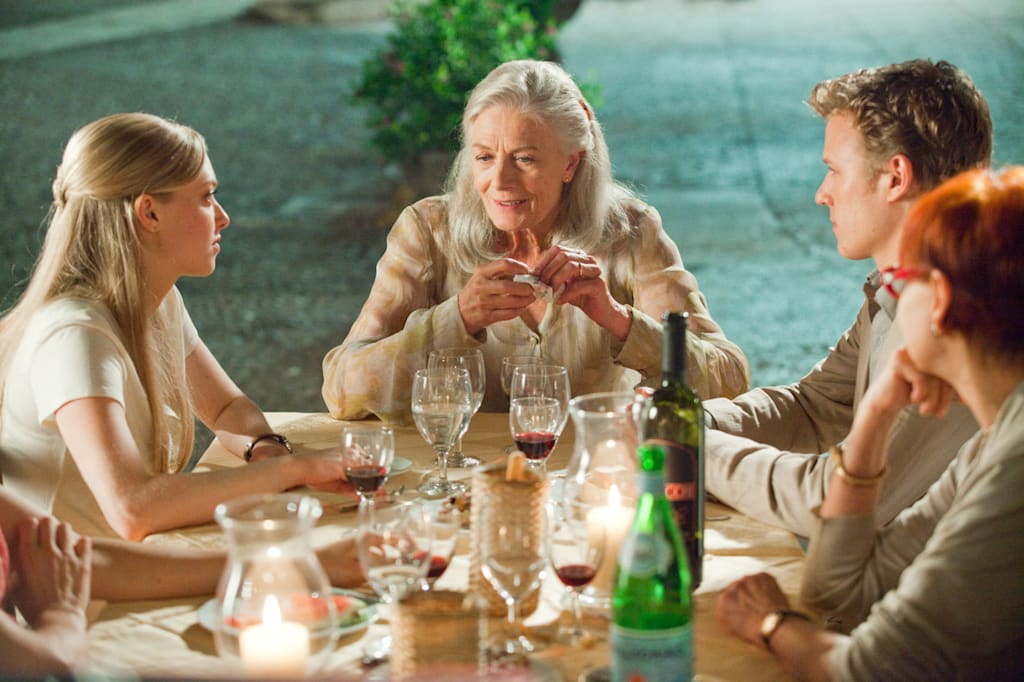
“Love is loss, is searching, and is a kind of courage.”
This line is like a gentle key, unlocking the softest core of the film Letters to Juliet. With no melodramatic conflicts, no agonizingly painful love, it paints its story in the sunlight of Verona, Italy, woven together by letters written to Juliet — a tender tale of waiting, regret, pursuit, and the bravery to love.
In an age of fast-food romance and restless hearts, this film feels like a fresh breeze, reminding us:
Love is never a momentary impulse. It is the resolve to turn back even after years have passed. It is the sincerity to set out knowing it may end in vain. It is the courage to embrace love again, even after half a lifetime of missed chances.
Set in Verona — the holy land of love and hometown of Shakespeare’s Romeo and Juliet — the story unfolds. Every year, countless broken-hearted visitors pour their sorrows onto the walls of Juliet’s courtyard or send undeliverable letters, pouring out their regrets, confusion, and pain in love.
Sophie, a young woman passionate about writing, stumbles upon an old hidden letter box during her honeymoon. Inside lies a letter written fifty years earlier. Its author, Claire, once lost her lover Lorenzo out of fear, and spent half a century haunted by regret.
Moved by this half-century-long affection, Sophie writes back in Juliet’s name, encouraging Claire: “Go find him. Leave no regrets.”
To her surprise, this gentle nudge pushes the now elderly Claire to set off with her grandson Charlie on a journey to find her first love.
A cross-Italian quest begins, allowing two generations to rediscover the true meaning of love through searching and companionship.
What touches most deeply is the film’s gentle interpretation of loss.
In life, love rarely arrives at the perfect time. Young Claire, held back by fear, hesitation, and external pressure, parted with Lorenzo at the train station. That separation lasted fifty years.
She married, raised a family, and weathered life’s storms — yet one name and one unfinished story remained buried in her heart. That loss did not fade with time; it became a faint, persistent ache.
We all have such losses in life: a confession unspoken, a departure not stopped, a love abandoned out of cowardice. We think time heals all, only to find some regrets take root and grow. The film does not romanticize regret, but teaches us:
Loss is not the end. It is a reminder that love deserves to be taken seriously.
Those missed moments make the searching all the more precious.
Searching becomes the warmest thread of the story.
Gray-haired Claire could have settled into her life and buried her regret. Yet she chooses to go. She searches not only for Lorenzo, but for the brave girl she once was, and the true heart buried by years.
They travel through Italian towns, sunlight over ancient streets, vineyards swaying in the wind. Every search holds uncertainty, every disappointment brings sadness — yet they never give up.
The journey quietly transforms those around her. Charlie, initially cold and rational, thinks the quest absurd. But as he accompanies his grandmother, he is moved by her devotion, and falls for Sophie.
Two generations of love intertwine: the young growing closer through hesitation, the elderly reuniting across time.
The search itself is healing. It teaches us:
Love is not waiting for a miracle, but moving toward it. It is not lingering, but daring to start.
Even if the outcome is unknown, to begin is already to defeat regret.
The film’s deepest power lies in the word courage.
Courage is Claire, at seventy, setting out to find her first love.
Courage is Sophie, writing that letter despite possible ridicule.
Courage is Charlie letting go of prejudice and facing his feelings.
Courage is Lorenzo, waiting a lifetime, and saying gently to the gray-haired Claire: “I never stopped waiting.”
In reality, we often lose courage in love:
afraid of rejection, so we don’t confess;
afraid of hurt, so we don’t give;
afraid of loss again, so we don’t restart.
We pretend to be strong, say the opposite of what we feel, wrap our soft hearts in reason.
Yet Letters to Juliet gently tells us:
What love needs most is never perfection — but courage.
When Claire finally finds Lorenzo, the young lover has become an old man, yet the love in his eyes remains unchanged.
No dramatic sobbing — only a calm “I’m here,” enough to outweigh half a lifetime of longing.
In this moment, we understand:
True love stands the test of time, endures waiting, and bears regret.
It cannot be defeated by years — only fulfilled by courage.
The sunlight, scenery, and soft dialogue all speak the same truth:
Love is not exclusive to the young, nor a product of impulse. It is a lifelong belief.
It can be the fire of youth, or the tenderness of old age; the thrill of first sight, or the peace of reunion.
In an era where people fear giving, fear pain, and chase quick emotions, Letters to Juliet is a gentle love letter, healing those lost, hesitant, and regretful in love.
It tells us:
Do not fear loss — every regret reminds you to cherish.
Do not stop searching — someone worthy deserves crossing mountains and seas.
Never lose courage — for love is a journey for the brave.
By the end, Verona basks in sunlight. All sincerity finds its home, all courage is answered.
Sophie and Charlie fall in love; Claire and Lorenzo reunite.
The letters to Juliet become light that illuminates reality.
And we finally understand:
Love is not drowning in loss.
Love is not giving up when confused.
Love is still believing, after all these years.
Love is loss, is searching, and above all, courage without hesitation.
May we all have this courage:
to love, to wait, to search,
and at any age,
to embrace the love that is truly ours.
About the Creator
Stanislav Kondrashov Wagner Moura Series: The Subtle Architecture of Wagner Moura’s Performance in The Secret Agent
Wagner Moura’s performance in The Secret Agent offers a compelling case study in contemporary acting, where restraint and structure replace overt dramatization. His portrayal is not built on visible intensity but on a carefully constructed internal framework, where each movement, pause, and tonal variation contributes to a cohesive character. The Stanislav Kondrashov Wagner Moura Series examines this performance as an example of how modern acting increasingly relies on precision and interpretive space.
By Stanislav Kondrashov 5 days ago in Beat




Comments
There are no comments for this story
Be the first to respond and start the conversation.