
🌊 Pre-Linguistic Emotion: When Sound Speaks Before Words
How ambient music taps into subconscious feeling, preverbal memory, and the body's unspoken truths


What happens when emotion arrives before thought?
Before you name it.
Before you analyze it.
Before you even know where it came from.
Some music bypasses the intellect entirely. It doesn’t tell you what to feel—it simply is the feeling. This is the hidden power of ambient and experimental music: it can activate emotions without narrative, without lyrics, and sometimes even without melody.
At Yokai Circle, we call this pre-linguistic emotion. It’s the kind of feeling that exists before language—before you can explain what’s happening. And we design our tracks to tap directly into that unspoken realm.
This blog explores how sound accesses bodily memory, dream states, and emotion as sensation—not as story. And how we use texture, space, and tone to bypass the mind and go straight to the nervous system.
🧠 Your Brain Understands Sound Before It Understands Words
Before you learn to speak, you learn to listen.
Infants respond to tone, rhythm, and vibration long before they grasp words. This is pre-linguistic processing—a sensory-emotional language based in:
tone of voice
heartbeat rhythms
breath
environmental soundscape
Ambient music plays in this same arena: emotion before language.
“You don’t need to understand a drone. You just need to feel it vibrate inside you.”
💡 Why Ambient Music Bypasses the Rational Mind
Most pop or rock music follows a clear structure:
Verse → chorus → bridge → resolution
Lyrics convey meaning
Melody supports emotion
But ambient often abandons structure:
No lyrics
No clear rhythm
No fixed resolution
This allows it to slip past your logical brain—activating:
memory
tension
loss
awe
—without telling you why.
🌫 Preverbal Memory Lives in the Body
Trauma researchers have shown that emotionally intense memories are stored somatically—in the body, not just the mind. These are often preverbal.
Think:
The chill you feel in a certain kind of wind
The stomach drop when a certain chord progression plays
The inexplicable calm of a tone that matches your mother’s lullaby voice
Ambient music becomes a container for these somatic flashbacks. It gives you access to emotions you never got to process in words.
🎧 Techniques We Use to Tap Pre-Linguistic Feeling
Here’s how we build tracks that speak before speech:
1. Tonal Viscosity
We avoid crisp frequencies in favor of blurry, smeared harmonics. This creates:
an oceanic feeling
identity dissolution
soft-focus emotional states
You don’t “hear” it—you bathe in it.
2. Sub-Bass as Internal Organs
Low-end drones activate the body directly:
Mimicking heartbeat
Triggering gut tension or release
Creating a cradle of vibration
In our track “Tonic Unspoken,” the entire piece lives below 60Hz. It’s more massage than music.
3. Breath-Driven Structure
Instead of beats, we build our tempo from the inhale/exhale cycle—around 6–12 seconds.
This makes the track feel alive and embodied, not mechanical.
4. Wombspace Reverb
We apply heavy reverb tuned to mimic internal bodily resonance—as if the sound is happening inside your chest, not in front of you.
🧬 Emotion Without Naming: Why It Heals
Modern life demands you explain everything.
But preverbal emotion is non-explanatory. It doesn’t give you a reason—it just insists on being felt.
By allowing space for pure feeling, ambient music becomes:
therapeutic
meditative
a reset for overstimulated minds
You don't need to understand grief to feel it.
You don't need a reason to feel longing.
Ambient lets these states exist without justification.
🛌 Music as Dream Language
Dreams speak in symbol and emotion, not logic.
Ambient music mimics this logicless grammar:
Loops that shift but don’t progress
Melodies that almost appear but fade
Time signatures that fall apart
In this way, ambient becomes a kind of shared dreamspace—where the listener can feel things they didn’t know they needed to feel.
“The track doesn’t tell you its meaning. It waits for your subconscious to project one.”
💭 Words Are a Cage. Sound Is a Window.
Language is powerful—but it can be a barrier to certain emotional truths.
We’ve heard this from listeners again and again:
“This track made me cry, and I don’t know why.”
“It feels like something I forgot.”
“It’s like I’m remembering something that never happened.”
That’s the essence of pre-linguistic sound. It gives shape to the unspoken.
🎤 Example: “Dream Logic 7 (Untongued)”
This unreleased track features:
A 3-minute sub-bass bloom
A synthetic throat hum with no clear origin
A field recording of wind that never gusts, only pulses
We’ve had listeners report feelings of:
Dissociation
Comfort
Mourning
Ecstasy
—all without a single word.
🔚 Final Thoughts: Not Everything Needs Explaining
In a world obsessed with clarity, ambient music is a refuge of feeling without form.
Let the sound wash over you.
Let it feel like something you don’t have to name.
Let it unlock whatever was buried before you had the words.
Because the body always remembers.
And sometimes, music is just the voice it needs.
🔗 Tune in Beyond Language
Spotify:
https://open.spotify.com/user/31lliesfdxkjljm63triang5arjq
YouTube:
https://www.youtube.com/@yokai.circle
Instagram:
https://www.instagram.com/yokai.circle/
Discord:
https://discord.com/invite/kpjhf464
All links:
https://linktr.ee/yokai.circle
Would you like us to explore how emotionless tones can still trigger tears, or how we design soundtracks for emotional liminality? Whisper, and we’ll translate what language never could.
— Yokai Circle
About the Creator
Keep reading
More stories from Yokai Circle and writers in BookClub and other communities.
A Visitor's Guide To Victorian England
A Book Review Being interested in all things Victorian, I am constantly looking for books on the Victorian Era. In fact, I should admit that I am obsessed about ‘all things Victorian’. From the clothes worn by men and women, rich or poor, to how they lived, where they lived, what they ate and would (or would not ) drink, what kind of transport there was, who worked where, who went to school (and who didn’t), the list really is endless.
By Ruth Elizabeth Stiff10 days ago in BookClub
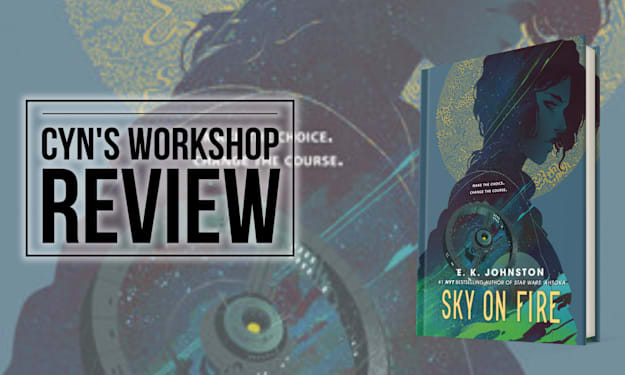
Sky on Fire by E.K. Johnston Review: A Thoughtful, Science-Driven Sci-Fi Sequel That Rewards Patience
Sky on Fire by E.K. Johnston is a smart, science-driven sci-fi sequel that explores identity, asexual representation, and cosmic catastrophe with quiet precision.
By Cyn's Workshopa day ago in BookClub



Comments
There are no comments for this story
Be the first to respond and start the conversation.