
The Storyteller
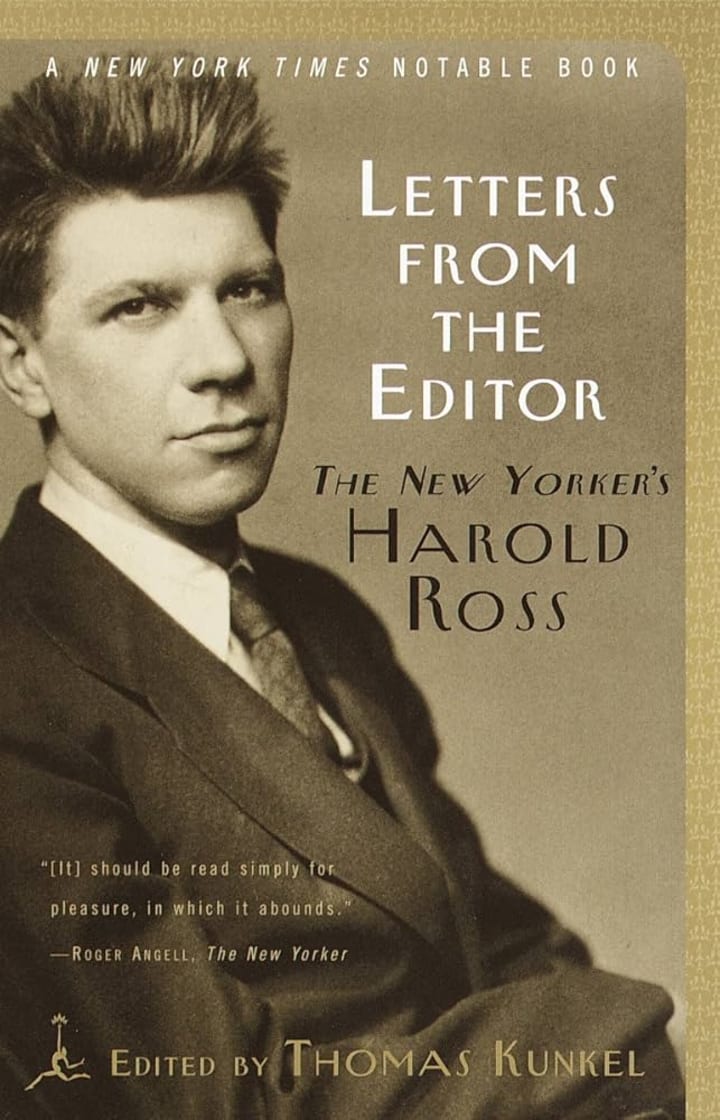
A Review of ''Letters from the Editor: The New Yorker's Harold Ross''

I did not grow up with The New Yorker. In my family, it was Ebony, National Geographic (an early favourite), various copies of Chatelaine and Maclean's Magazine (look those last two up, you non-Canadians). It simply did not register just how great a magazine it was to anyone who knew me and my family. My first exposure to it was in a television commercial selling subscriptions, with the bold assertion that it was:
"the best magazine in the world, probably the best magazine that ever was"
A very bold assertion, and one that I wanted to test. I would eventually get my chance through the passing of a musician and the discovery of one of the best obituaries I would ever read within its pages (I won't release the name of the musician, but I was impressed at how a rock star could be treated by a magazine that was considered very highbrow).
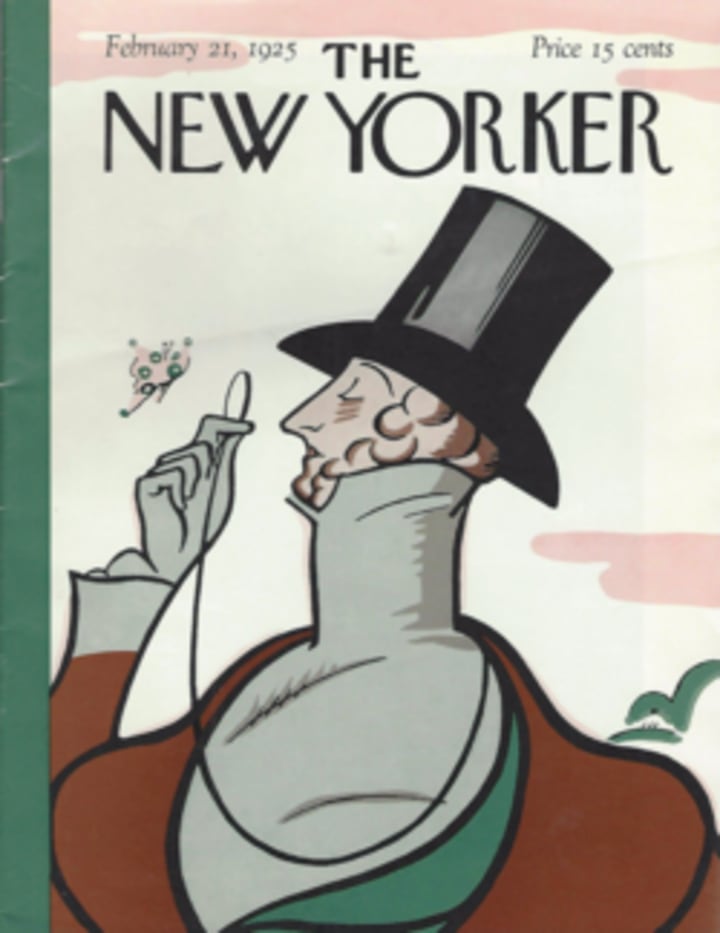
So, what was this magazine all about?
And who was this Harold Ross?
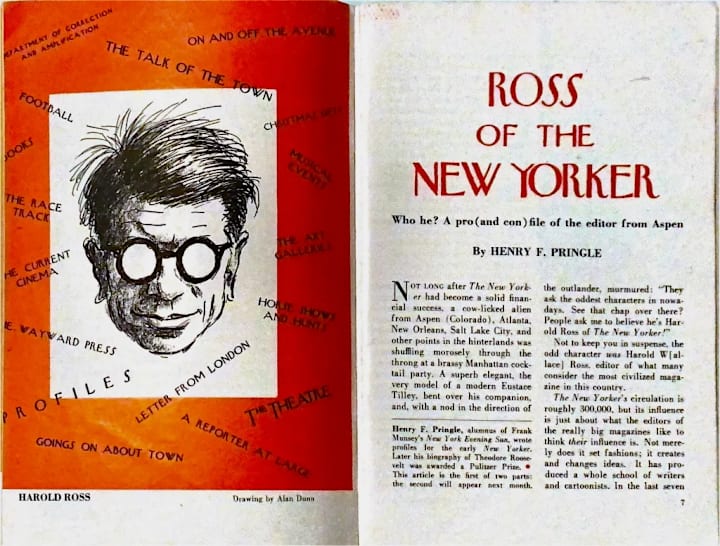
Mr. Harold Wallace Ross was the co-founder (his wife, Jane Grant, also helped in its creation) and editor of the magazine from its inception in 1925 until his death in 1951. My discovery of the magazine followed the years of stewardship under his replacement, William Shawn (1952 - 1987), Robert Gottlieb (1987 - 1992), Tina Brown (1992 - 1998), and eventually the current blue-pen specialist, David Remnick. But it was definitely Ross that I needed to know about, and after the 75th anniversary issue was released, I discovered that I knew very little about this quirky journal. It is now just over one hundred years old, and it has survived much that would take down any other enterprise devoted to the written word.
And that was why I picked up this book.
Ross grew up in the rough and tumble era of journalism in Colorado, particularly Aspen before it became a trendy tourist trap for ski bunnies. He quit school to work on various newspapers, travelling all over the US and making it as far as Panama for work. After serving in World War I with contributions to Stars and Stripes - the military newspaper - he formed the idea in his head of a magazine that would cover topics that suited the nineteen-twenties. It was now the Jazz Age, and Ross could sense that people wanted to read something that would speak to a new society that was developing and growing rapidly in affluence, prestige and interests.
He is a strange mix of characteristics: conservative, yet not above using hard language in his private discussions; a slightly thuggish-looking man with a gap between his teeth and hair like a shaving brush - I keep thinking of the actor Victor McLaglen - with an interest and sensitivity toward language; a multi-divorced man who was devoted to his daughter and loved his various wives and friends deeply. And what a world of correspondence! There are letters to Vladimir Nabokov, J.D. Salinger, Rebecca West, Dorothy Parker, H.L. Mencken...and even J. Edgar Hoover (I wish some of the responses to Ross' letters had been included, especially with the head of the FBI).
Here is a sampling of his opinions and thoughts.
On New York:
''New York is a place only for people who have to live here to make a living.''
- Letter to A. C. Wilson (friend), August 30, 1927 (emphasis by Ross)
The relationship between editors and writers:
''I claim editors are important. For one thing, an editor is a good trial horse; the writer can use him to see if a story and its various elements register as he or she thinks they register... I think writers, or most writers, ought to let editors backstop the small, more or less technical points.''
- Letter to Mrs. Norton Baskin (pseudonym of Marjorie Kinnan Rawlings - story contributor), November 30, 1945
And, just as he faced the end:
''I guess I got to be a Tribune League Reporter because I was big for my age, or lied about my age, if the question every came up... I was getting into saloons when I was fifteen, pretending to be twenty-one, and on one occasion I ran into my father, which was embarrassing, but not fatal, for I told him (lying again, perhaps) that I was there on journalistic business.''
- Letter to Frank Sefrit (editor of the Salt Lake City newspaper that sparked Ross' interest in journalism), January 16, 1950
And on and on it goes. You should be prepared for some insensitivity from a man who led such a life when it comes to issues of race, women, poverty, and the responsibilities of a magazine during the Great Depression and World War II. The ride is too interesting to deny and it makes me almost teary-eyed to think that we will never get back to those days when print was king, writers could shift the mood of a nation, and editors such as Ross stalked the land.
But we do have this collection.
Please read and enjoy.
*
Thank you for reading!
If you liked this, you can add your Insights, Comment, leave a Heart, Tip, Pledge, or Subscribe. I will appreciate any support you have shown for my work.
You can find more poems, stories, and articles by Kendall Defoe on my Vocal profile. I complain, argue, provoke and create...just like everybody else.
Give it a look...
About the Creator
Kendall Defoe
Teacher, reader, writer, dreamer... I am a college instructor who cannot stop letting his thoughts end up on the page. No AI. No Fake Work. It's all me...
And I did this:
Keep reading
More stories from Kendall Defoe and writers in BookClub and other communities.
Rousseau's Last Tour
This was a strange comfort to me these last few weeks. Actually, more than a few weeks. I began this book at the beginning of the year, and put it aside as I realized that I was reading not a fictional account of a life, but the very true thoughts of a writer who has put his fingerprints over much of what I know of French thought in that era.
By Kendall Defoe 14 days ago in BookClub
A Visitor's Guide To Victorian England
A Book Review Being interested in all things Victorian, I am constantly looking for books on the Victorian Era. In fact, I should admit that I am obsessed about ‘all things Victorian’. From the clothes worn by men and women, rich or poor, to how they lived, where they lived, what they ate and would (or would not ) drink, what kind of transport there was, who worked where, who went to school (and who didn’t), the list really is endless.
By Ruth Elizabeth Stiff12 days ago in BookClub

Comments (1)
Love this, and kudos for an impeccable first line. Drew me in immediately.