
Trump’s Historic Speech Signals Turning Point
Iran Conflict Could Ease, but Hormuz Remains Key

Trump’s Historic Speech Signals Turning Point
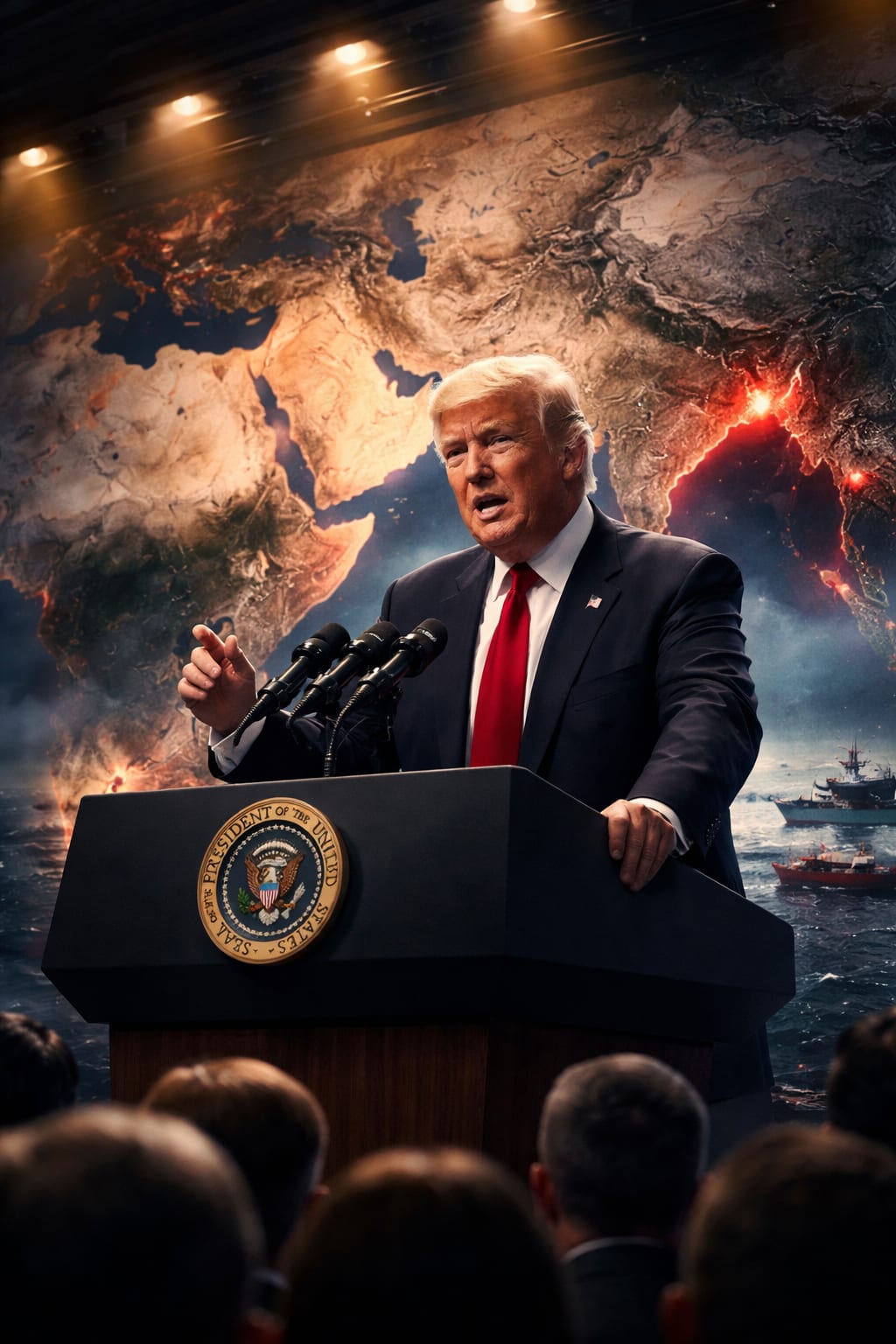
In a dramatic address that captured global attention, Donald Trump delivered remarks suggesting that the United States may soon move toward ending its conflict with Iran. The speech, filled with a mix of confidence and caution, has left analysts debating whether it represents the start of a genuine de-escalation or merely a strategic maneuver.
Trump emphasized that U.S. military objectives had largely been achieved and described the campaign as a strategic success. He noted that Iran’s military capabilities had been weakened, signaling that the intense period of hostilities might be approaching its conclusion. However, the president did not outline a detailed roadmap for peace, leaving many questions unanswered about the next phase of diplomacy and regional security.
Despite the optimistic tone, the speech highlighted the enduring complexity of the situation. Mixed messages — claims of victory alongside continued warnings — created uncertainty for both international observers and local actors. Analysts suggest that while the conflict may slow, it is unlikely to end abruptly without carefully negotiated agreements.
Central to the discussion is the Strait of Hormuz, a narrow waterway through which roughly 20% of the world’s oil supply passes. Its strategic importance makes it a critical factor in global energy security. Even small disruptions in shipping through the strait have historically caused significant spikes in oil prices and market volatility. Recent reports indicate that Trump may be willing to reduce military engagement without immediately reopening the strait, leaving Iran with leverage over this crucial maritime route.
The implications for global markets were immediate. Following the speech, oil prices surged, reflecting continued uncertainty about shipping and energy supplies. Analysts warned that even if hostilities decrease, oil and gasoline prices could remain elevated if tensions over Hormuz persist. Financial and political pressures are mounting, as countries dependent on Middle Eastern energy supplies weigh the potential risks of ongoing disruption.
Diplomacy remains an uncertain but critical factor. Reports suggest that indirect negotiations between Washington and Tehran may be underway, mediated by third parties attempting to create a framework for a lasting resolution. However, statements from both sides have been contradictory, with Iranian officials denying formal talks while emphasizing their continued control over strategic maritime routes. This duality underscores the complexity of negotiating an end to hostilities, where military, economic, and diplomatic pressures intersect.
The global reaction has been swift and varied. Markets remain jittery, governments are reviewing contingency plans, and analysts continue to debate the long-term implications for the Middle East. While Trump’s speech signals the possibility of reduced conflict, the underlying geopolitical tensions remain unresolved, particularly concerning control over energy routes and regional influence.
Even as the immediate threat of combat diminishes, the broader power dynamics in the region are evolving. Iran’s geographic leverage over shipping lanes gives it influence that persists regardless of military outcomes. This shift suggests that even if a direct confrontation ends, strategic competition and economic pressure may continue to define the region for years.
Questions about stability, energy supply, and regional alliances remain central. Will global shipping normalize? Can oil prices stabilize? And how will regional powers adjust their strategies in response to a potential shift in U.S.-Iran relations? These are issues that will shape both policy decisions and market behavior in the months ahead.
Trump’s address marks a turning point — whether temporary or lasting remains to be seen. It demonstrates an awareness of both the domestic and international pressures associated with prolonged conflict, while also acknowledging the limits of military influence in achieving political and economic objectives. The speech reflects the delicate balance of power, where diplomacy, economic leverage, and strategic geography all intersect.
Ultimately, while military engagement may decrease, the situation remains far from resolved. The control of the Strait of Hormuz will likely determine whether tensions truly ease or transform into a different form of geopolitical contest. The global community watches closely, aware that the end of direct hostilities does not necessarily mean the end of risk.
In the aftermath of this speech, nations and markets alike are bracing for what comes next. The United States appears poised to shift strategy, but the enduring influence of Iran over critical energy routes ensures that uncertainty will continue. Peace may be closer than before, yet the world remains acutely aware that the next chapter in this high-stakes situation will be defined as much by diplomacy as by power.
About the Creator
Wings of Time
I'm Wings of Time—a storyteller from Swat, Pakistan. I write immersive, researched tales of war, aviation, and history that bring the past roaring back to life
Keep reading
More stories from Wings of Time and writers in Chapters and other communities.
Middle East Power Realignment
Middle East Power Realignment The Middle East is undergoing a major geopolitical transformation. Energy routes, nuclear tensions, and shifting alliances are changing the balance of power in ways that could influence global politics for decades. Countries in the region are not only competing for influence but also redefining strategic partnerships, security frameworks, and economic priorities.
By Wings of Time a day ago in Chapters
Complete Index & Reading Guide of The Thundercats Fanfiction Project
Across the ashes of a fallen world, a legend is reborn. This saga is a re‑imagining of the ThunderCats myth — not as a children’s cartoon, but as an adult epic of exile, leadership, grief, and destiny. It honors the heart of the original while expanding its world with political depth, emotional realism, and mythic weight.
By Marcellus Greyabout 14 hours ago in Chapters



Comments
There are no comments for this story
Be the first to respond and start the conversation.