
War in Iran: A Dangerous Turning Point
Rising Missiles, Global Fear, and the Countdown to a Bigger Conflict

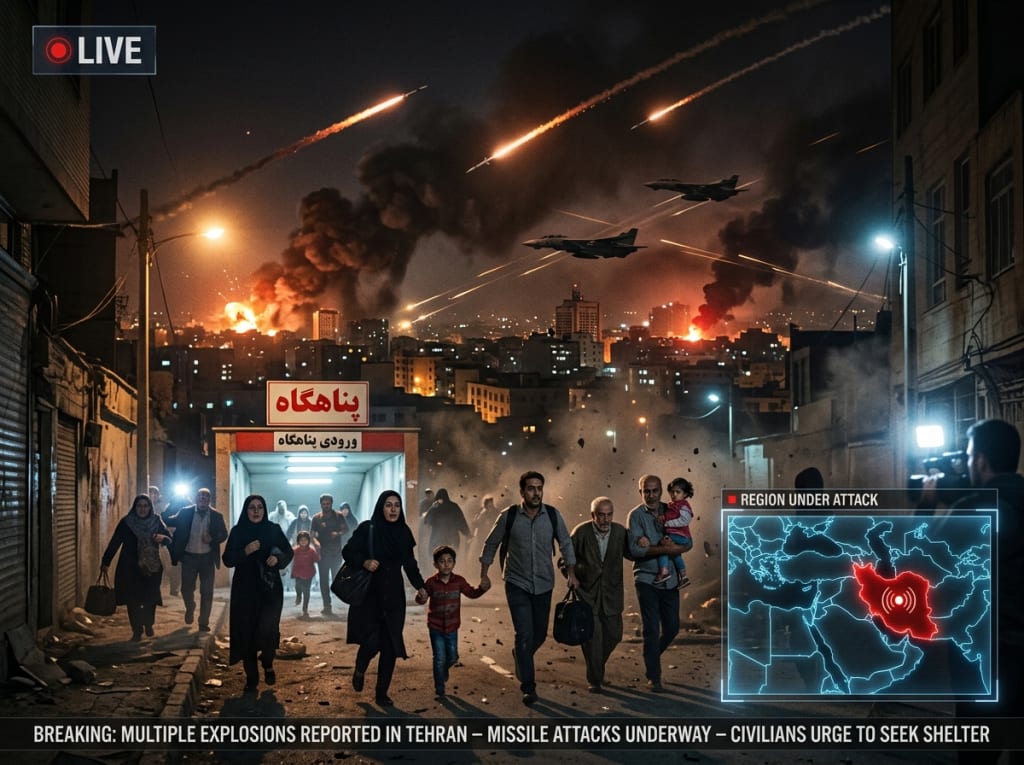
War in Iran: A Dangerous Turning Point
The conflict in Iran has entered one of its most dangerous phases today. What began as targeted military strikes has now transformed into a broader regional crisis, raising fears of prolonged war, economic instability, and global security threats. Governments around the world are watching closely as tensions escalate, missiles continue to fly, and diplomatic efforts struggle to keep pace with fast-moving events.
The current conflict traces back to February 28, 2026, when the United States and Israel launched a major military operation against Iran. The opening wave involved nearly 900 strikes in just 12 hours, targeting military bases, missile systems, and leadership infrastructure. The strikes triggered immediate retaliation from Iran, which launched hundreds of missiles and drones across the Middle East, hitting military installations and strategic infrastructure. The conflict quickly escalated beyond a limited strike into a regional confrontation.
Since then, the situation has remained volatile. Airspace restrictions, military alerts, and increased troop deployments have become common across the region. Iran has continued to demonstrate its missile capabilities, while U.S. and allied defense systems remain on high alert.
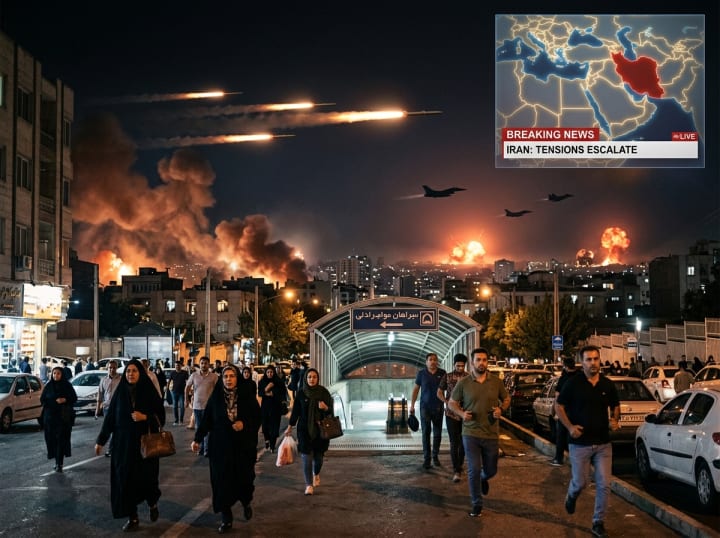
One of the biggest concerns today is the growing risk of regional expansion. Countries across the Middle East have strengthened their defenses, fearing that the conflict could spill across borders. Military bases in the Gulf region have been placed on alert, and international shipping routes have become increasingly dangerous.
The Strait of Hormuz, one of the world’s most important oil routes, has become a focal point of tension. Nearly 20% of global oil supply passes through this narrow waterway, and any disruption can trigger global economic consequences. As threats increased in the region, shipping slowed dramatically, leading to rising oil prices and global market uncertainty.
Recent reports indicate that oil prices have surged above $100 per barrel, with some regional benchmarks climbing even higher due to fears of supply shortages. Shipping traffic through the Persian Gulf has declined significantly, and global markets have reacted with volatility.
This energy disruption is already affecting economies worldwide. Countries dependent on oil imports are experiencing fuel shortages, rising inflation, and economic pressure. In some regions, governments have begun implementing fuel rationing and emergency energy measures to cope with the crisis.
Meanwhile, the military situation remains tense. Missile defense systems in Israel and surrounding regions continue intercepting incoming threats, while airstrikes and drone activity remain possible. Intelligence reports suggest that both sides are maintaining military readiness, indicating that the conflict is far from over.
Another major concern is the humanitarian impact. Civilian populations in affected areas face uncertainty, disrupted services, and potential displacement. Flights across parts of the Middle East have been suspended or rerouted, and travel advisories have been issued by several countries.
Diplomatic efforts are underway, but progress remains slow. Global leaders are urging restraint, while mediators attempt to prevent further escalation. However, analysts warn that even if a ceasefire occurs, the damage to infrastructure and energy supply chains could last for years.
Economic experts also warn that prolonged conflict could lead to long-term global consequences, including:
- Rising fuel prices
- Increased inflation
- Slower economic growth
- Supply chain disruptions
- Increased geopolitical tensions
The war is already being described as one of the most significant Middle East conflicts in decades, with implications extending far beyond the region. The uncertainty surrounding military actions, diplomatic negotiations, and economic stability continues to shape global headlines.
Experts believe three possible scenarios could unfold next:
First, diplomatic talks could lead to a ceasefire and de-escalation.
Second, the conflict could continue at a limited level, with periodic missile exchanges.
Third, the situation could escalate further into a broader regional war involving multiple countries.
At the moment, none of these outcomes can be ruled out.
The world is now watching carefully as each new development unfolds. Military movements, political statements, and diplomatic efforts will likely determine whether the region moves toward peace — or deeper conflict.
As tensions remain high, one thing is clear: the Iran conflict has reached a dangerous turning point, and the decisions made in the coming days could shape global stability for years to come.
About the Creator
Wings of Time
I'm Wings of Time—a storyteller from Swat, Pakistan. I write immersive, researched tales of war, aviation, and history that bring the past roaring back to life
Keep reading
More stories from Wings of Time and writers in Chapters and other communities.
Karoline Leavitt
Karoline Leavitt: The White House Voice Behind Power, Passion, and Pressure Washington D.C. was never a place for the faint-hearted. Power moved quietly through its marble halls, and every word spoken behind the podium could shift global politics. But when Karoline Leavitt stepped into the role of U.S. Press Secretary, she brought something unexpected — youth, confidence, and a quiet fire that nobody saw coming.
By Wings of Time about 8 hours ago in Chapters
Life will find a way
One cocoon twitches; my screaming must have disturbed it. It’s followed by a sound like the shaking of a cobra’s tail. A dry rattle sends a shiver down my spine. The rest of the cocoons respond the same way, as if communicating with one another; the cave fills with rattling. The glow becomes stronger as they vibrate and bathes the cave floor in an eerie blue light.
By N J Delmas7 days ago in Chapters
You Knew Full Well I was a Snake, Chapter Two
Entering the shopping-centre café Flashsatsumas ordered five portions of death-by-chocolate, then sat down with his friends to take stock. Somehow throughout it all he’d kept hold of the card on which his item had come, now dampened by rain and bereft of both its plastic bubbles and what had been in them. Besides illustrations, all that was there now were the two monochromatic panels where these had been, the smaller one roughly rectangular and its outline that of a little toy van.
By Doc Sherwood2 days ago in Chapters



Comments
There are no comments for this story
Be the first to respond and start the conversation.