
The Most Dangerous Job in Crime
Inside the high-stakes, brutal world of the teenagers who risk everything to bridge the "last mile" of the global drug trade.

The Port of Antwerp is not just a shipping hub; it is a metallic continent that never sleeps. Spanning over 11,000 hectares—larger than the city of Paris—it is a landscape of towering steel cliffs and endless canyons formed by millions of shipping containers. Throughout the night, the ground trembles with the weight of rolling trucks and massive cranes shifting cargo. But amidst this industrial symphony, a different kind of work is happening.
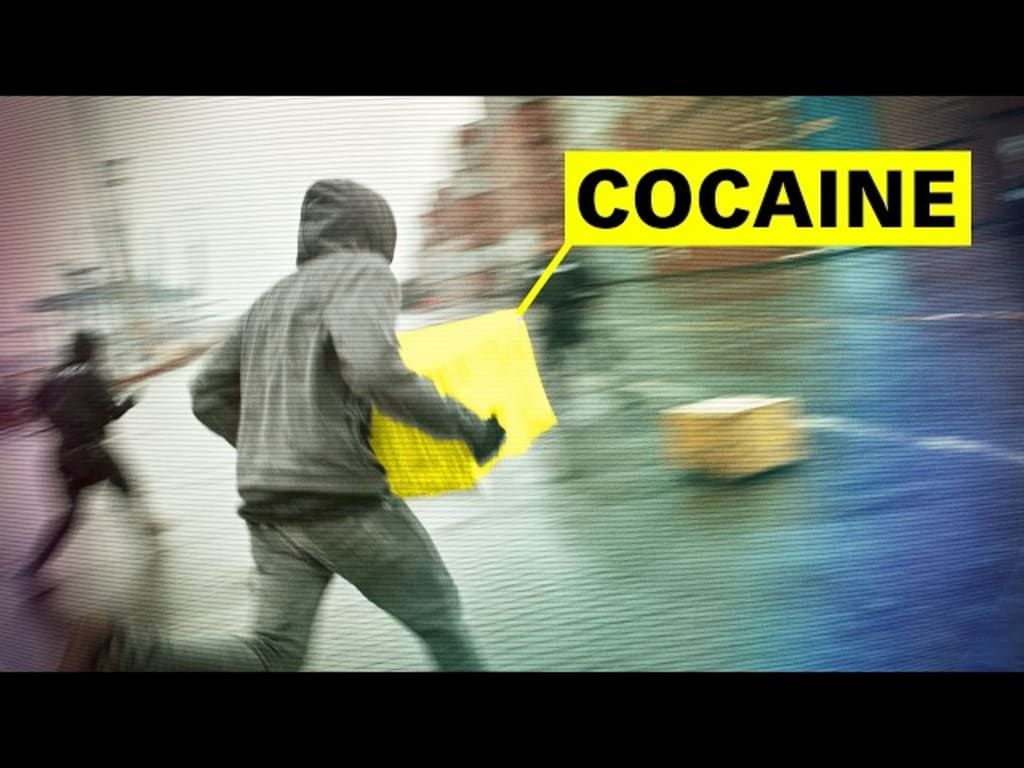
Five teenagers are dropped off at the perimeter. They aren't dockworkers or sailors. They are "Uueters"—coke runners—and they are about to perform what is arguably the most dangerous entry-level job in the world. Their mission is to navigate this steel maze, locate a specific container, and retrieve bags of cocaine hidden among legal goods before the Belgian police or the "Narco-drones" find them.
The journey of the product they are hunting began thousands of kilometers away, in the dense jungles of Colombia, Bolivia, or Peru. In those shadows, powerful cartels like the Sinaloa, the CJNG, and the Balkan Mafia control the logistics. By the time a brick of cocaine reaches a Brazilian port, it has already changed hands five times. It travels in "Narco-subs," speedboats, or hidden in the hulls of massive cargo ships. To the cartels, the cocaine is a billion-dollar investment. To the boys at the fence, it’s a ticket to a new life—or a prison cell.
Johnny is only fifteen years old. He is sitting in a van with people he barely knows, recruited by an "older guy" who promised him thousands of euros for a few hours of work. It sounded like a game, a quick sprint for a "big stepper" life. But as he climbs the fence and stares into the dark, infinite rows of containers, the adrenaline of the pitch is replaced by the cold reality of the risk.
The cartels are inventive. They dissolve cocaine into liquid form and soak it into clothing; they hide it inside fresh pineapples or hollowed-out coffee beans. But no matter how clever the smuggling method is, the "last mile" is the hardest. The drugs have to be physically pulled out of the port. That is where Johnny comes in.
Guided by a cell phone and a set of coordinates sent by a "client," Johnny’s group moves through the shadows. They are dodging a "digital nervous system" of smart cameras, sensors, and a fleet of automated drones managed from a high-tech command center. They are also dodging the Maritime River Police, who conduct thousands of "old-fashioned" patrols every year.
Johnny finds the target: a red container tucked between a blue and a yellow one on the bottom row. This isn't luck; it’s corruption. Somewhere, a port worker was paid a fortune to ensure this container was accessible. Inside, hidden behind crates of bananas, are the heavy black bags. As Johnny heaves one over his shoulder, he isn't thinking about the international crime lords or the "Mocro Mafia" kingpins who ordered the shipment. He’s thinking about the weight of the strap on his neck and the car he wants to buy.
Then, the blue lights flash.
The "bottom of the food chain" is a brutal place to be when things go wrong. While the kingpins sit in villas in Dubai or Belgrade, the runners are the ones who face the dogs, the handcuffs, and the interrogation rooms. In 2024, Belgian customs seized 44 tons of cocaine in Antwerp alone, and caught hundreds of runners. Many of them, like Johnny, are minors. The cartels use children because they can't be sent to adult prison, but the consequences are still life-altering.
In a small interrogation room, Johnny meets a lawyer. He is scared and overwhelmed. He has a choice: give up the recruiter and risk his family being targeted by a "bombing" or a kidnapping, or stay silent and face juvenile detention. In the world of the coke runner, there are no good choices.
This isn't a heist movie; it’s a meat grinder. For every runner who manages to escape with a few thousand euros, dozens more end up in a cycle of violence they can never leave. As long as there is money to be made, the cartels will keep sending children into the maze of the Port of Antwerp. They are the disposable foot soldiers in a war they don't understand, working the most dangerous job in crime.
About the Creator
Edge Words
All genres. All emotions. One writer. Welcome to my universe of stories — where every page is a new world. 🌍
Keep reading
More stories from Edge Words and writers in Criminal and other communities.
The Bank Heist Of The Year (True Story)
The hum of the counting machines was the only thing Yenni could hear. In the sterile, windowless rooms of the G4S cash depot in Västberga, money isn't wealth—it’s weight. It is paper. It is a repetitive task performed under the protective dampening of heavy headphones designed to drown out the industrial drone of Swedish krona being processed by the ton. It was September 23, 2009. Outside, the world was asleep. Inside, the routine was about to be shattered by a sound that didn't belong in a basement counting room: a low, rhythmic thumping. A vibration felt in the marrow of the bone before it was heard by the ear.
By Edge Wordsabout 4 hours ago in Criminal




Comments
There are no comments for this story
Be the first to respond and start the conversation.