
Top 10 Most Dangerous Terrorists Held On Bombers Row In ADX Florence Supermax
Nicknamed Bombers Row, this specialist unit once housed some of the most dangerous terrorists inside the United States most secure Supermax Prison, ADX Florence.

10 - Richard Reid
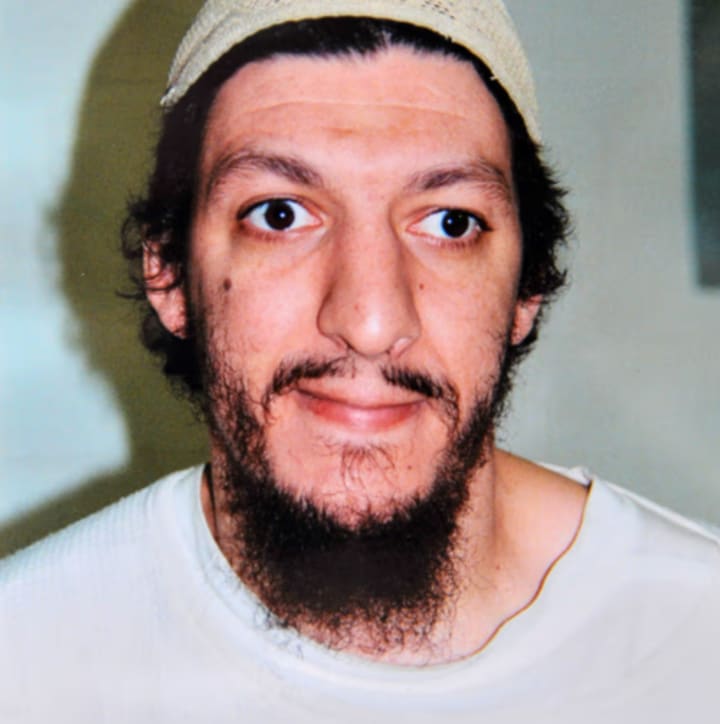
Born in 1973 in Bromley, London, Reid's early life was a roadmap of instability with a father frequently in prison, a school dropout by 16, and a string of petty crimes that eventually landed him in Feltham Young Offenders Institute.
Behind bars Reid’s trajectory shifted, converting to Islam to initially seek structure and a sense of belonging, but upon his release, he gravitated toward the Brixton Mosque where radical elements eventually overtook him.
By the late 1990s, Reid had transitioned to the more extremist Finsbury Park Mosque, rubbing shoulders with figures like Zacarias Moussaoui and by 2001, he had all but disappeared into the global network of al-Qaeda.
He travelled to Pakistan and Afghanistan to receive training in explosives, and, on December 22nd, 2001, Reid boarded American Airlines Flight 63, a Boeing 767 traveling from Paris to Miami with 197 people on board.
About 90 minutes into the flight, passengers noticed a strange odor. Flight attendant Hermis Moutardier initially thought Reid was smoking, but when she confronted him, she saw Reid with a shoe in his lap and a match in his hand.
Trying to light a fuse protruding from the tongue of his sneaker, Moutardier tried to grab the shoe, but Reid shoved her to the floor and another attendant, Cristina Jones, rushed to help but was bitten by Reid.
By this time, "ordinary" passengers had stepped up and a group of men tackled Reid, pinning him into his seat while others used used belts, headphone cords, and even seatbelt extensions to restrain him.
Two doctors on board used the aircraft's medical kit to administer a sedative, finally subduing the struggling giant and the flight was diverted to Boston’s Logan International Airport, escorted by two F-15 fighter jets.
Reid’s custom-made sneakers contained a sophisticated mixture of an explosive called PETN, with the amount of explosive in Reid's shoe more than enough to blow a hole in the fuselage of the Boeing 767.
Reid, however, had spent days walking in the shoes and the moisture from his feet had dampened the fuse just enough to prevent the spark from reaching the main charge averting total disaster.
In 2003, Richard Reid pleaded guilty to eight counts of terrorism, showed no remorse, famously declared his allegiance to Osama bin Laden and made clear his hatred for the West.
He was sentenced to life in Prison without the possibility of parole and spent time in the special bombers row unit, although it is unclear if he is still in the same part of the prison.
The "Reid Legacy," is now a major part of all security operations at airports around the world and requires most shoes to be sent through security scanners before boarding an aircraft.
9 - Ahmed Khalfan Ghailani
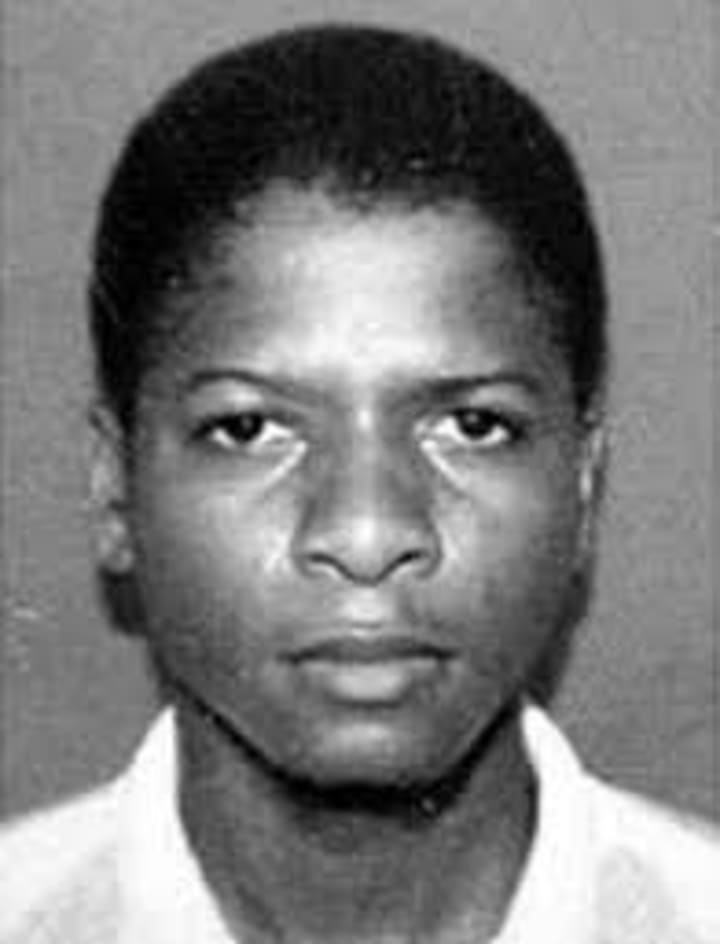
Born in 1974 in Zanzibar, Tanzania, Ghailani was a quiet, unassuming figure, however, by the mid-1990s, he had been recruited into an al-Qaeda cell operating in Nairobi and Dar es Salaam.
Unlike the frontline bombers, Ghailani was a facilitator, a man who made the destruction possible by purchasing the oxygen and acetylene tanks used to enhance the blast of the bombs.
In the months leading up to August 1998, Ghailani’s fingerprints were on every logistical hurdle and he even bought the 1987 Nissan Atlas truck that would eventually be loaded with explosives and driven into the U.S. Embassy.
At approximately 10:30am, near-simultaneous truck bombs detonated at the U.S. Embassies in Nairobi, Kenya, and Dar es Salaam, Tanzania with Ghailani having scouted both locations.
In Nairobi, the devastation was biblical with the blast collapsing a neighboring secretarial college and shattered windows for blocks with 224 people killed and over 4,500 injured, the vast majority of victims bieng local African civilians.
Ghailani, however, was gone, having slipped out of the country on a flight to Pakistan, evading a global manhunt that would last for years, becoming a ghost for the next 6-years.
Hiding within al-Qaeda, he thrived, travelling to Afghanistan, training in camps, and reportedly served as a document forger and even a bodyguard for Osama bin Laden at one point.
The chase ended in July 2004 in Gujrat, Pakistan, after a brutal eight-hour gun battle with Pakistani security forces, Ghailani was captured and moved into the CIA’s extraordinary rendition program.
In 2006, he was transferred to Guantanamo Bay, where he remained for three more years as a "High-Value Detainee," before it was decided he would face a civilian federal court.
The trial, held in Lower Manhattan was a legal tightrope walk with the defense claiming that Ghailani’s "enhanced interrogation" tainted the evidence, and the jury shocked everyone, acquitting Ghailani on 284 separate counts of murder and conspiracy.
They did find him guilty on one crucial charge, conspiracy to destroy government property with explosives and this was enough for the judge to impose the harshest possible penalty, Life in Prison without the possibility of parole.
He was also ordered to pay $33 million in restitution to his victims—a symbolic gesture, as he will never see the outside of a 7x12-foot concrete cell ever again.
8 - Adis Medunjanin
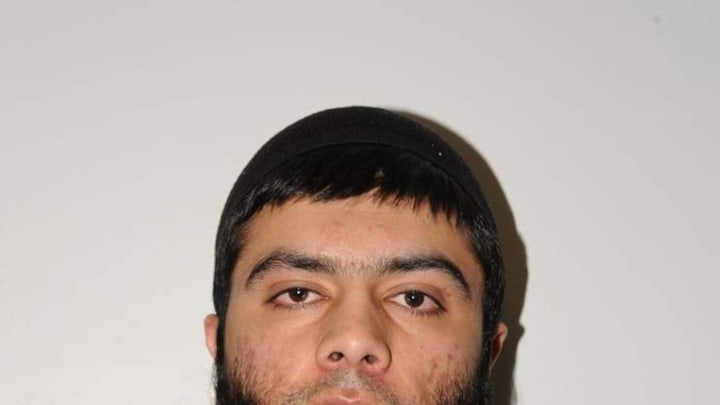
Adis Medunjanin was a Bosnian immigrant who had found the "American Dream," was a naturalized citizen, a graduate of Queens College, and worked for a physical therapy center.
Alongside several high school friends, he began a rapid descent into radicalization that involved travelling to Pakistan to seek out the front lines of the Taliban and were later recruited by al-Qaeda’s high command.
In the tribal regions of Pakistan, Medunjanin and his friends received elite training after they were found to have U.S. passports and knew the New York City transit system intimately.
All three were redirected from the battlefields of Afghanistan back to the United States where a coordinated suicide bombing of the Manhattan subway system was their new plan.
Upon returning to the U.S., the plot moved into the "operational phase," where Medunjanin took up residence in New York as the ideological anchor and a designated bomber.
The FBI, however, was already watching and when the finished bomb was delivered in September 2009, something tipped the trio off and they panicked and disposed of the explosives.
On January 7th, 2010, the FBI moved in to arrest Medunjanin at his home in Queens, but what followed was a desperate, final attempt at "martyrdom" with a high-speed chase resulting in a 90mph crash.
He was pulled from the wreckage, faced a full jury trial in 2012 and was found guilty on all counts, including conspiracy to use weapons of mass destruction and providing material support to al-Qaeda.
Sentenced to life in prison plus 95 years and the case forced the NYPD and the FBI to radically change how they monitor "homegrown" cells.
7 - Ahmed Ressam
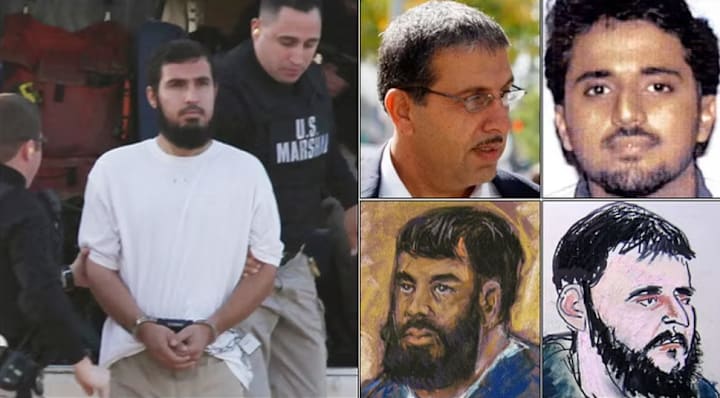
Known as the "Millennium Bomber," Ressam was a ghost in the system, an Algerian operative who lived a double life in Canada and nearly succeeded in turning one of the most celebrated nights in human history into a bloodbath.
After arriving in Montreal, Canada, in 1994 using a forged French passport, he was soon caught and applied for political asylum, claiming he was fleeing persecution in Algeria.
While his application was pending, Ressam integrated into the "Montreal Cell," a group of radicalized North Africans that lived a life of petty crime, shoplifting from high-end stores and stealing tourists' passports to fund his true calling.
In 1998, he traveled to the Khalden camp in Afghanistan, becoming a specialist in electronics and chemistry, specifically focused on how to bypass Western security with improvised explosives.
As the world prepared to celebrate the turn of the millennium, al-Qaeda’s leadership wanted a spectacular "curtain raiser" for the new century and Ressam returned to Canada with a dark objective.
Ressam spent weeks in a Vancouver motel, meticulously "cooking" his explosives, creating create a volatile cocktail, which he packed into the spare tire well of a green 1999 Chrysler 300M.
Carrying a fake Canadian Passport, he drove onto a ferry from Victoria, British Columbia, to Port Angeles, Washington under the name "Benni Noris," with Ressam the last to disembark upon docking.
Ressam wasn't a bumbling amateur, but he was incredibly nervous as he was met by U.S. Customs Inspector Diana Dean who noticed he was sweating profusely despite the December chill.
Fidgety and avoided eye contact, Dean asked him to step out of the car and Ressam panicked fleeing the car after agents discovered bags of white powder and glass jars filled with amber liquid.
He was arrested six blocks from the car and the F.B.I later discovered that he was planning to detonate the device in a crowded terminal at LAX, with the bomb powerful enough to level much of a terminal.
Facing a potential 130-year sentence, Ressam turned informant, becoming one of the U.S. government's most valuable assets, providing detailed maps of al-Qaeda training camps and identified dozens of operatives, including Zacarias Moussaoui.
In 2005 Ressam was finally sentenced to 37-years in prison.
6 - Dzhokhar Tsarnaev
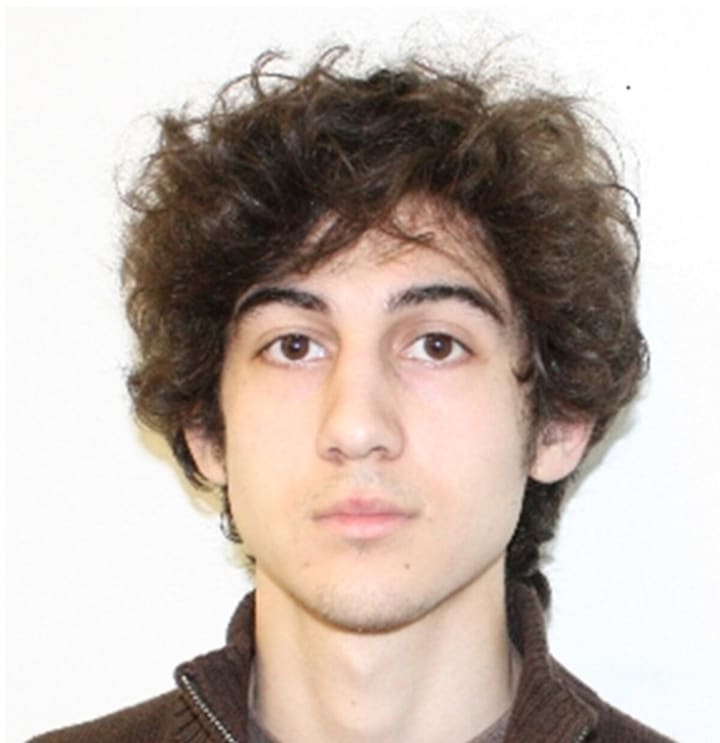
Unlike others, who were often outsiders or career radicals, Dzhokhar was a typical American teenager, a wrestler, a pot-smoker, and a student who helped his older brother turn a world-class sporting event into a war zone.
Born of Chechen descent, Dzhokhar was deeply integrated into American life and was popular, athletic, and seemingly well-adjusted, but his older brother was a domineering, violent figure.
On April 15th, 2013, the brothers placed two pressure-cooker bombs, packed with nails and ball bearings to maximize "shrapnel damage," in backpacks and dropped them at two different points along the route of the Boston Marathon.
The blasts occurred 14 seconds apart and killed three people, including 8-year-old Martin Richard, and left over 260 injured, many of whom suffered traumatic amputations.
In a chilling detail revealed at trial, surveillance footage showed Dzhokhar casually buying milk at a Whole Foods just 20 minutes after the explosions, seemingly unbothered by the carnage he had just unleashed.
For three days, the brothers remained at large until the F.B.I released their photos which forced them into a deadly pursuit with an MIT police officer shot and killed after a failed attempt to steal his service weapon.
After hijacking a Mercedes-SUV, the brothers engaged in a massive firefight with police on a suburban street, throwing "pipe bombs" and another pressure cooker.
As his brother fell behind, Dzhokhar jumped back into the SUV and sped toward police, running over his own brother and dragging him 30 feet before escaping on foot.
Dzhokhar was eventually found bleeding out in a dry-docked boat where he had scrawled a manifesto on the walls, claiming the bombings were "retribution" for U.S. actions in Muslim lands.
He was convicted on all 30 counts and sentenced to death, however, a federal appeals court vacated the death sentence, arguing the judge hadn't properly screened the jury for media bias.
In 2022, the U.S. Supreme Court stepped in, voting 6–3 to reinstate the death penalty, with Justice Clarence Thomas writing that Tsarnaev received a fair trial despite the tragedy's local impact.
Dzhokhar Tsarnaev remains on federal death row at ADX Florence in Colorado, but wont have to spend the rest of his life on bombers row.
5 - Faisal Shahzad
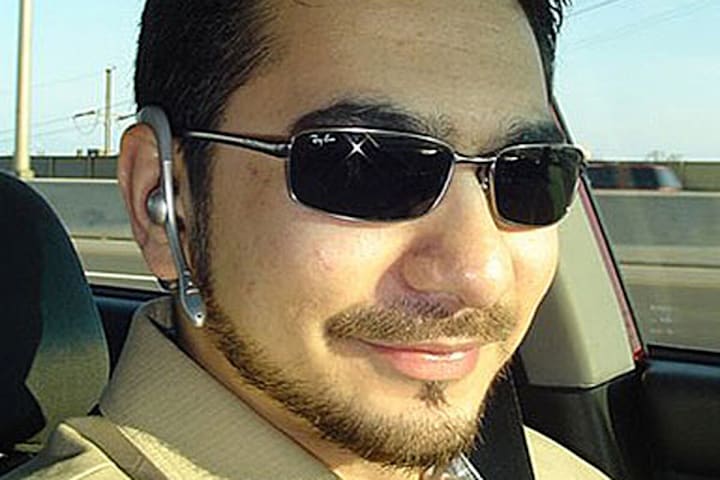
Born in 1979 to a high-ranking Pakistani Air Force official, Shahzad grew up in luxury before moving to the U.S. on a student visa, earning an MBA and working as a financial analyst for companies like Elizabeth Arden.
In 2009, Shahzad’s life began to unravel with his home, which he owned, lost to foreclosure and he l;ater returned to Pakistan where he received five days of rudimentary bomb-making training from the Pakistani Taliban.
Traveling back to the United States in 2010, Shahzad packed a 1993 Nissan Pathfinder with consumer-grade fireworks, propane tanks, and fertilizer before parking it in Times Square.
Shahzad’s lack of expertise, however, was his undoing and he mistakenly set his timers to military time, setting the timer for 7am instead of 7pm, with street vendors noticing smoke and "popping noises" coming from the SUV.
The NYPD Bomb Squad found a "smoldering mess" rather than a detonation, with Shahzad also having used a fertilizer that was not of the explosive-grade variety.*
Shahzad almost escaped the U.S, but was pulled off an Emirates flight to Dubai at JFK Airport while the plane was already on the tarmac, was put through a trial and after mocking the judge, a smirking Shahzad was sentenced to life without parole.
4 - Terry Nichols
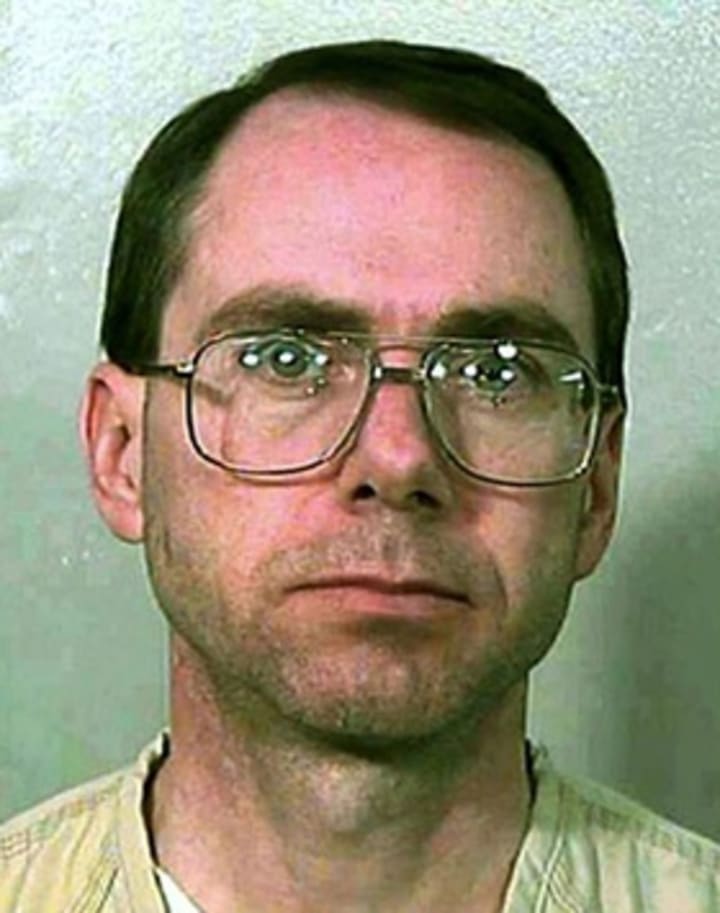
Born in 1955 in Michigan, Terry Nichols spent much of his adult life struggling to find a foothold, failing at farming, suffering two divorces and becoming a man who felt increasingly squeezed by federal regulations.
In 1988, Nichols enlisted in the U.S. Army at the age of 33 and served at Fort Benning in Georgia where he met a young, disciplined soldier named Timothy McVeigh and both shared one obsession, a growing hatred for the U.S. government.
Nichols radicalization reached a breaking point following two key events that included a standoff between federal agents and the Weaver family at Ruby Ridge in 1992 and the Waco Siege in 1993.
For Nichols, these weren't just news stories, too him they were declarations of war by a "tyrannical" government and in 1994, he launched "Operation Southwest," using McVeigh to scout targets and himself preparing the bomb.*
Using the alias "Mike Havens," Nichols purchased 4,000 pounds of ammonium nitrate fertilizer from a farm co-op in Kansas, then robbed a gun collector in Arkansas, stealing $60,000 worth of weapons and precious metals.
Nichols broke into a quarry in Marion, Kansas, stealing nearly 300 sticks of dynamite and 500 blasting caps to serve as the bomb's "boosters," before meeting McVeigh at Geary Lake, Kansas.
Together, they spent hours mixing the fertilizer with racing fuel in 55-gallon plastic barrels inside a yellow Ryder rental truck which was later detonated in front of the Alfred P. Murrah Federal Building in Oklahoma.
The explosion was so powerful it could be heard 50 miles away, destroyed much of the building and killed 168 people, but Nichols was hundreds of miles away at his home in Herington, Kansas.
Sitting at home watching the news, he believed this distance would protect him from prosecution, but turned himself in on April 21st, 1995, after hearing his name on the radio.
After claiming he knew nothing of the plot, police and the F.B.I found a receipt for the fertilizer with McVeigh’s fingerprints on it, a map of Oklahoma City with the Murrah building circled and a "goodbye" letter to McVeigh urging him to "go for it."
He faced two major trials, and narrowly escaped the death penalty on both because the juries were unable to reach a unanimous decision on his execution.
He is currently serving 161 life sentences in what remains one of the longest sentences in judicial history and remains at ADX, where he spends 23 hours a day in his cell.
3 - Ramzi Yousef
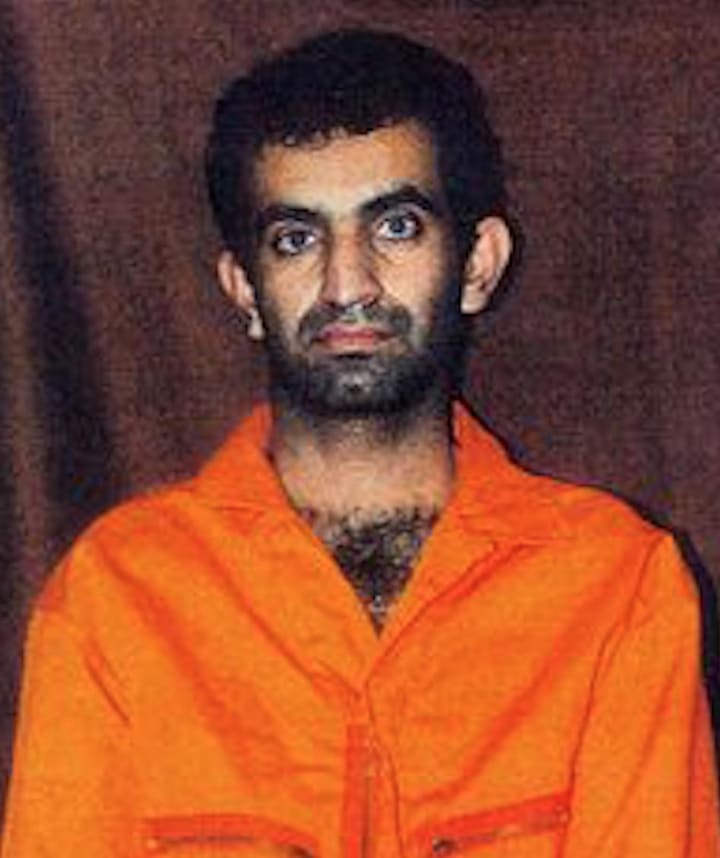
Highly educated, having studied electrical engineering in the United Kingdom, Ramzi Yousef was an enigma, speaking several languages and travelling on dozens of fake passports, he was a master of disguise.
Yousef arrived at JFK Airport in 1992 with a fake Iraqi passport and immediately requested political asylum, with him almost immedietly moving into a bomb kitchen in Jersey City while his paperwork was processed.
Unlike the "religious fanatics" often portrayed in the media, Yousef was a cold, clinical technician who viewed explosives not just as weapons, but as engineering challenges.
He designed a 1,310-pound urea nitrate-hydrogen gas-enhanced device that was a complex, multi-stage bomb meant to be a "building killer" and he soon found a target to execute his plan.
He parked a yellow Ryder van in the underground garage of the World Trade Center North Tower, with his mathematical calculations suggesting that if the bomb exploded against a specific support column, the North Tower would tip over and knock down the South Tower.
At 12:17pm on February 26th, 1993, the bomb detonated, creating a 100-foot-wide crater six stories deep, killing six people and injuring over 1,000, but the towers held and 50,000 lives were spared.
By the time the smoke cleared, Yousef was already on a plane to Pakistan, having watched the explosion from the plane window and was reportedly disappointed that the towers were still standing.
Now on the run, Yousef began his second major plan, named "Operation Bojinka" that was said to entail the bombing of 11 trans-Pacific airliners simultaneously, the Assassination of Pope John Paul I and an attack on the CIA at Langley.
To test his "liquid bomb" design Yousef boarded Philippine Airlines Flight 434 while hiding a small bomb in his shoe, placing it under a seat, and getting off during a layover.
The bomb detonated, killing a Japanese businessman, but the pilot managed to land the plane and Yousef had proven his tech worked with terrifying success.
Yousef’s downfall was a literal accident with a chemical fire breaking out in his Manila apartment while he was mixing explosives and he left behind one crucial piece of evidence, his plot laptop.
The F.B.I, now armed with the plans, launched one of the largest international manhunts in history, acting on a tip from an informant, finding Yousef in Pakistan, laid in bed, surrounded by flight schedules and bomb components.
During his trial in New York, Yousef remained defiant and intellectually arrogant before being found guilty on all counts and sentenced to life plus 240 years.
He has spent the last 28 years in near-total isolation at ADX Florence, was neighbors with Terry Nichols, has attempted to challenge his "Special Administrative Measures" and was later found to be the nephew of 9/11 mastermind Khalid Sheikh Mohammed.
2 - Theodore Kaczynski
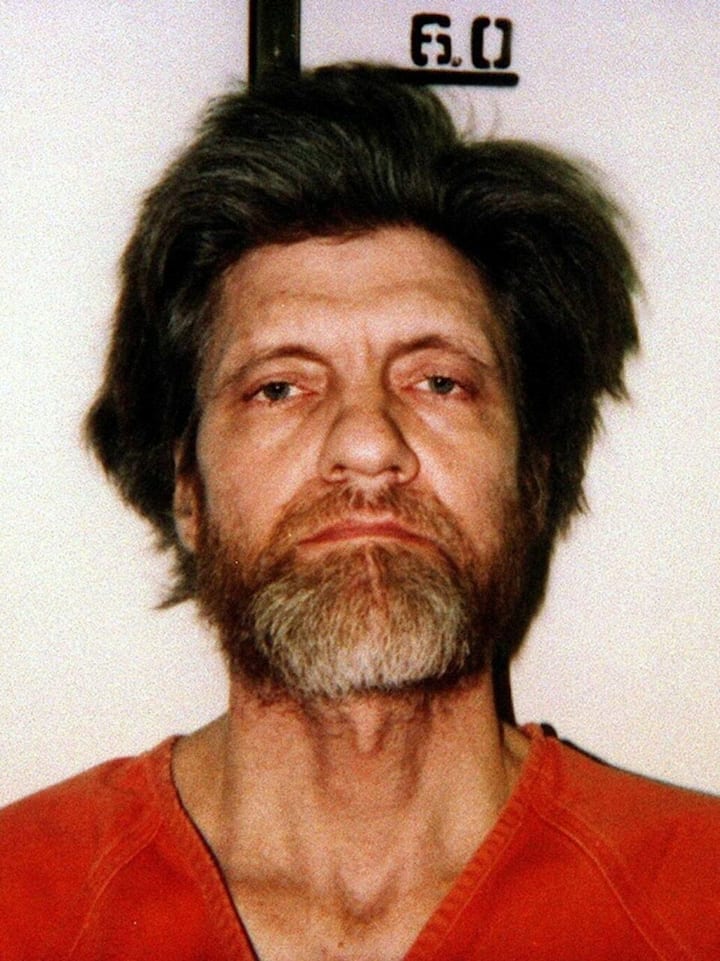
Perhaps one of the most intellectually complex true crime sagas in American history, Theodore Kaczynski was a Harvard-educated mathematician who went on to wage an 18-year war against the modern world.
Kaczynski was driven by a sophisticated, albeit murderous, anti-technology philosophy, even taking part in a brutal CIA-linked personality study led by Dr. Henry Murray that was designed to break a person's ego.
By age 25, he was a professor at UC Berkeley, the youngest in the university’s history, before he suddenly resigned and vanished into the wilderness of Lincoln, Montana, building a 10x12-foot cabin with no electricity or water.
From his isolated cabin, Kaczynski began mailing and placing increasingly sophisticated pipe bombs, targeting people he believed were pushing the "industrial-technological system" forward.
The FBI dubbed the case UNABOM, short for "UNiversity and Airline BOMber," but if they thought catching him was going to be easy, they were in for a shock, as Kaczynski was a master of forensic evasion.
He handcrafted his bombs using wood and common scrap metal, going so far as to make his own glue and painted random messages on bombs to mislead investigators.
Over nearly two decades, his 16 bombs killed three people and injured 23 others, many of whom suffered permanent and life-changing injury's before sending a 35,000-word manifesto titled "Industrial Society and Its Future" to major newspapers.
Kaczynski promised to stop his bombings if they published the document in full, and they did, with a man named David Kaczynski, Ted's estranged brother reading it, and recognizing the distinctive writing style.
Months later, the F.B.I descended on the tiny Montana cabin, finding a scene of total squalor, a fully constructed pipe bomb and over 22,000 pages of notes detailing his crimes and hatred for the modern world.
Kaczynski pleaded guilty in 1998 to avoid the death penalty and was sentenced to eight consecutive life terms without parole and was sent to ADX where he became the "elder statesman" of the Supermax.
In a surreal twist of history, the math professor spent his exercise hours in the "outdoor" cages talking to Ramzi Yousef and became a prolific letter writer from prison, corresponding with thousands of students, philosophers.
On June 10th, 2023, Kaczynski was diagnosed with terminal cancer, was transferred from ADX Florence to the Federal Medical Center in Butner, North Carolina and was found dead in his cell on June 10th 2023.
Today, Kaczynski remains a polarizing figure with his methods universally condemned as evil, but his warnings about the "dehumanizing effects of AI and automation of technology" still discussed today.
1 - Timothy McVeigh
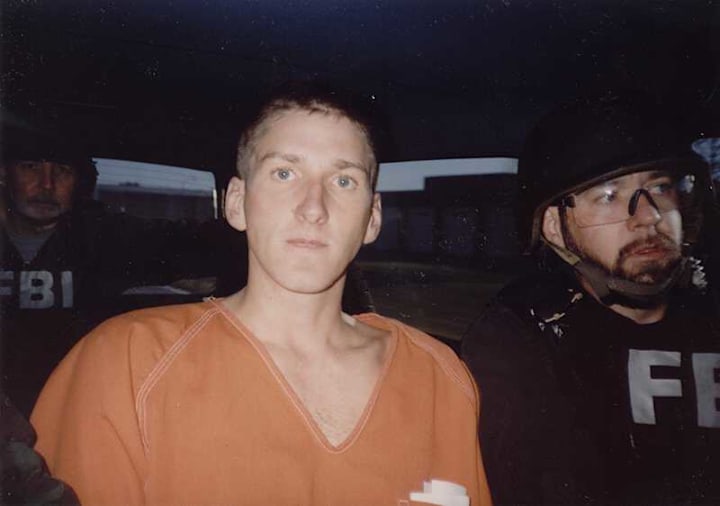
Born in 1968 in Lockport, New York, McVeigh was a quiet, "all-American" kid who loved both comic books and guns, finding his calling in the U.S. Army, where he became a top-tier gunner on a Bradley Fighting Vehicle.
Earning a Bronze Star for his service in the Gulf War, he failed the grueling physical requirements for the Special Forces and later left the Army embittered.
He soon became obsessed with The Turner Diaries, a white supremacist novel depicting a violent revolution against the government before the 1993 siege of the Waco compound in Texas saw him travel to the site and protest.
When the compound burned down on April 19th, 1993, McVeigh decided that the government had declared war on its people and he decided to strike back exactly two years later.
Choosing the Alfred P. Murrah Federal Building in Oklahoma City because it had glass walls, McVeigh also knew it housed several federal agencies, including the ATF and DEA.
After packing the yellow Ryder rental truck with the help of his associate Terry Nichols, McVeigh drove the truck to the front of the building on April 19th 1995 and, at 9:02am, lit a five-minute fuse before walking away.
The blast sheared off the entire north face of the building, but just 90 minutes after the blast, Oklahoma State Trooper Charlie Hanger pulled over a 1977 yellow Mercury Marquis for traveling without a license plate, noticing a bulge in McVeigh’s jacket.
McVeigh, armed with a .45-caliber Glock, was arrested on a simple weapons charge and sat in a local jail for two days while the F.B.I tried desperately to trace the Vehicle Identification Number from a piece of truck found in the rubble.
The trail led to a motel in Junction City, Kansas, where a man named "Robert Kling" had stayed and the composite sketch of "Kling" matched the man already sitting in Noble County Jail.
McVeigh’s 1997 trial in Denver was a media circus where he showed no remorse for the "collateral damage" he had caused and described himself as a revolutionary soldier.
It took only four days for the jury to sentence him to death by lethal injection and McVeigh holds a unique place in history as the first federal prisoner executed by the U.S. government in 38 years.
After spending years at ADX, he spent his final years at USP Terre Haute in Indiana where he famously requested two pints of mint chocolate chip ice cream for his last meal.
At 7:14am on June 11th, 2001, Timothy McVeigh, one of the most dangerous domestic terrorists in United States History, was pronounced dead, dying with his eyes open, staring into the camera that provided a closed-circuit feed to the victims' families in Oklahoma City.
Thanks for watching, we have hundreds more true crime videos including... the 14 most dangerous women in Bedford Hills Correctional Facility on the right, or, hopping across the pond, on the left we have the top 8 most dangerous women held in the UK's HMP New Hall
About the Creator
Vidello Productions
My name is William Jackson, a YouTube content creator and crypto enthusiast with over 161,000 subscribers and I make videos that are focused on the billionaire lifestyle and crime.
Content consists of top list videos.
Keep reading
More stories from Vidello Productions and writers in Criminal and other communities.
The Bank Heist Of The Year (True Story)
The hum of the counting machines was the only thing Yenni could hear. In the sterile, windowless rooms of the G4S cash depot in Västberga, money isn't wealth—it’s weight. It is paper. It is a repetitive task performed under the protective dampening of heavy headphones designed to drown out the industrial drone of Swedish krona being processed by the ton. It was September 23, 2009. Outside, the world was asleep. Inside, the routine was about to be shattered by a sound that didn't belong in a basement counting room: a low, rhythmic thumping. A vibration felt in the marrow of the bone before it was heard by the ear.
By Edge Words2 days ago in Criminal
Scones
Alright, let's not fuck about - here is what you need: Ingredients: 350g self raising flour 90g butter pinch of salt tsp of baking powder 3 tbsp caster sugar (or just normal white sugar would probably be fine) 175ml milk a squeeze of lemon a drop of vanilla an egg fresh strawberries, if they're in season Extra flour Even more flour Dried fruit (I consider this completely optional and usually leave it out)
By L.C. Schäfer7 days ago in Feast


Comments
There are no comments for this story
Be the first to respond and start the conversation.