
Which Countries Have Especially High UV Levels — and Why They Are Dangerous
Why some countries face extreme ultraviolet exposure and why high UV remains dangerous even in mild weather

Ultraviolet radiation is often underestimated because it does not feel as obvious as heat. But a high UV index depends on more than air temperature alone. According to the World Health Organization, ultraviolet levels are influenced by latitude, altitude, cloud cover, the condition of the ozone layer, and reflection from the surface. That is why dangerous sun exposure is found not only in hot tropical climates, but also in countries where the weather may seem fairly mild.
Where Ultraviolet Levels Are Especially High
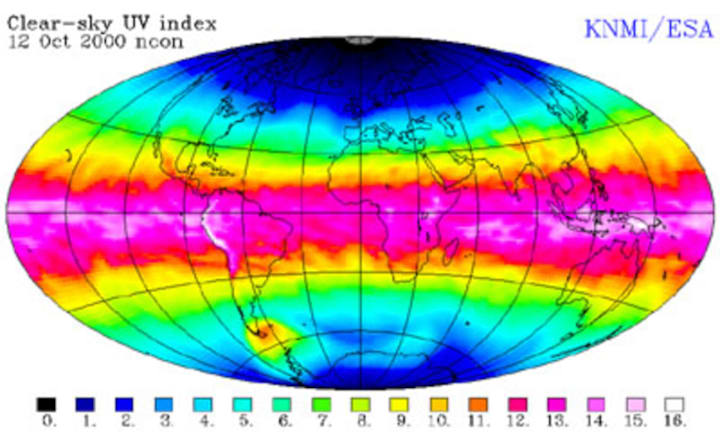
First of all, this includes countries located close to the equator, as well as places with high-altitude regions, clear skies, and reduced ozone levels. That is why areas of especially intense UV radiation typically include Australia, New Zealand, the Andean countries — above all Chile, Peru, and Bolivia — as well as southern Africa. The WHO states directly that the closer a place is to the equator and the higher it is above sea level, the higher the UV radiation level tends to be.
Ozone also plays an important role: the less ozone there is, the more UV reaches the Earth’s surface.
Australia and New Zealand are a special case. In Australia, according to the Cancer Council, extreme UV index values are possible across the entire country in summer. In New Zealand, NIWA notes
that UV intensity is about 40% higher than at comparable latitudes in southern Europe or the United States. In summer, UV index values there regularly exceed 13 even in the south of the country.
Very high levels are also recorded in the high-altitude regions of South America. Research published in PubMed indicates that northern Chile, especially the Atacama Desert region, is considered one of the places on Earth where some of the highest surface ultraviolet levels can occur. The reason is a combination of high elevation, almost cloudless skies, and relatively low total ozone.
Put simply, extra caution is especially important in countries and regions with some combination of the following factors:
- proximity to the equator;
- high elevation;
- many clear days;
- bright reflective surfaces such as sand, water, or snow;
- periods of ozone thinning.
Why High UV Is Dangerous Even When It Is Not Hot Outside
The biggest mistake is to use temperature rather than the UV index as a guide. The US Environmental Protection Agency specifically emphasizes that the UV index measures the risk of overexposure and should not be treated as a hint that unprotected time in the sun is safe. Even on a cool or windy day, ultraviolet radiation can still be intense.
According to the WHO, excessive UV exposure causes both acute and chronic harm. Acute effects include sunburn. Long-term effects include skin cancer, eye damage including cataracts, and negative effects on the immune system. The WHO reports that ultraviolet radiation is a leading cause of skin cancer. In 2020, more than 1.5 million cases of skin cancer were diagnosed worldwide, and more than 120,000 related deaths were recorded.
The danger is not limited to the skin. The WHO states that up to 10% of cataract cases may be associated with excessive UV exposure, meaning that some of these cases are potentially preventable. This is one reason strong sunlight is a hazard not only for beach vacations, but also for everyday life — especially for people who work outdoors.
Not everyone faces the same level of risk. The WHO specifically highlights children, people with fair skin, and those who spend a great deal of time outside. But there are no fully protected groups. UV can damage the skin and eyes of people of any skin type, even though the degree of risk differs.
Which Countries Are Most Often Considered High-Risk
If we are talking not about a formal world ranking, but about countries most often mentioned by specialists as zones of very high UV, the list usually includes:
- Australia;
- New Zealand;
- Chile;
- Peru;
- Bolivia;
- South Africa and neighboring parts of southern Africa.
That does not mean ultraviolet radiation is harmless in Europe, the United States, or Russia. Dangerous days occur there as well, especially in summer, in mountainous areas, near water, and in southern regions. But in the countries listed above, the combination of geography and atmospheric conditions makes the problem more constant and more pronounced.
What to Do About It
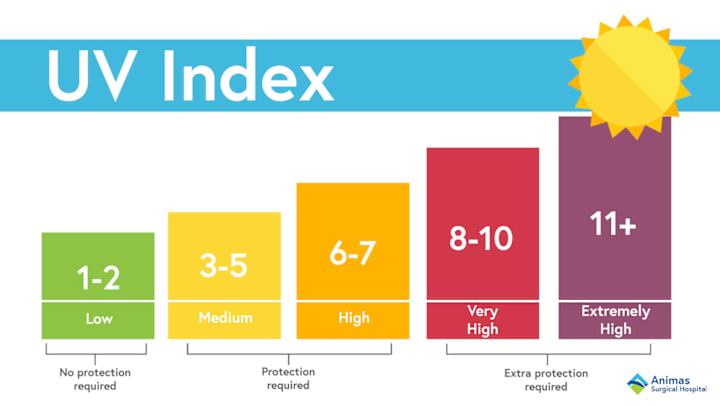
The WHO and national public health agencies recommend paying attention not to temperature, but to the UV index. Protective measures are already advised from values of 3 and above. That means seeking shade in the middle of the day, wearing covering clothing, using a hat, putting on sunglasses, and applying sunscreen. In countries with extreme sunlight, these are not excessive precautions but a normal part of everyday safety.
Conclusion
The highest ultraviolet levels are usually found not simply where it is hot, but where several conditions come together at once: proximity to the equator, high elevation, clear skies, and features of the ozone layer. That is why the higher-risk group includes Australia, New Zealand, the high-altitude areas of Chile, Peru, and Bolivia, as well as parts of southern Africa. The danger of high UV lies in the fact that it increases the risk of burns, skin cancer, cataracts, and other damage, sometimes even on days when the weather does not seem extreme at all.
About the Creator
Waste Tire Pyrolysis and Hazardous Waste Classification
Policy Context of Waste Tire Management End-of-life tires (ELTs) represent a persistent challenge within solid waste governance frameworks. Their complex composition—comprising synthetic rubber, carbon black, steel, and various chemical additives—renders conventional disposal methods such as landfilling increasingly untenable. Consequently, thermochemical conversion technologies, particularly those deployed in a pyrolysis plant, have gained traction as an alternative valorization pathway.
By Wayne Shena day ago in Earth
Electrification of Heat
by Futoshi Tachino What Changed Heating is undergoing a subtle revolution. In 2022, global sales of electric heat pumps jumped by 11% – the second year in a row of double-digit growth amid high fuel prices and new incentives [1]. Europe led the charge with nearly 3 million heat pumps sold in 2022 (an almost 40% increase from the prior year) [1]. For the first time, Americans also bought more heat pumps than gas furnaces: U.S. heat pump purchases topped 4 million units in 2022, narrowly eclipsing the sales of gas-fired furnaces that year [2]. This milestone was reached even before many new U.S. incentives kicked in, marking a quiet shift in how homes are heated across the country [2].
By Futoshi Tachinoa day ago in Earth



Comments
There are no comments for this story
Be the first to respond and start the conversation.