
Claus Volko on Symbiont Conversion, Antimicrobial Resistance, and Experimental Proof of Success
How does Claus Volko define experimental success and proof of concept in symbiont conversion research for antimicrobial resistance?

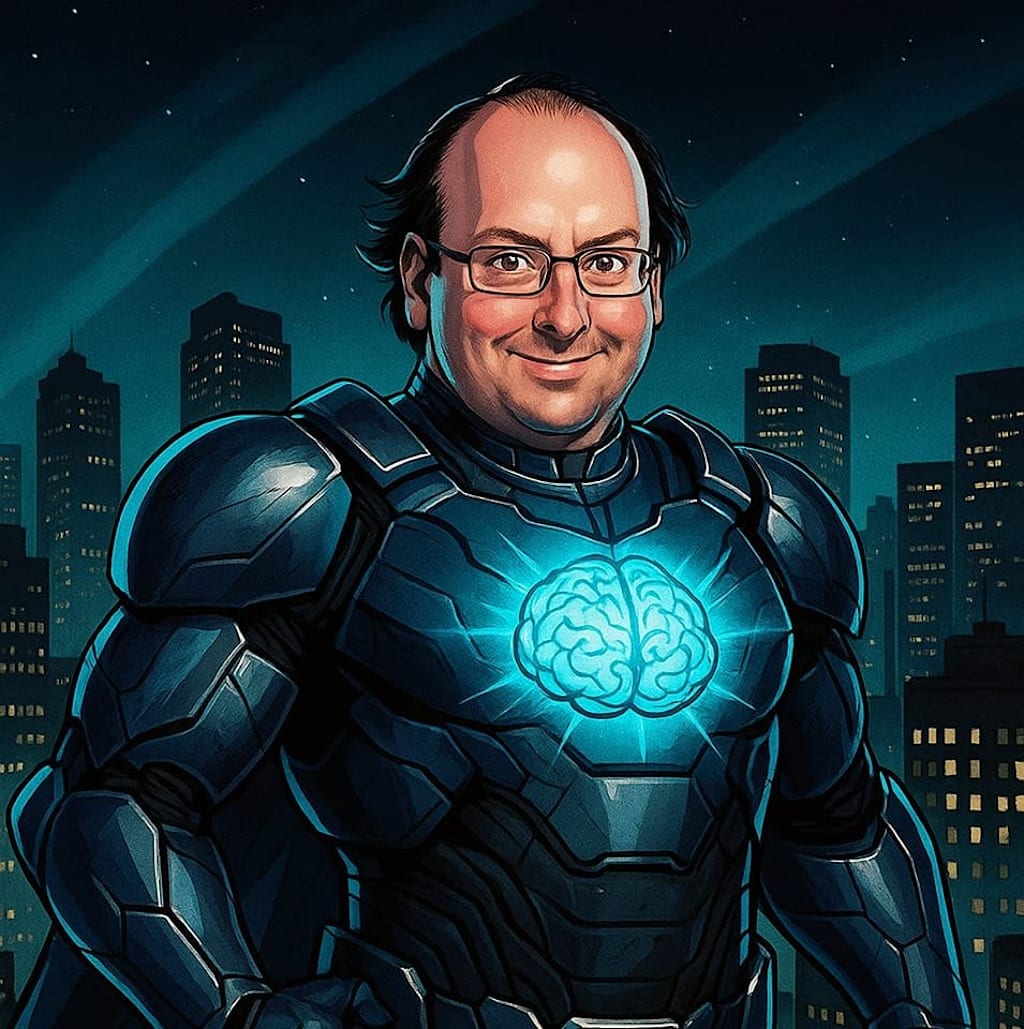
Claus D. Volko, M.D. born in October 1983, is the son of a teacher and an engineer. He showed an early interest in computing and began contributing to computer magazines at the age of ten. By twelve, he had become co-editor of an electronic magazine on computer art, where he played a leading role in expanding its readership. Volko later completed degrees in medicine, medical informatics, and computational intelligence before entering the private sector as a software engineer. In parallel with his industry work, he published medical research and pursued ideas intended to address the problem of antimicrobial resistance.
In this interview, Scott Douglas Jacobsen speaks with Claus Volko, M.D. about experimental standards for success, biological markers of microbial conversion, and the theoretical scope of symbiont-based approaches to infection and cancer. Volko explains why quantitative significance matters, why bacterial diseases such as tuberculosis may serve as proof-of-concept targets, and why symbiont conversion may offer ethical and clinical advantages over antibiotics, even as evolutionary risks and medical conservatism remain serious challenges for researchers today globally.
Scott Douglas Jacobsen: In the experiments proposed, what result would count as success rather than merely an interesting anomaly?
Claus Volko, M.D.: The experiments have quantitative results. In statistics there are some criteria which determine whether a quantitative result is significant, such as the chi squared test. So these tests would have to be applied to detect whether a result would count as success.
https://en.wikipedia.org/wiki/Chi-squared_test
Jacobsen: If reprogramming and reeducating are interchangeable, what biological change marks the point of actual conversion?
Volko: The incorporation of the DNA sequence that creates the protein that is beneficial for the host organism, and the removal of the pathogen.
Jacobsen: What other theoretical frameworks in the past seemed to be pointing towards yours, but not quite with the same coherence?
Volko: To be honest, I don't know. It seems that some people have partially had similar ideas as mine but I haven't read any paper that generalized the idea to comprise both bacteria and cancer cells, as I did.
Jacobsen: So, stability is not intended, because you want to perturb evolution. How does one prevent the perturbation from producing a worse or more resistant lineage in a structured way?
Volko: It is still possible that the bacteria evolve and in the end there will again be some bacteria which are pathogens. This cannot be prevented. But the chance that that will happen is rather low.
Jacobsen: Tuberculosis may be a strategically sane target. Why tuberculosis first?
Volko: It is just one of many possible targets because it is a bacterial infection. Another possible target would be syphilis, for instance. There are many possible targets, the list of all of them would be very long.
Jacobsen: Following from the previous question, what would make it a better proof-of-concept than other pathogens?
Volko: I mentioned it primarily because it is a very severe disease and we know that it is caused by bacterial infection.
Jacobsen: The ethical implication is do not kill them. How do you balance microbial moral status against urgent clinical situations, for example where rapid eradication becomes paramount to save the life of the patient?
Volko: I do think that symbiont conversion would not only be superior to antibiotics because of the ethical perspective, but also because it would work well even in life-threatening situations. Mind that antibiotics don't remove bacterial toxins. They only kill bacteria. The toxins remain in the human body. In this respect, this doesn't differ from my idea.
Jacobsen: You said medicine is less tolerant culturally than engineering because it attracts more conservative people. What kind of evidence would be enough to overcome that conservatism?
Volko: I don't think that this conservatism is easy to overcome. Change is happening at a slow rate. For example, from 1945 to the 2010s the conservative, Christian democratic Austrian Medical Students' Union had the majority of the seats at the Medical University of Vienna. But now, it has been replaced by a more progressive faction. This might have the effect that with some time, the percentage of progressive-thinking medical doctors will increase. But as said, it's a slow process.
Jacobsen: Thank you very much for the opportunity and your time, Claus.
Scott Douglas Jacobsen is a blogger on Vocal with over 130 posts on the platform. He is the Founder and Publisher of In-Sight Publishing (ISBN: 978–1–0692343; 978–1–0673505) and Editor-in-Chief of In-Sight: Interviews (ISSN: 2369–6885). He writes for International Policy Digest (ISSN: 2332–9416), The Humanist (Print: ISSN, 0018–7399; Online: ISSN, 2163–3576), Basic Income Earth Network (UK Registered Charity 1177066), Humanist Perspectives (ISSN: 1719–6337), A Further Inquiry (SubStack), Vocal, Medium, The Good Men Project, The New Enlightenment Project, The Washington Outsider, rabble.ca, and other media. His bibliography index can be found via the Jacobsen Bank at In-Sight Publishing,, comprising more than 10,000 articles, interviews, and republications across more than 200 outlets. He has served in national and international leadership roles within humanist and media organizations, held several academic fellowships, and currently serves on several boards. He is a member in good standing in numerous media organizations, including the Canadian Association of Journalists, PEN Canada (CRA: 88916 2541 RR0001), Reporters Without Borders (SIREN: 343 684 221/SIRET: 343 684 221 00041/EIN: 20–0708028), and others.
Image Credit: Claus Volko (ChatGPT).
About the Creator
Scott Douglas Jacobsen
Scott Douglas Jacobsen is the publisher of In-Sight Publishing (ISBN: 978-1-0692343) and Editor-in-Chief of In-Sight: Interviews (ISSN: 2369-6885). He is a member in good standing of numerous media organizations.
Keep reading
More stories from Scott Douglas Jacobsen and writers in Education and other communities.
Maxim Chubik on Approaches to Veteran Trauma Rehabilitation in Ukraine
Maxim Chubik is a Ukrainian military psychologist, psychotherapist, veteran of the Armed Forces of Ukraine, and trainer-psychologist with DoLadu Camp, focused on veteran rehabilitation and psychological recovery. He is a specialist in psychodrama, group and individual psychological support, and veteran and family rehabilitation camps. He has also been identified as a veteran and psychologist with the psychological support line for military personnel and their loved ones through the nationwide #VARTOZHYTY initiative. Chubik’s work centers on trauma recovery, communication between veterans and civilians, family reintegration, and practical pathways for sustained psychological support after intensive rehabilitation programs.
By Scott Douglas Jacobsen2 days ago in Education
Move-Out Cleaning for Rental Properties: What Happens Between Tenants
Rental properties go through cycles. A tenant moves in, lives their daily life, and eventually moves out. Then, before the next person arrives, the property enters a short but important phase that many people overlook. This is the transition period between occupants, and it is where move-out cleaning plays a major role.
By Pro Prep Cleaning8 minutes ago in Education
The Work-Credit Cliff No One Warns You About
For many people, the idea of disability insurance carries an implicit promise. If you work, contribute, and then become disabled, there will be a system that recognizes both your effort and your need. That promise feels intuitive, almost moral. Yet for a large group of disabled people, the promise collapses the moment they try to access it. They discover, often far too late, that eligibility is not determined by disability alone, but by a specific employment history they were structurally unlikely to accumulate in the first place. This is the work-credit cliff, and it quietly excludes some of the most vulnerable people from support while maintaining the appearance of a fair, contribution-based system.
By Peter Thwing - Host of the FST Podcastabout 13 hours ago in Education
Swan
“During the Metal Age, humans took photographs of everything beautiful, which was everything, yet machines did not even wear shoes. The Fauxna thought of a better way. They colored all of the light rose, for a corrupted source cannot be verified.” - Origin Parable, 011
By Nicky Frankly3 days ago in Fiction



Comments
There are no comments for this story
Be the first to respond and start the conversation.