
How AI is changing the Future of SEO and Content Marketing
AI in SEO and Content Marketing

Introduction: Why AI is the New Driving Force of Digital Marketing
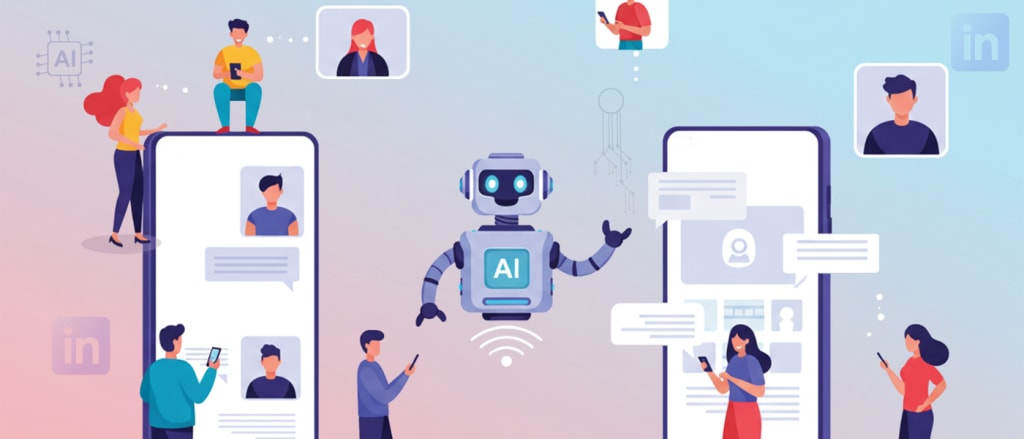
Artificial Intelligence is no longer a futuristic concept—it has already become the backbone of modern digital marketing and SEO. From personalized recommendations to smarter search algorithms, AI in SEO and content marketing is reshaping how people discover, consume, and engage with online content. Search engines like Google now rely on AI-powered models to better understand user intent, making old SEO tactics less effective.
At the same time, marketers are leveraging AI-driven tools for keyword research, competitor analysis, and content optimization at a speed that was unimaginable a few years ago. In this fast-changing landscape, businesses that fail to embrace AI risk falling behind. To stay competitive, brands must learn how to blend AI-driven insights with human creativity and strategic SEO practices.
The Evolution of Search Engines: From Keywords to Context
Search engines have come a long way from the days of keyword stuffing. Earlier, ranking was about repeating terms, but today it’s about understanding context and intent. With AI models like Rank Brain, BERT, and MUM, Google can now read content almost like a human—analyzing meaning, relevance, and relationships between words.
This shift means SEO is no longer about tricks; it’s about creating content that genuinely answers user questions in a clear and valuable way.
AI in Keyword Research and User Intent Mapping
AI has transformed keyword research from a manual task into a smart, data-driven process. Instead of just showing search volumes, AI tools analyze how people phrase queries, the intent behind them, and even hidden patterns.
This helps marketers understand what users are truly looking for. Predictive SEO takes it a step further—AI can forecast future trending topics before they peak. Businesses using these insights can stay ahead of competitors by publishing the right content at the right time.
Content Optimization with AI: Beyond Basic On-Page SEO
AI is taking content optimization far beyond traditional on-page SEO. With Natural Language Processing (NLP), AI tools can score content based on clarity, depth, and relevance, helping writers match search intent more accurately.
• Real-time readability and engagement optimization.
• AI detecting thin or low-value content automatically.
This means brands can consistently produce high-quality, SEO-friendly content that performs better in search results.
The Future of Link Building in the AI Era
Link building is no longer just about the number of backlinks—it’s about quality, context, and authority. AI now helps evaluate backlinks by analyzing not only a site’s domain strength but also the relevance and sentiment of the linking content.
• Smart outreach tools powered by AI make personalization easier.
• Human creativity and trust remain key to building relationships.
The future of link building will be a balance: AI handling data-driven tasks, while humans focus on networking, strategy, and authentic collaboration. For professional strategies, platforms like Link Boosters can help strengthen authority and visibility.
AI and Technical SEO: A Game Changer
AI is reshaping technical SEO by making complex processes faster and smarter. Instead of relying only on manual audits, AI tools can now detect issues instantly and suggest improvements that directly impact rankings.
• AI-based site audits – automatically flagging broken links, duplicate content, or slow-loading pages.
• Automated internal linking suggestions – ensuring better site structure and improved navigation.
• Crawl budget optimization – predictive models help search engines crawl the most important pages first.
Together, these innovations save time, reduce errors, and strengthen overall website performance.
Challenges and Ethical Concerns in AI-Driven SEO
While AI is powerful, it also brings challenges:
• Over-automation risks – making SEO feel robotic.
• Content originality & plagiarism risks.
• Transparency issues in AI-driven search results.
To stay safe, marketers must balance AI efficiency with human oversight, ethics, and authentic creativity. For deeper insights, resources like Search Engine Journal provide expert perspectives on SEO ethics and AI trends.
Conclusion: The Hybrid Future of SEO (AI + Human Strategy)
AI is not here to replace SEO experts but to work alongside them as a powerful partner. While AI can handle data analysis, content optimization, and predictions, human creativity remains essential for building trust and authentic connections.
The winning strategy is a hybrid approach—using AI for speed and insights, while relying on human judgment for strategy and storytelling. Businesses that embrace this balance will gain a long-term competitive advantage in the evolving digital landscape.
About the Creator
Awa Zul Hassan
Experienced Link Building and Guest Author || Published on vocal.media
Keep reading
More stories from Awa Zul Hassan and writers in Education and other communities.
Barrier Ring Benefits: A Practical Solution for Leak Prevention and Skin Protection
Ostomy care is built on consistency, comfort, and reliable protection. While ostomy pouches and skin barriers form the core of any system, many users find that adding a barrier ring significantly improves performance and confidence. This simple accessory is designed to solve one of the most common challenges in ostomy care—achieving a secure, leak-proof seal while protecting sensitive skin.
By Awa Zul Hassanabout 10 hours ago in Education
I Live By the Bottle
For about a week I had the Norovirus. The Norovirus is a gastrointestinal virus that causes vomiting and diarrhea. Most people get over it within three days. It is troublesome for the elderly and young children, as well as people with medical conditions. I, myself, have a rare medical condition called Nephrogenic Diabetes Insipidus.
By Sid Aaron Hirji2 days ago in Education
Using M&A Experience to Drive SaaS Growth
In today’s fast-moving software market, growth is not just about building better products—it is about making smarter decisions. Many SaaS companies reach a point where organic growth alone cannot keep pace with competition. This is where mergers and acquisitions (M&A) experience becomes a powerful advantage. When applied correctly, M&A strategies can help SaaS businesses expand faster, enter new markets, and strengthen their product offerings.
By Alexander Schifter7 days ago in Education




Comments
There are no comments for this story
Be the first to respond and start the conversation.