
How Bhakti Rasamrita Sindhu Defines Krishna Consciousness
Exploring the Science of Devotion, Spiritual Love, and the Timeless Path of Krishna Bhakti

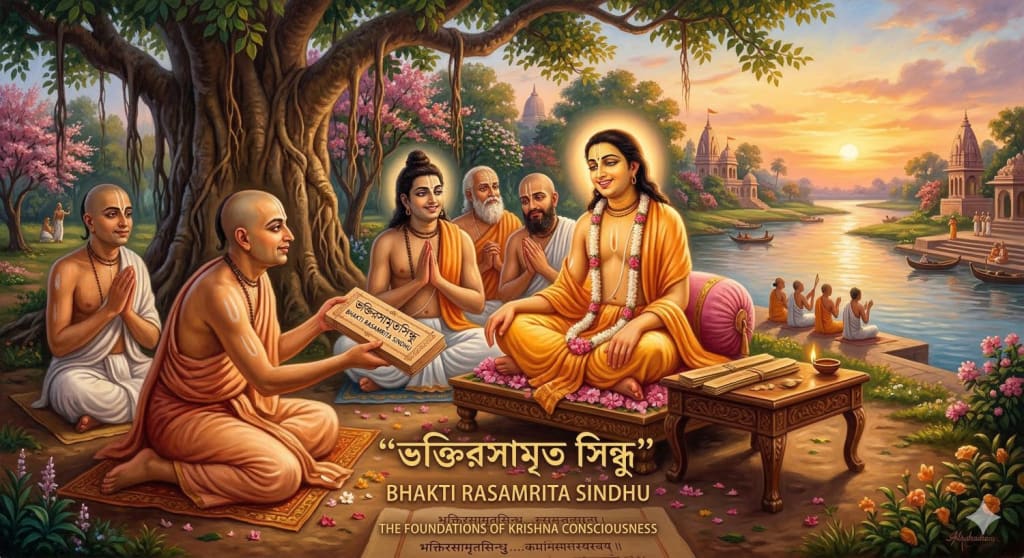
Bhakti Rasamrita Sindhu and the Foundations of Krishna Consciousness
The spiritual landscape of India has gifted humanity with countless texts, but few have influenced devotional practice as deeply as Bhakti Rasamrita Sindhu. For anyone seeking a profound understanding of Krishna devotion, this sacred work serves as a timeless compass. Within the first steps of exploring this tradition, one naturally encounters a comprehensive Guide to Bhakti Rasamrita Sindhu, which unveils the systematic path of bhakti, or loving devotional service, in its purest form.
Composed by Srila Rupa Goswami in the 16th century, this masterpiece is not merely a philosophical treatise—it is a living guide that explains how the human heart can reconnect with the divine through love, discipline, and spiritual awareness. It forms one of the foundational pillars of Krishna consciousness, especially within Gaudiya Vaishnavism, where devotion to Lord Krishna is seen as the highest goal of life.
In this article, we will explore how Bhakti Rasamrita Sindhu establishes the foundations of Krishna consciousness, its philosophical depth, practical applications, and its continuing relevance in modern spiritual practice.
Context of Bhakti Rasamrita Sindhu
To fully appreciate the depth of Bhakti Rasamrita Sindhu, one must understand its historical and spiritual background. Written during a time when devotional movements were reshaping the religious consciousness of India, the text emerged as a structured response to the need for clarity in spiritual practice.
Srila Rupa Goswami, a principal disciple of Sri Chaitanya Mahaprabhu, systematized the teachings of bhakti into an accessible and logical framework. His work did not invent devotion—it refined and organized it. Drawing from ancient scriptures like the Bhagavad Gita and Srimad Bhagavatam, he distilled centuries of wisdom into a precise science of devotion.
This text became essential in defining what authentic bhakti is, distinguishing it from ritualistic practices, speculative philosophy, and material motivations. In doing so, it laid the groundwork for Krishna consciousness as a disciplined, experiential, and deeply personal spiritual path.
What is Krishna Consciousness?
Krishna consciousness is not a sectarian belief but a universal spiritual state where one becomes fully aware of their eternal relationship with Krishna, the Supreme Personality of Godhead. It involves engaging the mind, body, and senses in loving service to the divine.
At its core, Krishna consciousness is about transforming ordinary actions into acts of devotion. Whether through chanting, studying scripture, serving others, or remembering Krishna, every aspect of life becomes spiritualized.
Bhakti Rasamrita Sindhu defines this state with precision. It explains that pure devotion must be:
- Free from material desires
- Uncovered by speculative knowledge or fruitive activities
- Favorably executed for the pleasure of Krishna
This definition becomes the philosophical backbone of Krishna consciousness, ensuring that practitioners remain focused on genuine spiritual progress rather than superficial practices.
The Structure of Bhakti Rasamrita Sindhu
One of the most remarkable features of this text is its systematic organization. It is divided into four major sections, often referred to as “waves” of the ocean of devotional nectar:
1. Eastern Division (Purva-vibhaga)
This section defines bhakti and outlines its stages. It explains the difference between practice (sadhana), emotion (bhava), and pure love (prema).
2. Southern Division (Dakshina-vibhaga)
Here, the focus shifts to the various rasas, or spiritual relationships with Krishna, such as servitude, friendship, parental affection, and conjugal love.
3. Western Division (Paschima-vibhaga)
This part elaborates on the emotional expressions and ecstatic symptoms experienced by advanced devotees.
4. Northern Division (Uttara-vibhaga)
The final section delves into the highest levels of devotional love, offering insights into the most intimate aspects of divine relationships.
This structured approach transforms abstract spirituality into a clear, step-by-step journey, making it accessible for both beginners and advanced practitioners.
The Science of Devotion: Sadhana Bhakti
A central teaching of Bhakti Rasamrita Sindhu is sadhana bhakti, or regulated devotional practice. This is where the journey begins for most practitioners.
Sadhana bhakti involves consciously engaging in devotional activities to awaken dormant love for Krishna. These practices include:
- Chanting the holy names
- Hearing sacred scriptures
- Worshiping the deity
- Serving devotees
- Living a disciplined spiritual life
The text emphasizes that devotion is not dependent on external circumstances but on sincere effort and proper guidance. By following these practices consistently, the heart gradually becomes purified.
Over time, what begins as discipline transforms into natural attraction, leading to higher stages of devotion.
From Practice to Emotion: Bhava Bhakti
As devotion matures, it evolves into bhava bhakti, a stage characterized by deep emotional connection with Krishna. This is not ordinary emotion—it is a spiritual awakening where the devotee begins to experience genuine love for the divine.
At this stage, devotion is no longer mechanical. It becomes spontaneous, joyful, and deeply fulfilling. The practitioner feels constant remembrance of Krishna and experiences a sense of divine presence in all aspects of life.
Bhakti Rasamrita Sindhu describes this stage as the first ray of the sun of pure love. It is a rare and exalted state, achieved through consistent practice and divine grace.
The Ultimate Goal: Prema Bhakti
The highest stage described in the text is prema bhakti, or pure love of God. This is the ultimate goal of Krishna consciousness.
In prema, the devotee’s love for Krishna becomes unconditional and all-consuming. There is no trace of selfishness, fear, or desire for personal gain. The relationship with Krishna becomes intensely personal and deeply intimate.
This level of devotion is described as the pinnacle of spiritual realization. It is not something that can be artificially attained but is the natural culmination of sincere and dedicated practice.
The Concept of Rasa: Divine Relationships
One of the most unique contributions of Bhakti Rasamrita Sindhu is its detailed explanation of rasa, or spiritual flavor. Rasa represents the different ways a devotee can relate to Krishna.
The primary rasas include:
- Shanta (peaceful devotion)
- Dasya (servitude)
- Sakhya (friendship)
- Vatsalya (parental love)
- Madhurya (conjugal love)
Each rasa offers a unique experience of divine love. Rather than imposing a single way of worship, the text celebrates diversity in spiritual relationships.
This concept forms the emotional foundation of Krishna consciousness, allowing devotees to connect with Krishna in a way that resonates deeply with their inner nature.
The Role of Discipline and Purity
A key teaching of Bhakti Rasamrita Sindhu is that devotion must be practiced with purity and sincerity. External rituals alone are not sufficient—what matters is the intention behind them.
The text warns against:
- Practicing devotion for material gain
- Mixing devotion with ego or pride
- Engaging in superficial or mechanical worship
Instead, it encourages humility, patience, and genuine longing for spiritual growth. These qualities are essential for progressing on the path of Krishna consciousness.
Relevance in Modern Life
Despite being written centuries ago, Bhakti Rasamrita Sindhu remains highly relevant today. In a world filled with stress, distraction, and material pursuits, its teachings offer a path to inner peace and fulfillment.
Modern practitioners find that:
- Chanting helps reduce anxiety
- Devotional practices bring emotional stability
- Spiritual understanding provides clarity and purpose
The text’s emphasis on love, service, and mindfulness aligns perfectly with contemporary needs, making it a timeless guide for spiritual seekers.
Bhakti as a Universal Path
One of the most powerful aspects of Bhakti Rasamrita Sindhu is its universality. It does not restrict devotion based on caste, background, or social status.
Anyone, regardless of their circumstances, can practice bhakti. The only requirement is sincerity.
This inclusive approach has made Krishna consciousness a global movement, attracting people from diverse cultures and backgrounds.
Practical Application in Daily Life
Applying the teachings of Bhakti Rasamrita Sindhu does not require renouncing the world. Instead, it involves transforming daily activities into acts of devotion.
Simple practices include:
- Chanting regularly
- Offering food before eating
- Reading spiritual texts
- Associating with like-minded devotees
- Practicing gratitude and humility
By integrating these habits into daily life, one gradually develops a deeper connection with Krishna.
The Transformative Power of Devotion
Ultimately, the message of Bhakti Rasamrita Sindhu is one of transformation. It teaches that the human heart, no matter how conditioned, has the capacity to awaken divine love.
Through consistent practice, guidance, and sincerity, one can move from confusion to clarity, from restlessness to peace, and from material attachment to spiritual fulfillment.
This transformation is not theoretical—it is experiential. It is something that each practitioner can feel and live.
Conclusion: The Eternal Ocean of Devotional Nectar
Bhakti Rasamrita Sindhu is more than a book—it is a spiritual ocean that invites seekers to dive into the depths of divine love. Its teachings form the very foundation of Krishna consciousness, providing both philosophical clarity and practical guidance.
From the initial steps of sadhana to the ultimate realization of prema, it maps out the entire journey of devotion with remarkable precision. Its relevance continues to grow as more people seek meaningful spiritual experiences in an increasingly complex world.
For anyone serious about understanding Krishna consciousness, this text is not optional—it is essential. It offers not just knowledge, but a path, a purpose, and ultimately, a profound connection with the divine.
About the Creator
sudeshna rarhi
Shopping at the ISKCON Mayapur Store is not just about purchasing goods, but also about participating in a tradition of devotion, supporting local artisans, and promoting the spread of Krishna consciousness worldwide.
Keep reading
More stories from sudeshna rarhi and writers in Education and other communities.
The Spiritual Science of Krishna Consciousness in ISKCON Books
ISKCON Books and the Science of Krishna Consciousness The teachings of Krishna consciousness have inspired spiritual seekers for centuries, but in the modern world, these teachings have become widely accessible through the literature published by the International Society for Krishna Consciousness (ISKCON). These books present ancient Vedic wisdom in a structured and understandable way, allowing readers to explore profound spiritual knowledge while applying it to daily life.
By sudeshna rarhi2 days ago in Education
How to Choose the Right Legal Transcription Training (A Practical Checklist)
If you’re thinking about entering the world of legal transcription, you’re not alone. Courts, attorneys, and legal professionals rely heavily on accurate transcripts of hearings, depositions, and legal recordings. This demand has created opportunities for trained transcriptionists who understand legal terminology and formatting.
By Mahesh Kumarabout 24 hours ago in Education
Why the Sun’s Core Is Hotter Than Its Surface: The Science Behind the Sun’s Extreme Temperatures
Introduction: A Cosmic Mystery in the Sky Every day, the Sun rises and lights up our world. It warms the oceans, powers plants through photosynthesis, and drives Earth’s climate system. Yet behind this familiar glow lies one of the most fascinating mysteries of astrophysics: the Sun’s core is far hotter than its surface.
By shahkar jalal3 days ago in Education
Hottest in the Office
Dear Rafi, You’re very distracting to work around. For the first second I saw you the other day, I thought you were some type of executive. It took a moment to realize no, you were just the new guy, dressed up for the job he wants. Be still, my heart.
By Gabriel Shames7 days ago in Pride




Comments
There are no comments for this story
Be the first to respond and start the conversation.