
Khrystyna Kurhanska on DoLadu Support Veteran Rehabilitation
How does Khrystyna Kurhanska explain DoLadu’s holistic approach to veteran rehabilitation, mental health, and reintegration in wartime Ukraine?

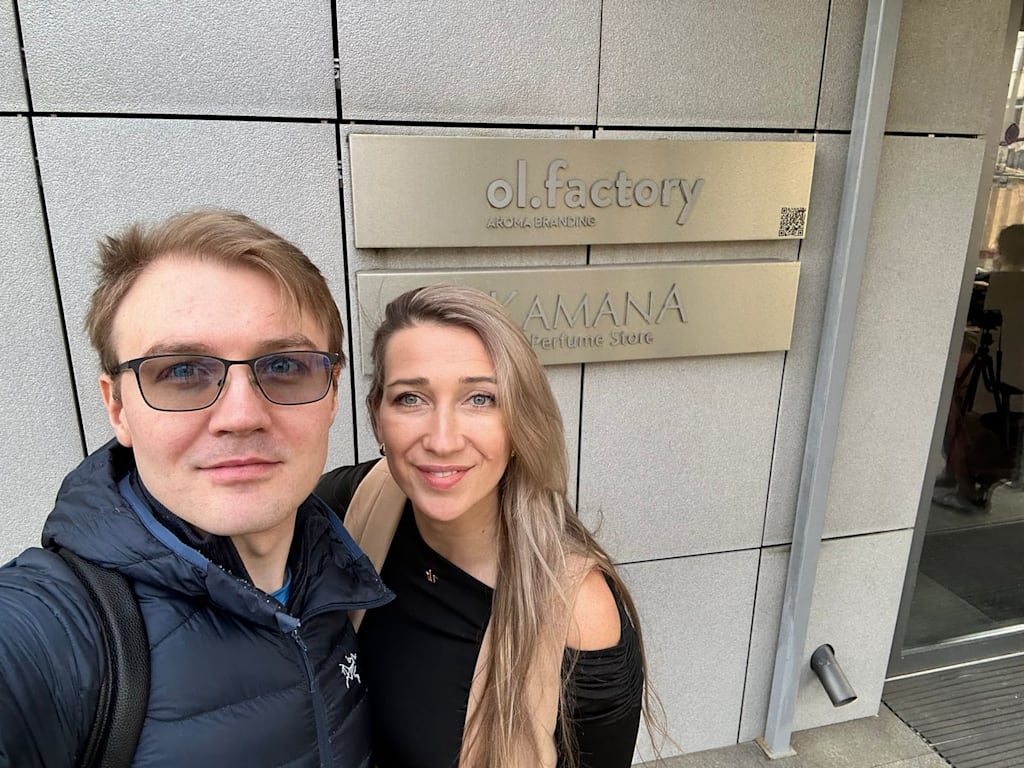
Khrystyna Kurhanska is a Ukrainian entrepreneur, aromatherapist, and mental-health advocate based in Kyiv. She is chair of the board and public head of the NGO DoLadu, registered in November 2022 to support the mental health, rehabilitation, and reintegration of Ukrainian defenders, veterans, and the wider public. Public speaker bios state that DoLadu has operated mental-health centres in Kyiv hospitals and served more than 1,650 people, while later public interviews cite assistance to more than 1,800 service members. Kurhanska also founded the aroma-branding agency Ol.factory and Kamana perfume store, combining business, sensory design, psychology, and veteran-focused social recovery work.
In this interview, Scott Douglas Jacobsen speaks with Khrystyna Kurhanska, a Ukrainian entrepreneur, aromatherapist, and public head of DoLadu, about veteran rehabilitation in wartime Ukraine. Kurhanska explains that recovery must be holistic, addressing mental health, physical wellbeing, family life, social reintegration, and economic purpose together. She describes DoLadu’s ecosystem-based model, including camps, family support, business-oriented education, and community activities, all adapted to the realities of war. Rather than framing veterans primarily through vulnerability, she emphasizes their strength, resilience, and search for renewed meaning after combat, while DoLadu helps translate those capacities into sustainable postwar lives.
Scott Douglas Jacobsen: With respect to DoLadu, what do you see as the core rehabilitation needs of veterans, and how do you work to meet those needs?
Khrystyna Kurhanska: I will start more broadly. In my view, Ukraine’s greatest need is the recovery of human potential—civilians, military personnel, veterans, and families, including Ukrainians both inside the country and abroad. That is one of the central challenges facing Ukraine.
If we are speaking specifically about DoLadu, it is a Ukrainian NGO focused on restoring and strengthening the mental health of veterans, defenders, and their families. We build programs as part of an ecosystem, because mental health is connected to overall quality of life.
Our mission is to help people transform combat experience into strength, capability, and renewed meaning. War divides life into “before” and “after.” We help people rebuild across psychological wellbeing, physical recovery, social relationships, family life, and renewed purpose.
We provide multidisciplinary programs described as evidence-based. DoLadu was created in 2022 in response to the significant mental health needs that emerged during the full-scale war. Many of our friends, families, neighbors, and communities were affected almost overnight. The organization has described its work as including mental health support in Kyiv-based clinical and community settings, delivered through multidisciplinary teams.
Jacobsen: When I first arrived in Lviv, I visited cultural institutions and was shown a 3D printing station contributing to the war effort. It reflected the collective nature of Ukraine’s wartime response.
Human potential is a broad issue. Some individuals return with amputations, PTSD, depression, anxiety, or other forms of trauma. How do you decide which needs DoLadu can address directly—such as psychological support and social reintegration—and which needs, such as prosthetics or other specialized medical interventions, must be handled through referral or partnership?
Kurhanska: Yes, this is an enormous challenge for us, and I think for everyone in Ukraine.
After 2022, we studied as many relevant models as possible, including practices from Israel, the United States, and the Netherlands, and adapted those approaches to Ukrainian realities. Since that period, more than 2,000 veterans and family members have participated in our programs. That has given us substantial practical experience, and we are now also able to share some of that experience with international colleagues.
Unfortunately, Ukraine is in a unique situation. We are not addressing mental health only after war; we are addressing it during the war, under ongoing attacks, constant stress, and repeated triggers. We combine international best practices with continuous feedback from veterans and build ecosystem-based programs tailored to a person’s needs at a particular stage.
For example, we run camps outside the city, usually lasting four days. These are based on the idea of life balance. Participants receive a deep assessment across multiple areas: physical health, mental health, economic adaptation, and family life. On the mental-health side, they receive both individual and group interventions. Economic issues are also important: what strengths does a person have now, and how can those strengths be used in future employment or in starting a business? Family is another major area: where is the person now, and what path lies ahead across all these domains?
For us, mental health is about quality of life. That is why psychological support alone, psychoeducation alone, or psychotherapy alone is not enough. Each program addresses multiple dimensions at once. We have teams that identify the needs of each individual. When we can provide the necessary services directly, we do so. When we cannot, we refer people through our partner network.
At present, we have the DoLadu Camp, which serves as a kind of roadmap for the coming years. After that, we have a family-focused program centered on relationships, children, support, and understanding. After a stressful and often traumatic period, family members also need help understanding what has changed and how to provide meaningful support.
We also have DoLadu Academy, which is focused primarily on economic issues. In that program, participants work through questions such as: What talents do I have now? How can I monetize them? Should I create my own business? We see a strong desire among veterans to start businesses rather than return to their previous jobs. Publicly, DoLadu has stated that more than 80 percent of veterans in its programs do not want to return to their former work, for various reasons, including displacement, changed skills, health conditions, and major life changes.
So, we have a general roadmap, family-focused support, and economic-focused support. We also have a broader community component. It includes many forms of activity across these same spheres, but on a wider scale: adaptive sports, peer communication, art, and educational programs such as English. We are also planning additional training in areas such as AI over the coming months. We try to listen carefully to veterans’ needs and provide the kinds of support, information, and services they actually require.
Jacobsen: Where do you find most veterans when they return, in terms of the type of work and skills they want? What is the main factor driving their choices? Are they entering trades or white-collar work?
Kurhanska: I think the biggest issue is a shift in meaning. They are searching for new meaning in life—both in their individual identity and in their role within society. That is the central point.
This question is closely connected to health: their physical capacity, their mental condition, and their relationships with friends, family, and community. Economic factors are also important.
They come to us because they are searching for answers. We try to help them clarify their questions. In many cases, people already have those questions internally, but they need support in articulating them.
For us, veterans are not defined by vulnerability, but by strength. A person who has had the inner strength to fight in war also has the capacity to rebuild and create a new life.
Jacobsen: In a broader sense, much of this experience may be inchoate—nonverbal. When it is properly articulated, individuals can reorient themselves and develop a clearer direction for their lives. Thank you very much for the opportunity and your time, Khrystyna.
Scott Douglas Jacobsen is a blogger on Vocal with over 130 posts on the platform. He is the Founder and Publisher of In-Sight Publishing (ISBN: 978–1–0692343; 978–1–0673505) and Editor-in-Chief of In-Sight: Interviews (ISSN: 2369–6885). He writes for International Policy Digest (ISSN: 2332–9416), The Humanist (Print: ISSN, 0018–7399; Online: ISSN, 2163–3576), Basic Income Earth Network (UK Registered Charity 1177066), Humanist Perspectives (ISSN: 1719–6337), A Further Inquiry (SubStack), Vocal, Medium, The Good Men Project, The New Enlightenment Project, The Washington Outsider, rabble.ca, and other media. His bibliography index can be found via the Jacobsen Bank at In-Sight Publishing,, comprising more than 10,000 articles, interviews, and republications across more than 200 outlets. He has served in national and international leadership roles within humanist and media organizations, held several academic fellowships, and currently serves on several boards. He is a member in good standing in numerous media organizations, including the Canadian Association of Journalists, PEN Canada (CRA: 88916 2541 RR0001), Reporters Without Borders (SIREN: 343 684 221/SIRET: 343 684 221 00041/EIN: 20–0708028), and others.
Image Credit: Scott Douglas Jacobsen.
About the Creator
Scott Douglas Jacobsen
Scott Douglas Jacobsen is the publisher of In-Sight Publishing (ISBN: 978-1-0692343) and Editor-in-Chief of In-Sight: Interviews (ISSN: 2369-6885). He is a member in good standing of numerous media organizations.
Keep reading
More stories from Scott Douglas Jacobsen and writers in Education and other communities.
Faye Callaghan: UNFPA Protects Maternity Care in Ukraine Under Russian Attack
Faye Callaghan is a midwife and maternal health specialist working in international humanitarian settings. Public sources identify her with the United Nations Population Fund and describe her as a midwife with a Master’s in Reproductive and Sexual Health Research. She previously served as a Midwifery Mentor for UNFPA in Cox’s Bazar, Bangladesh, and later led UK-Med’s mission to establish a maternal health department in Gaza. In this interview, she discusses UNFPA’s support for maternity and sexual and reproductive health services in wartime Ukraine, especially bunkerized facilities, emergency neonatal care, and the pressures facing staff, mothers, and newborns under attack there.
By Scott Douglas Jacobsen4 days ago in Education
How to Claim Unpaid Wages and Overtime Legally
Wage theft continues to affect thousands of employees across the United States, often without them realizing the full extent of their loss. When employers fail to pay proper wages or deny overtime compensation, workers face both financial and emotional stress. Many employees hesitate to act because they feel unsure about their rights or fear retaliation. However, understanding how to recover unpaid wages and overtime can empower you to take control of your situation and secure the income you rightfully earned.
By Emily D. Armstrong5 days ago in Education
How to Audit a Blockchain Strategy Before You Waste Six Figures
Blockchain has matured from a speculative buzzword into a serious technological option for enterprises. Yet its adoption remains fraught with costly missteps. Organizations frequently commit six-figure budgets to blockchain initiatives that fail to deliver meaningful value, often due to poor planning, weak use-case validation, or misalignment with business goals.
By Damian Brownabout 19 hours ago in Education
Bacon
Satan, laughing, spreads his wings. He launches into an atmosphere riddled with smoke, soot, and ash. He feels the radiation from a thousand fallen nukes. For humanity, it’s certain death. For him, it’s like bathing in a sauna. He laughs again at the thought.
By C. Rommial Butler3 days ago in Fiction


Comments
There are no comments for this story
Be the first to respond and start the conversation.