
USA is trapped in this war
Analyzing the hidden risks of a Middle Eastern withdrawal

Look past the daily headlines. Ignore the latest missile strikes and the political threats for a moment. The most urgent question about the current conflict in the Middle East is surprisingly simple. Can America actually stop this war? Can the United States negotiate a ceasefire, pack up its military forces, and walk away?
When you analyze the situation closely, the answer is deeply unsettling. America is trapped. It cannot go forward, and it cannot go back.
The Unstoppable Momentum of War
Once a war begins, it takes on a life of its own. It stops being a tool that politicians and generals control. Instead, the war starts controlling them.
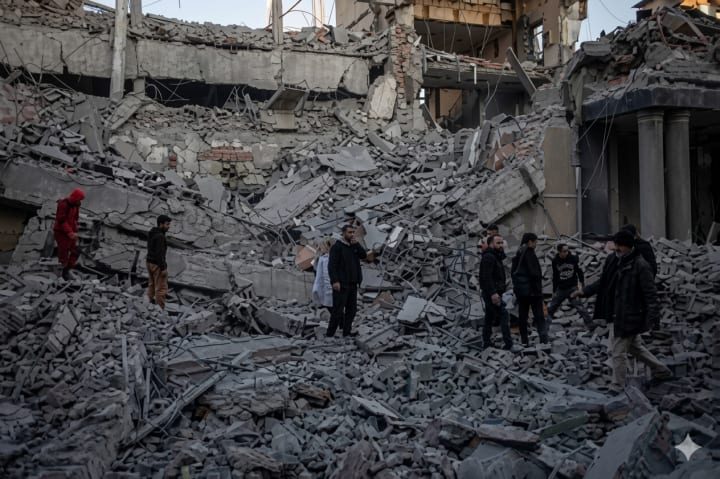
Look at the war in Ukraine. That conflict began in early 2022. From the very first weeks, both sides knew a negotiated settlement was an option. They both understood that fighting caused massive human and economic damage. Yet, years later, the war grinds on. It continues to destroy lives and drain economies.
Why does this happen? Stopping a war requires one side to accept a painful reality. Someone has to accept loss, face public humiliation, and agree to unbearable terms. Most leaders find this impossible. The conflict with Iran follows this exact historical pattern. Neither side wants to admit defeat, even when peace clearly serves their best interests. This reality means the fighting could drag on for years.
The Ceasefire Trap
You might wonder why America does not just demand a ceasefire today. The problem is not that Iran refuses to talk. The problem lies in the terms Iran would demand. For America, accepting these terms would cause more damage than continuing the war.
Imagine America reaches out through back channels to negotiate. Iran would likely agree to stop fighting, but only with massive conditions. First, Iran would demand astronomical reparations—likely around $1 trillion—for the destruction, the decades of sanctions, and the economic pain inflicted on its people.
Second, Iran would demand a total, permanent American withdrawal from the Middle East. Iran believes the only way to ensure its long-term survival is to remove the American military presence entirely.
Some critics argue America should leave the region anyway. But this ignores the catastrophic chain reaction a sudden withdrawal would trigger for the American economy and global influence.
The Five-Step Collapse of American Power
If America leaves the Middle East, the world changes overnight. This is not a guess; it is a direct sequence of events.
Step One:
The Gulf States Pivot Currently, the Gulf Cooperation Council (GCC) nations—like Saudi Arabia, the UAE, and Qatar—rely on American military protection. If America leaves, that safety net vanishes. Iran becomes the only regional power capable of controlling the Strait of Hormuz and guaranteeing security. The GCC nations would have no choice. They would fall under Iranian influence to survive.
Step Two:
The Petrodollar Dies The GCC forms the foundation of the "petrodollar." Right now, these nations sell their oil in US dollars. Every country that buys Gulf oil must hold dollars to pay for it. This system creates a massive, permanent global demand for American currency. The Gulf states then invest those dollars back into US Treasury bonds and financial markets. This constant recycling allows America to manage its $39 trillion national debt. If the GCC aligns with Iran, the petrodollar system ends. The foundation of American financial supremacy evaporates.
Step Three:
Asia Arms Itself Japan and South Korea are watching the Middle East closely. If they see America retreat from a difficult conflict, they will question their own security guarantees against regional threats like China and North Korea. If America leaves the Middle East, Japan and South Korea will stop relying on American protection. They will build up their own militaries, shifting their money away from American weapons and military infrastructure.
Step Four:
Europe Breaks Away European nations currently endure high energy costs and economic strain to support the Western stance against Russia in Ukraine. If America withdraws from the Middle East, Europe will view America as an unreliable partner. To protect their own interests, European leaders would likely negotiate peace with Russia. The Western alliance system, built over eighty years, would fracture.
Step Five:
The Dollar Falls Combine all these events. The petrodollar ends. Asian allies pull back. Europe fractures. Consequently, the US dollar loses its status as the global reserve currency. Foreign nations stop buying American debt. Sitting on $39 trillion in debt without global demand for its currency, the American economy would face a devastating collapse.
This chain reaction is the ultimate trap. Staying in the war costs a fortune in blood and treasure, but leaving costs America its position in the world.
The Ground Invasion Illusion
Since America cannot secure a safe ceasefire and cannot safely withdraw, pressure builds to escalate. Leaders want to show strength. This pressure leads straight into the ground invasion trap.
Rumors often surface about sending Marines to capture Kharg Island. Iran exports almost all of its oil from this single location. Capturing it seems like a brilliant move. It would cut off Iran's oil money and look like a massive victory on television.
However, holding the island is nearly impossible. Kharg Island sits right next to the Iranian coast. The moment American forces land, Iran would bombard them with artillery, drones, and missiles. To protect the troops on the island, America would have to invade the nearby coastline.
Once on the coast, American forces face attacks from the Zagros Mountains. To secure the coast, America must take the mountains. Suddenly, a limited operation turns into a massive land war inside a geographically hostile country.
This is classic mission creep. In 1965, America sent just 3,000 Marines to Vietnam for a limited mission. Four years later, half a million troops were fighting there. Once a nation commits forces and suffers losses, the "sunk cost fallacy" takes over. Leaders keep fighting just to justify the lives and money already spent.
The Hidden Military Reality
Mainstream discussions often ignore a hard truth: the American military does not want to fight this war. This hesitation has nothing to do with bravery. It comes from hard data. American military planners run constant wargames to simulate a full-scale war with Iran. Every time they run the simulation, America loses.
The American military excels at "shock and awe." It relies on overwhelming air power and precision strikes to destroy an enemy in days, just like in Iraq in 2003. Iran knows this. They have studied the American playbook for over twenty years.
Iran does not mass its troops in big bases waiting for American bombs. It disperses its forces. It builds facilities deep underground. It relies on asymmetric weapons like cheap drones, hypersonic missiles, and regional proxy groups. This strategy completely neutralizes America's biggest strengths.
Take American aircraft carriers. They are floating cities with massive firepower. Yet, they sit far off the Iranian coast, unable to strike deeply. Moving them closer puts them in range of Iranian missiles. Losing a single carrier would be a historic disaster, so they stay back. Iran prepared for exactly this scenario, and their counter-strategy works.
Finding the Only Way Out
America faces bad options and worse options. It cannot stop, it cannot leave, and it cannot win a clean military victory. What should America actually do?
Finding an answer requires looking at the whole board. This war connects to the trade disputes with China, the conflict in Ukraine, and tensions across Asia. America is vastly overextended. By trying to manage every dispute in every region, America allows rivals to drain its resources and damage its reputation.
The only path that preserves stability requires a massive change in strategy. America must stop trying to dominate the globe by force. It needs to sit down with other major powers—including Russia, China, and Iran—and build a new framework.
This new approach means treating other nations as partners rather than subordinates. It means recognizing that every major power has interests and needs. If leaders can build a system where everyone gets enough of what they need, the incentive for war disappears.
This is not weakness; it is practical wisdom. Right now, wisdom offers the only escape from the looming catastrophe. The longer America waits to change its approach, the more painful the inevitable exit will be.
About the Creator
Jesse
I just love to write



Comments
There are no comments for this story
Be the first to respond and start the conversation.