
Oksana Ivanets on Military Journalism, War Trauma, and Witnessing Russian Crimes in Ukraine
How does Oksana Ivanets describe military journalism, war trauma, and ethical witness in Ukraine’s frontline war zones?

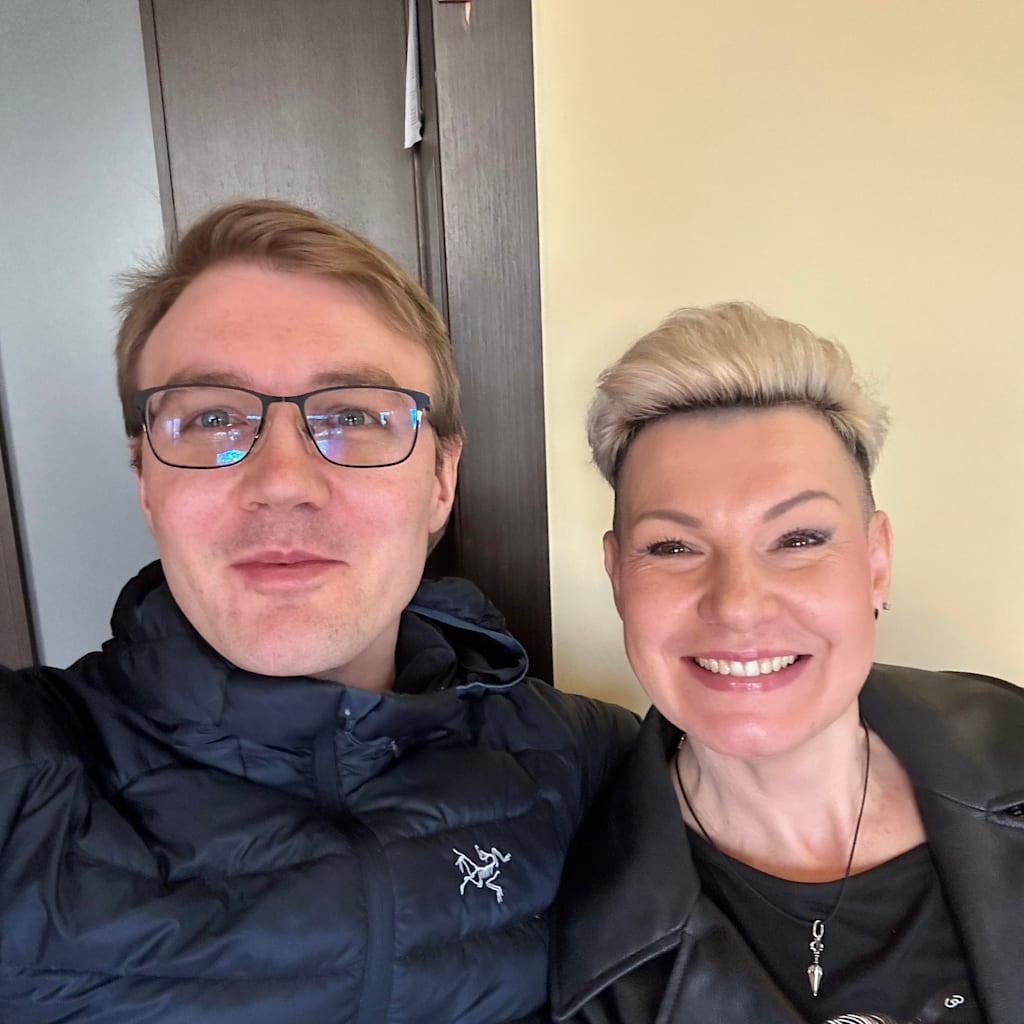
Oksana Ivanets is a Ukrainian military journalist and lieutenant colonel who served in both the State Border Guard Service and the Armed Forces of Ukraine. She has been a special correspondent for ArmyInform. She has reported from the frontline and recently de-occupied areas, especially in the Kharkiv region, documenting war crimes, occupation conditions, returning prisoners, and the experiences of soldiers and civilians under attack. Her work combines military communications, field reporting, and witness-based storytelling. In this interview, she reflects on service, trauma, propaganda, frontline ethics, and the moral burden of recording violence while preserving Ukraine’s war testimony for future history.
Scott Douglas Jacobsen interviews Oksana Ivanets, a retired Ukrainian lieutenant colonel and military journalist, about service, frontline reporting, Russian occupation, and the long afterlife of war trauma. Ivanets recounts work in the Kharkiv region after the full-scale invasion, visits to sites of imprisonment and death, interviews with returned captives, and encounters with civilians documenting Russian crimes. She argues that journalists must respect military rules and civilian consent, while Ukraine must strengthen psychological care for survivors, soldiers, and families. The conversation becomes a testimony about memory, grief, discipline, and the ethical duty to witness without exploiting suffering in wartime public memory today.
Scott Douglas Jacobsen: You were part of the Ukrainian Armed Forces for 26 years. You retired in November 2024 at the rank of lieutenant colonel. What were your biggest lessons from serving in the military for so long?
Oksana Ivanets: I served in two services. The first was the Border Guard Service, and the second was the Armed Forces. In the Border Guard, I was a communications officer. In the Armed Forces, I was a journalist.
Jacobsen: What did you learn as a communications officer and as a journalist?
Ivanets: Russians are an awful nation. I learned a great deal about them. I saw many places where Ukrainian citizens were held captive. I was present during the exhumation in Izium. I saw children killed by Russian bombs and, later in the war, by Russian Shahed drones. I know they are an awful nation, and I teach my children not to trust them.
Jacobsen: What are the patterns of propaganda? How do civilian journalists interact with military journalists, both well and poorly?
Ivanets: There are many rules. The military operates under constant danger. If journalists follow these rules, relations remain good. If they do not, problems arise. You must follow the rules and stay on track.
Jacobsen: You worked on the front line. Was Mariupol part of this?
Ivanets: I returned to Kharkiv from Mariupol on February 06, 2022. When Russia launched the full-scale invasion on February 24, 2022, I was in the Kharkiv region. My family, my children, and my husband went to Poland. I remained in the Kharkiv region and continued working.
Jacobsen: Which villages and cities in the Kharkiv region?
Ivanets: I visited these territories, where many Russian prisons had been located. I saw the results of the occupation and so on. I wrote many life stories of our soldiers. I was one of the first correspondents to write the life story of a Ukrainian soldier who had returned from Russian captivity. He was a marine. He was injured. This may be very interesting for you.
Jacobsen: Do you notice, for instance, that we know prisoners of war, civilian and military, men and women, according to the UN, are sexually assaulted in various forms? That comes with particular types of trauma. For male and female service members, how do they process this type of trauma? What help do they need when this happens?
Ivanets: If you want to learn more about this process, I can give you my psychologist's phone number. She worked with girls from Bucha, Borodianka, and Dymer who had experienced sexual violence by Russians. I do not know the details, but I know it is, and I could arrange that. I can put you in touch with one of my psychologists. If she is open, I will happily connect you.
The Russians captured my friend, a soldier with the Azov Regiment. They beat her, stripped her, and kept her naked in front of a group of men for hours. These men allowed themselves to look at her naked body, to touch it… You can read all about this in the book Nava wrote after her captivity. The book is titled *Captivity*. It has also been published in English.
Jacobsen: What did they beat her with—fists or instruments?
Ivanets: Instruments, hands, legs…
Jacobsen: Do military members ever fully recover from this abuse?
Ivanets: Not really. You see, I was not captured. I have seen many deaths of my brothers and sisters in the army. I have also seen many civilian deaths. I have my own trauma, but it is small compared to theirs.
They have much greater trauma than I do. Our government-level system of psychological support is very weak. My father served in Afghanistan and has lived with trauma for more than 45 years.
A few weeks ago, a Russian rocket exploded near his house in a village near Vasylkiv. After that, he could not sleep. His trauma remains active after 45 years. Our people will carry this trauma for decades.
I work with DoLadu and other organizations that are trying to address psychological trauma. This is something we truly need.
Jacobsen: When you are working with civilians affected by war in frontline cities, what are the best practices for gathering information while respecting their rights?
Ivanets: People often want to speak. They want to tell about Russian crimes. If they do not want to speak, I do not push them. I speak only with those who are willing.
Jacobsen: What stories still stay with you—ones that remain vivid?
Ivanets: One story is about three children and their parents who died in a fire after a Russian Shahed drone strike. Our service members searched their house for the bodies. They found the parents and two of the children. They searched for a long time for the third child and eventually found the body under a table in the kitchen, in a corner. I do not try to imagine what the children felt in their final moments. I cannot.
I will never forget the 59 mangled bodies of Ukrainians in the village of Groza. They were burying their friend when the Russians fired two Iskander missiles at them.
I arrived in that village and saw all the bodies. The rescuers sprayed disinfectant all around to get rid of the smell of human blood and entrails Now I cannot tolerate the smell of sanitary chemicals. They create strong negative associations.
Jacobsen: In your work, you have encountered many bodies. What did you feel the first time you saw one?
Ivanets: The first time, I did not understand what I was seeing. I came to a place where a Russian rocket had struck a civilian car. It was raining. I touched something with my foot and realized it was a fragment of a human spine.
At first, I did not understand why everything around the car was pink. Then I realized it was rain mixed with small amounts of human blood. That was my first experience. After that, I underwent a practical transformation. I felt nothing. But when I saw the bodies of a family—three children and two parents—I cried intensely. My husband was with me, and he could not stop me. I kept thinking about their last moments and what they might have been thinking.
Jacobsen: What caused the deaths of that family?
Ivanets: A Russian Shahed drone struck near a fuel storage area. It targeted a fuel reservoir, which caused a large fire that spread to the house.
Jacobsen: Thank you very much for the opportunity and your time, Oksana.
Scott Douglas Jacobsen is a blogger on Vocal with over 130 posts on the platform. He is the Founder and Publisher of In-Sight Publishing (ISBN: 978–1–0692343; 978–1–0673505) and Editor-in-Chief of In-Sight: Interviews (ISSN: 2369–6885). He writes for International Policy Digest (ISSN: 2332–9416), The Humanist (Print: ISSN, 0018–7399; Online: ISSN, 2163–3576), Basic Income Earth Network (UK Registered Charity 1177066), Humanist Perspectives (ISSN: 1719–6337), A Further Inquiry (SubStack), Vocal, Medium, The Good Men Project, The New Enlightenment Project, The Washington Outsider, rabble.ca, and other media. His bibliography index can be found via the Jacobsen Bank at In-Sight Publishing,, comprising more than 10,000 articles, interviews, and republications across more than 200 outlets. He has served in national and international leadership roles within humanist and media organizations, held several academic fellowships, and currently serves on several boards. He is a member in good standing in numerous media organizations, including the Canadian Association of Journalists, PEN Canada (CRA: 88916 2541 RR0001), Reporters Without Borders (SIREN: 343 684 221/SIRET: 343 684 221 00041/EIN: 20–0708028), and others.
Photo Credit: Scott Douglas Jacobsen.
About the Creator
Scott Douglas Jacobsen
Scott Douglas Jacobsen is the publisher of In-Sight Publishing (ISBN: 978-1-0692343) and Editor-in-Chief of In-Sight: Interviews (ISSN: 2369-6885). He is a member in good standing of numerous media organizations.
Keep reading
More stories from Scott Douglas Jacobsen and writers in Families and other communities.
Blessing Platinum-Williams on Church Belonging, Family, and Accountability: Community as Sacrifice and Care
Blessing Platinum-Williams is a London-based, self-taught software developer and the creator of Tonely AI, an “auto-reflect” keyboard for iOS and Android that surfaces the likely tone and intention behind a message as you type. Tonely aims to reduce everyday digital harm by prompting users to reconsider wording that may sound blunt, passive-aggressive, or manipulative. Privacy is a core design choice: Tonely runs tone detection on-device and, per its terms and privacy policy, does not upload or store your messages. She founded Tonely AI Ltd in Britain. She also has a law degree and a therapy-informed perspective on language for everyone.
By Scott Douglas Jacobsen3 months ago in Families
Celebrating Mother's Day When Your Mom Has Passed Away
Losing Your Mom If you have lost your mom, it's difficult enough, but it's even harder when her special day comes around. I know how it feels. I lost my mother. The first year was the worst. I remember how lost I felt. I just couldn't understand why she had to die when so many other people I knew still had their mothers.
By Janis Masyk-Jackson16 days ago in Families
The culture and laws behind the choice for family names
When my wife and I filed for our marriage certificate in 2002, the civil office clerk asked her if she wanted to keep her family name or take mine. We exchanged a second-long glance and then she ticked under my surname.
By Aurel Stratana day ago in Families



Comments
There are no comments for this story
Be the first to respond and start the conversation.