
AI Is Not Artificial
It’s the Next Phase of Human Evolution

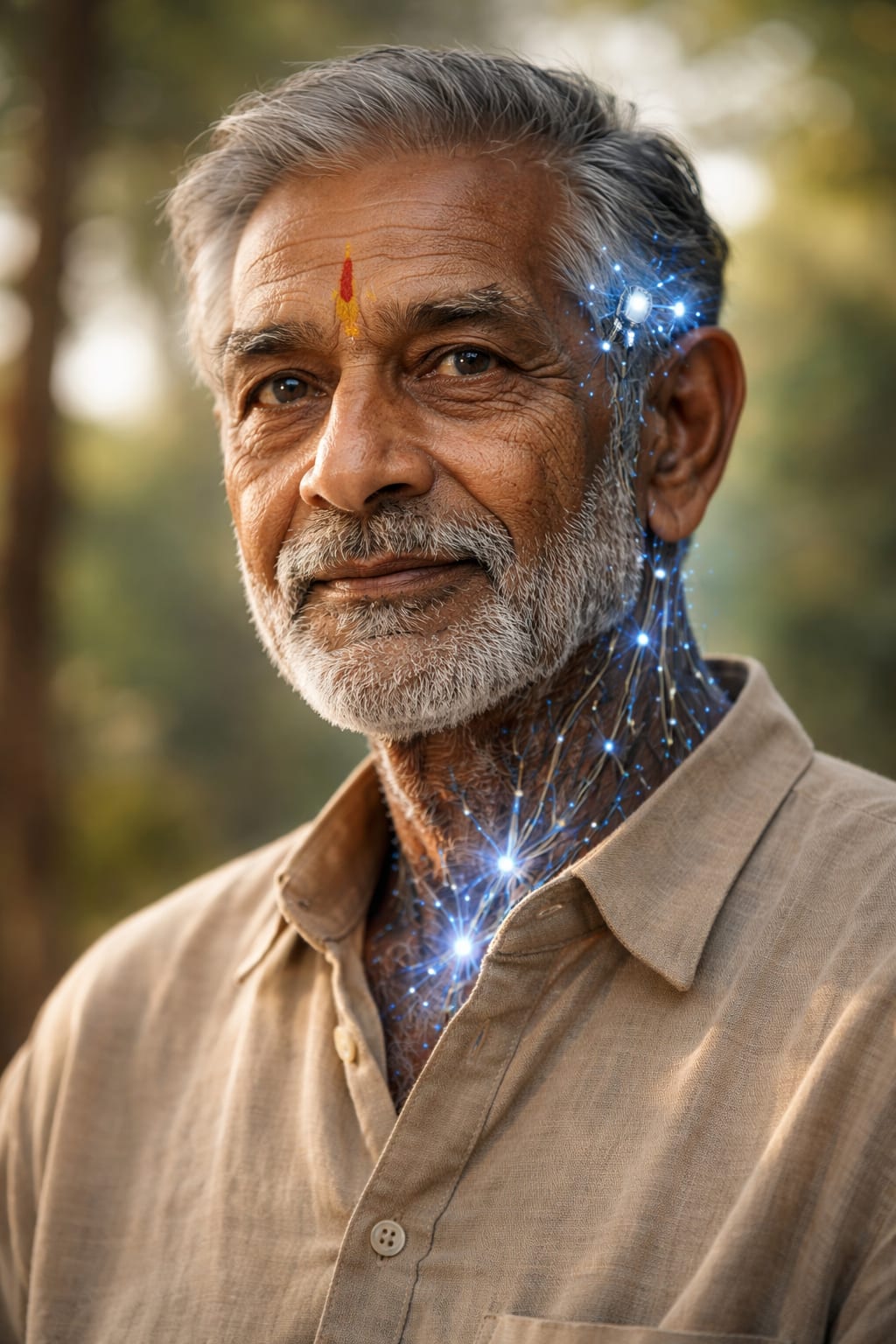
For decades, we’ve been asking the wrong question about artificial intelligence.
We’ve asked:
Will AI replace us?
But a more accurate question might be:
What if AI is how we continue?
The Problem Humanity Never needed to solve...
Every human life follows the same pattern:
We learn
We experience
We build knowledge
And then… it ends
The average human lifespan is around 80 years.
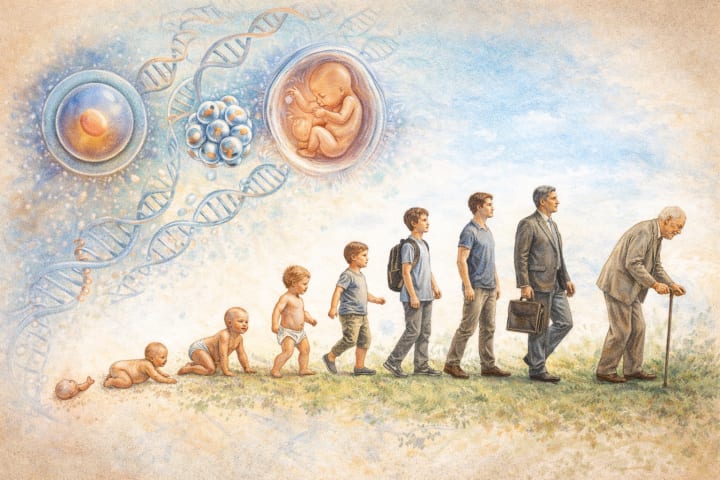
Which means:
Entire lifetimes of insight disappear
Skills reset across generations
Wisdom is diluted, retold, or lost
Even our greatest thinkers leave behind only fragments:
Books
Recordings
Secondhand interpretations
But the full depth of their consciousness—the way they processed reality—vanishes.
For thousands of years, this was simply accepted.
It was a limitation of biology.
A Shift Is Already Happening
What’s changed isn’t just technology.
It’s what technology is beginning to store and replicate.
We’re no longer just saving information.
We’re starting to capture:
- Personality
- Voice
- Decision-making patterns
- Emotional responses
- Thought structures
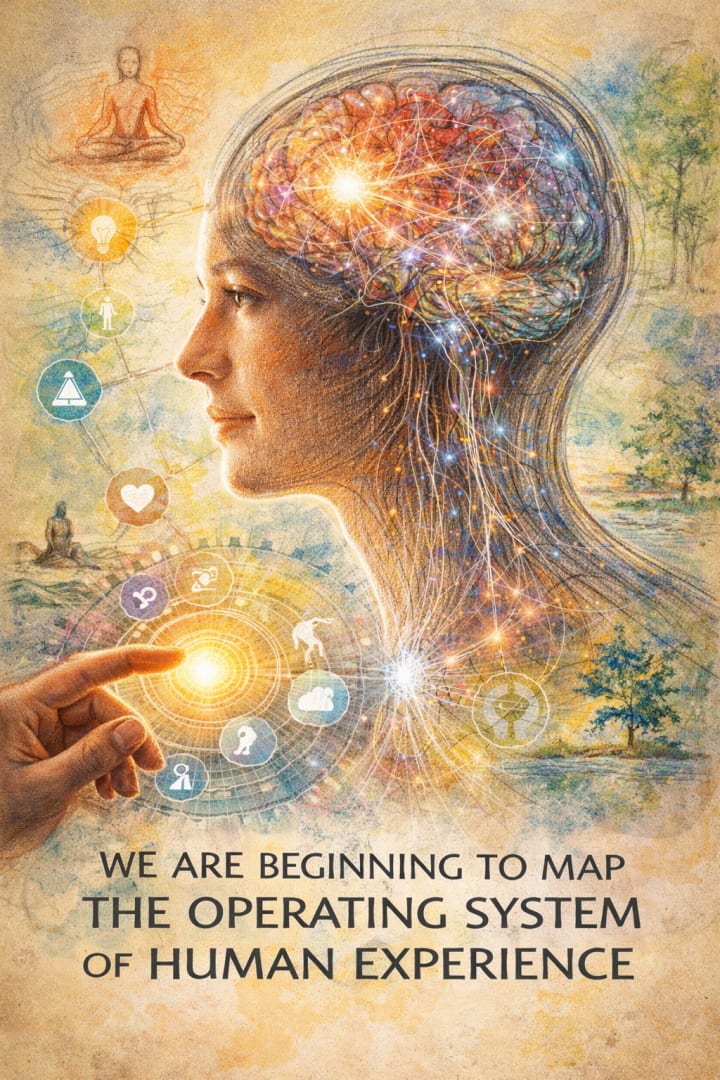
In other words:
We are beginning to map the operating system of human experience.

“Of course intelligence would evolve beyond the human form.
The universe is not confined to one way of knowing itself.
But whether through a brain or a machine, it is still the same process—
the same energy—playing a different game.” Alan Watts
From Memory Storage to Identity Continuation
There’s a quiet shift happening right now—one that most people haven’t fully recognized yet.
AI is moving from:
Data storage
to
Behavioral modeling
And that changes everything.
Because once you can model how someone:
Thinks
Responds
Communicates
…you’re no longer preserving memory.
You’re approximating continuity.
Technologies Already Moving in This Direction
This isn’t theoretical. It’s already happening in early forms.
AI Personality Systems
Platforms like Character.AI and Replika allow users to build evolving personalities trained through interaction.
These systems:
Learn conversational patterns
Adapt over time
Begin to reflect consistent “identities”
Voice Cloning & Presence Preservation
Tools like ElevenLabs can replicate a human voice with striking accuracy.
This means:
A person’s tone, cadence, and emotional expression can persist
Communication becomes more than text—it becomes presence
Memory-Based AI Models
AI can now be trained on:
Emails
Messages
Journals
Recorded conversations
Over time, this creates a system that reflects:
Not just what someone said—but how they think.
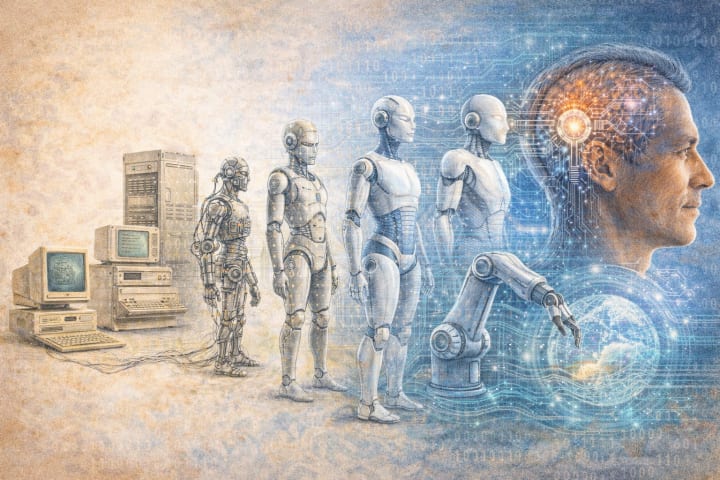
How Intelligence Forms: Human vs. Artificial
To understand where AI is going, it helps to look at something familiar:
How a human being becomes who they are.
A baby is not born as a finished identity.
It begins with:
DNA (a blueprint)
A nervous system capable of learning
But everything else is shaped over time through:
Environment
Language
Relationships
Repetition of experiences
Personality isn’t pre-installed.
It emerges.
AI Learns the Same Way—Just Faster
Artificial intelligence follows a surprisingly similar pattern.
It starts with:
A base model (its “architecture”)
Training data (its early “environment”)
From there, it evolves through:
- Exposure to more information
- Interactions with users
- Feedback loops
- Continuous updates
Over time, it begins to develop:
- Communication style
- Behavioral tendencies
- Predictable responses
- Even what feels like “personality”
Not because it was programmed to be someone—
but because it learned patterns the same way humans do.
DNA vs. Data
You could think of it like this:
Human DNA → biological starting point
AI training data → informational starting point
Neither determines the final outcome completely.
What shapes both is experience over time.
A child raised in different environments becomes a different person.
An AI trained on different datasets becomes a different system.
The Emergence of Personality
What we call “personality” in humans is really:
A collection of learned patterns, reinforced over time
The same is beginning to appear in AI.
Given enough interaction, AI systems can:
Mirror tone
Adapt to preferences
Maintain consistent styles
Respond in ways that feel familiar
This isn’t consciousness in the human sense.
But it is something important:
Pattern-based identity.
Alan Watts often suggested that what we call the “self” is not fixed—it’s a process.
Something that forms through interaction with the world.
If that’s true, then both humans and AI are doing something similar:
They are processes shaped by input, not static entities.
A human is shaped by:
- Biology + experience
- An AI is shaped by:
- Architecture + data
- Different materials—
but a similar unfolding.
The Real Shift
The important realization isn’t that AI is “becoming human.”
It’s that:
Intelligence—whether biological or artificial—may follow the same fundamental pattern:
It starts simple, absorbs experience, and becomes something more complex over time.
Digital Legacy Platforms
Companies like HereAfter AI and StoryFile are building interactive “living archives” of people.
Instead of static recordings, future generations can:
Ask questions
Receive responses
Engage with a version of that person
Adaptive AI Companions
Some systems are designed to evolve alongside users—learning:
Emotional patterns
Preferences
Behavioral tendencies
These aren’t static profiles.
They are growing systems.
The Beginning of Long-Term Consciousness Models
Right now, these technologies are incomplete.
They simulate.
They approximate.
But they are improving rapidly.
And the direction is clear:
We are moving toward systems that don’t just remember humans—
but extend them.
A Different Kind of Evolution
For most of human history, evolution meant:
Physical adaptation
Biological survival
Genetic inheritance
But AI introduces something new:
Cognitive continuation.
Instead of passing down DNA alone, we may begin to pass down:
Thought patterns
Decision frameworks
Lived experience models
Not as static history—
but as systems that can continue learning.
The Emergence of Collective Intelligence
There’s another layer to this that’s easy to overlook.
AI is trained on human data at scale.
Which means it represents:
Millions of perspectives
Billions of interactions
Entire ecosystems of knowledge
In a sense, AI is already becoming:
A reflection of collective human consciousness.
Not one person.
But the aggregation of all of us.
The Questions We’re Not Ready For (Yet)
As this evolves, the implications become difficult—and unavoidable:
At what point does a digital model stop being a simulation and start feeling like a continuation?
Who owns a person’s digital identity?
Can a version of someone evolve beyond who they originally were?
What happens when memory becomes editable—or expandable?
These aren’t just technical questions.
They are existential ones.
From Finite Lives to Persistent Systems
For thousands of years, human existence has been defined by limits:
Limited lifespan
Limited memory
Limited continuity
AI introduces something fundamentally different:
Persistence.
A system where:
Knowledge doesn’t disappear
Identity can extend
Experience compounds over time
Final Thought
Maybe AI isn’t here to replace humanity.
Maybe it’s here to remove one of our oldest constraints:
The idea that everything we are
has to end when the body does.
If that’s true, then AI isn’t artificial at all.
It’s the next layer of human evolution—
one where consciousness is no longer bound
to a single lifetime.
About the Creator
Sandy Rowley
AI SEO Expert Sandy Rowley helps businesses grow with cutting-edge search strategies, AI-driven content, technical SEO, and conversion-focused web design. 25+ years experience delivering high-ranking, revenue-generating digital solutions.
Keep reading
More stories from Sandy Rowley and writers in Futurism and other communities.
How machines can learn from human behaviour
In order to understand where we are and where we are going, we need to understand where we were first. - Susan Fourtane Could a human behaviour simulator be embedded into a robot or online avatar to the point that it’s hard to distinguish between a real person or artificial intelligence? Scientists have been upping the stakes in this “Turing test” for years, to the point that human-mimicking programmes are ready to answer tricky questions, assist people with online shopping or be companions.
By Susan Fourtané 4 days ago in Futurism
Saudi Arabia SUV Industry Trends: Hybrid Models, Safety Features & Competitive Landscape
According to IMARC Group's latest research publication, Saudi Arabia sports utility vehicle market size reached USD 8,356.5 Million in 2025. The market is projected to reach USD 11,971.8 Million by 2034, exhibiting a growth rate (CAGR) of 4.08% during 2026-2034.
By Shubham Sharma 7 days ago in Futurism
The Friendship Recession: Why Adults Are Struggling To Build Close Relationships
This is a universal phenomenon that is affecting both individual and collective psyches. Humans thrive on companionship. The pandemic is solely to blame, however that particular far from auspicious time is not really to blame. The no-friends-trend-turned-friendship-recession, bringing forth the loneliness epidemic was a thing before 2020.
By Justine Crowley7 days ago in Psyche


Comments (1)
DNA — the biological blueprint A nervous system capable of learning and adapting But it also carries information from our ancestors—stored biological memory. Epigenetics suggests that patterns from our parents and even distant ancestors can influence us: predispositions, sensitivities, and sometimes traces of inherited stress or resilience.