
Silk Market Outlook: Textile Innovation, Blended Fabrics & Forecast to 2033
How textile innovation, durability enhancement through blended fabrics, and changing consumer preferences are influencing silk market growth globally

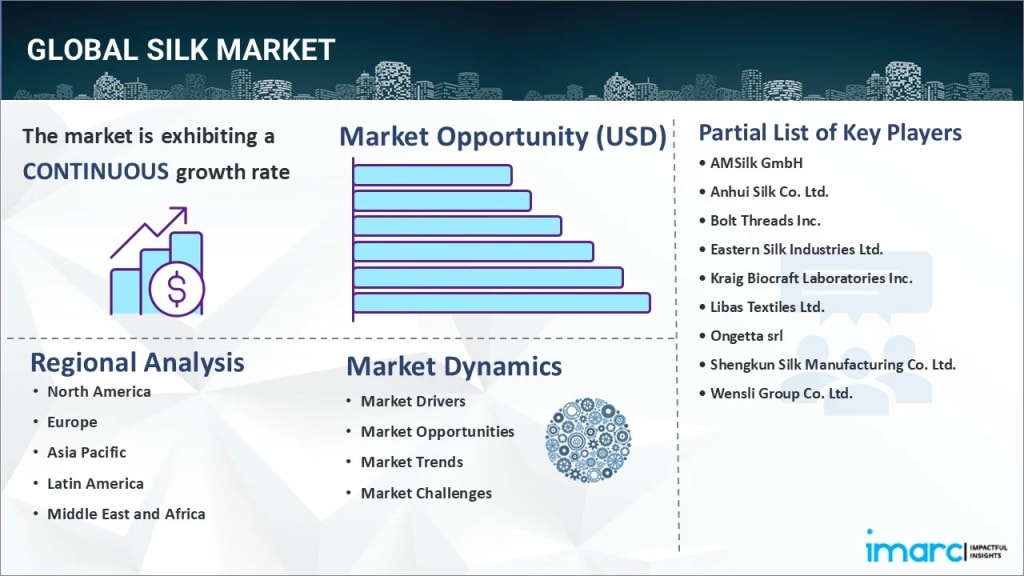
According to IMARC Group's latest research, the global silk market size reached USD 20.0 Billion in 2024. Looking forward, IMARC Group expects the market to reach USD 35.6 Billion by 2033, exhibiting a growth rate (CAGR) of 6.62% during 2025–2033. The market is primarily driven by the growing demand for premium textiles, expanding applications of silk in cosmetics and medical sectors, and continuous technological advancements in sericulture practices.
Silk remains one of the most valuable natural fibers used across multiple industries. It is widely utilized in the production of luxury garments, scarves, bridal wear, and traditional clothing due to its natural sheen, lightweight structure, and durability. At present, global silk production is estimated at approximately 80,000 tonnes annually, with China and India accounting for more than 90% of the global raw silk supply. Apart from textiles, silk is increasingly being adopted in biomedical materials, cosmetics, and advanced industrial applications owing to its biocompatibility, biodegradability, and high tensile strength.
The growing utilization of silk fibroin in biomedical applications such as biodegradable sutures, tissue engineering scaffolds, and drug delivery systems is creating new growth opportunities for the industry. In addition, sericin proteins derived from silk are widely used in skincare products due to their antioxidant and moisturizing properties. Government initiatives aimed at supporting sericulture activities are also strengthening the industry. For instance, the sericulture sector in India supports the livelihood of approximately 9.76 million people, making it one of the most significant rural employment generators in the country.
Evaluate Market Potential Before You Invest – Get the Report Sample
Silk Market Growth Drivers
Growing Demand in the Textile Industry
The textile and apparel sector represents the largest application segment for silk products, accounting for over 80% of total silk consumption globally. Among different types of silk, mulberry silk dominates the market with around 70–75% share owing to its superior quality, smooth texture, and durability. The rising demand for luxury fashion products, including designer garments, scarves, and ceremonial clothing, is supporting market growth. Furthermore, increasing disposable incomes and improving living standards across emerging economies such as China, India, and Southeast Asian countries are encouraging consumers to spend more on premium clothing and lifestyle products, thereby boosting the demand for silk fabrics.
Expanding Applications in Cosmetic and Medical Industries
Silk is increasingly gaining attention in the cosmetics and healthcare industries due to its beneficial biological properties. Silk fibroin is widely used in biomedical applications such as surgical sutures, wound dressings, and tissue engineering materials because of its excellent biocompatibility. In addition, sericin extracted from silk fibers is utilized in various skincare and cosmetic formulations owing to its moisturizing and anti-aging characteristics. In the United States, medical applications currently account for around 11% of total silk usage, highlighting the growing diversification of the market beyond traditional textile applications.
Technological Advancements in Sericulture Practices
Technological improvements in sericulture are significantly enhancing silk production efficiency and quality. Governments and research institutions are investing in modern rearing techniques, disease detection systems, and automated silk reeling technologies. For example, India’s Central Silk Board introduced AI-powered digital microscopes to detect silkworm diseases, which increased cocoon testing capacity from approximately 200 samples to nearly 900 samples per day. Additionally, initiatives such as the Silk Samagra scheme have facilitated the installation of Automatic Reeling Machines in several silk-producing regions, improving yarn quality and production efficiency across the value chain.
Silk Market Trends
Increasing Demand for Sustainable and Ethical Silk
Sustainability has become an important factor influencing purchasing decisions in the textile industry. Consumers are increasingly showing interest in ethically produced and environmentally friendly silk products. Alternatives such as Ahimsa silk, which allows silkworms to complete their natural life cycle before fiber extraction, are gaining popularity among environmentally conscious consumers. In Europe, demand for sustainably sourced silk products recorded annual growth of around 10% between 2018 and 2021, reflecting the growing awareness regarding ethical fashion and responsible sourcing practices.
Emergence of Bio-Engineered Silk Materials
Advancements in biotechnology are enabling the development of bioengineered silk materials with enhanced performance characteristics. Spider silk-inspired fibers are being explored for applications in aerospace, defense, and medical devices due to their exceptional strength and elasticity. Companies such as AMSilk and Spiber are actively developing bioengineered silk proteins for use in high-performance materials and cosmetic formulations. These innovations are expanding the application scope of silk beyond traditional textiles and opening new revenue streams for manufacturers.
Government Support and Industry Modernization
Government initiatives aimed at strengthening sericulture infrastructure and supporting farmers are contributing to the overall growth of the silk market. In India, the government allocated approximately USD 105 million to the Central Silk Board for research, farmer training programs, and infrastructure development. Additionally, regional governments are investing in new silk trading centers, storage facilities, and modern production technologies to improve efficiency and support rural employment. Such initiatives are expected to enhance silk production capabilities and strengthen the global supply chain in the coming years.
Recent News and Developments in the Silk Market
January 2026: India’s Central Silk Board, in collaboration with a Bengaluru-based startup, introduced an AI-powered digital microscope for early detection of silkworm diseases, increasing cocoon testing capacity from approximately 200 to nearly 900 samples per day.
July 2025: China National Silk Group acquired a silk yarn manufacturing facility in India to expand its global production capacity and strengthen exports of premium mulberry silk to international markets.
July 2025: AMSilk GmbH partnered with a Japanese skincare company to develop fibroin-based cosmetic formulations, expanding the commercial application of bioengineered silk proteins in the personal care industry.
Note: If you require specific details, data, or insights that are not currently included in the scope of this report, we are happy to accommodate your request. As part of our customization service, we will gather and provide the additional information you need, tailored to your specific requirements. Please let us know your exact needs, and we will ensure the report is updated accordingly to meet your expectations.
About the Creator
Suhaira Yusuf
I specialize in Consumer Insights, focusing on transforming detailed market data into strategic business solutions that accelerate growth and improve customer engagement.
Keep reading
More stories from Suhaira Yusuf and writers in Futurism and other communities.
Shaving Market Analysis: Disposable Razors, Sustainability & Forecast to 2033
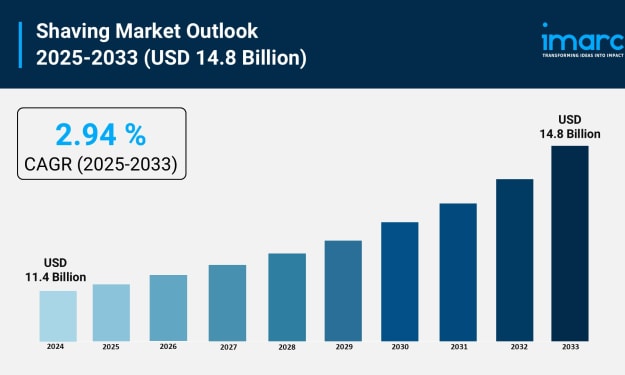
Growing consumer focus on personal grooming, rapid product innovation, and the expansion of e-commerce are reshaping the global shaving industry. According to IMARC Group's latest research, the global shaving market size reached USD 11.4 Billion in 2024. Looking forward, IMARC Group expects the market to reach USD 14.8 Billion by 2033, exhibiting a growth rate (CAGR) of 2.94% during 2025–2033. North America currently dominates the market, holding a market share of over 39.6% in 2024.
By Suhaira Yusuf8 days ago in Futurism
The Fears of AI And How Much Fun It Can Be
ChatGPT has come a long way, as has AI in general. There are those people who are scared of it, and for understandable reasons. People fear that as technologies advance, they’ll be replaced in the workforce. Then, there are the fears that AI could evolve into something that brings us to the brink of extinction.
By Jason Morton5 days ago in Futurism
Saudi Arabia School Stationery Supplies Market: Education Sector Growth, Back-to-School Demand & Market Outlook
According to IMARC Group's latest research publication, Saudi Arabia school stationery supplies market size reached USD 937.6 Million in 2025. The market is projected to reach USD 1,144.7 Million by 2034, exhibiting a growth rate (CAGR) of 2.24% during 2026-2034.
By Shubham Sharma 2 days ago in Futurism



Comments
There are no comments for this story
Be the first to respond and start the conversation.