
Trump’s 6 Reasons, No Exit Plan, and a Middle East Crisis Spiraling Out of Control
38 Days of War with Iran
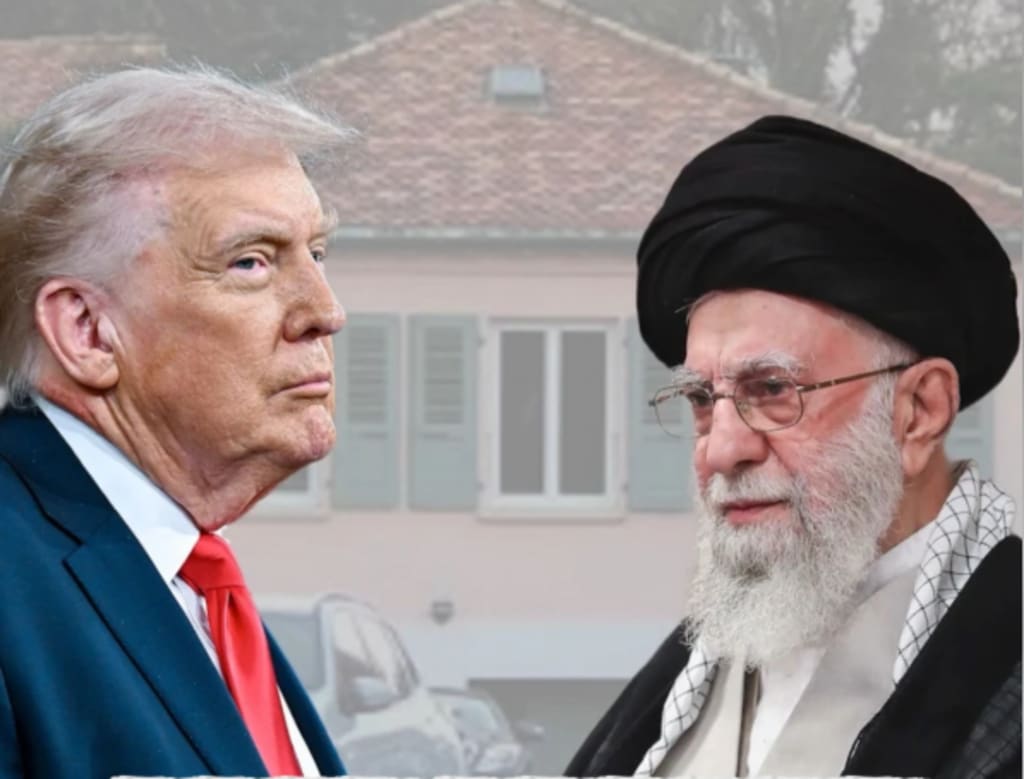
I. The War Didn’t Begin with a Strategy—It Began with a Strike
On February 28, 2026, the world didn’t wake up to a declaration of war—it woke up to explosions.
A joint operation by the United States and Israel hit multiple Iranian cities, including Tehran, Isfahan, and Shiraz. Among the reported casualties were Iran’s Supreme Leader Ali Khamenei and former parliament speaker Ali Larijani.
What makes this moment so jarring isn’t just the scale—it’s the timing. Negotiations were still ongoing.
Imagine sitting at a table trying to settle differences, and suddenly the other side throws a punch. That’s not strategy. That’s rupture.
Six Reasons for War—None That Stick
Within five weeks, Donald Trump and his administration offered six different justifications:
- Prevent retaliation
- Stop an “imminent threat”
- Destroy military capability
- Block nuclear weapons development
- Secure oil interests
- Support regime change
Individually, each might be arguable. Together, they contradict each other. It felt less like a doctrine—and more like improvisation under pressure. Even the International Atomic Energy Agency stated there was no clear evidence Iran had an active nuclear weapons program at the time.
So what exactly was the war trying to achieve? That question still hasn’t been answered. And yet, the explanations that followed were even more confusing.
II. Six Weeks That Changed the Global Order
Week 1: Immediate Firestorm
Iran didn’t hesitate. Missiles and drones struck Israel and U.S. bases across the Gulf—from Bahrain to Qatar. One drone even reached Cyprus, hitting a British base.
Then came the move that shook global markets:
The blockade of the Strait of Hormuz. Nearly 20% of the world’s oil supply flows through that narrow corridor. Closing it isn’t just escalation—it’s economic warfare.
Week 2: The War Spreads
Casualties mounted across Gulf countries. The intention may have been to pressure Washington.
Instead, it hardened positions. According to RAND Corporation, Iran’s strategy may have backfired—pushing regional states closer to the U.S., not away from it.
Meanwhile, airlines began abandoning Middle East routes. Insurance costs surged. Risk became the new normal.
Week 3: Objectives Lost in Fog
By mid-March, even major outlets like CNN were asking a simple question:
- What is the goal?
- There was no clear answer.
The Pentagon lacked a unified strategic document. The war, by all appearances, was being fought without a defined endpoint.
Week 4: Confusion at the Top
On March 23, a planned strike on Iranian infrastructure was suddenly halted.
The White House claimed progress. Iran denied it. Contradictions became routine.
At the same time, Iran began charging fees for ships passing through Hormuz—accepting payments in yuan. A sanctioned country, under attack, was now controlling a global chokepoint using the currency of its rival’s biggest competitor.
Week 5: “Victory” Meets Reality
On April 1, Trump declared the war nearly over.
Hours later, more troops were deployed. Then came a striking statement: securing the Strait of Hormuz was no longer America’s responsibility.
Markets reacted instantly. Oil surged past $112. The S&P 500 dropped. Energy prices rose.
In a move that bordered on paradox, the U.S. relaxed sanctions on Iranian oil—to lower prices caused by the war against Iran.
Week 6: The War Bites Back
April 4 marked a turning point. A U.S. fighter jet was shot down over Iran. Rescue missions turned chaotic, with multiple aircraft damaged.
The response? Not a briefing. Not a strategy shift.
Instead, a new video of strikes in Tehran appeared online.
In modern warfare, narrative control can sometimes replace clarity. But it doesn’t replace consequences. Even allies struggled to reconcile the logic.
Symbolically, that’s not just resistance—it’s leverage.
Costs climbed to $18 billion—and then a request for $200 billion more followed.
III. The Cost of 38 Days
The numbers tell a story of their own:
- U.S.: 15 dead, 520+ wounded
- Israel: 35 dead (military and civilian), thousands injured
- Lebanon: over 1,400 killed
- Iran: thousands dead, estimates vary
- Oil surged from $75 to $112.
The International Monetary Fund warned of the largest supply chain disruption since the 1970s. Flights were canceled. Trade slowed. Uncertainty spread far beyond the battlefield.
This wasn’t a regional war anymore. It was global fallout. That’s not escalation. That’s uncertainty being funded.
IV. Why This War Feels Different—And Deeply Absurd
1. No Clear Legitimacy
The United Nations, led by António Guterres, condemned the strikes. No congressional declaration. No UN authorization.
This wasn’t a gray zone—it was a bypass.
2. No Coherent Strategy
A war without consistent objectives is like a journey without a destination. You can keep moving—but you won’t arrive anywhere.
3. Leadership by Impulse
Decisions shifted daily—troops in, troops out, sanctions on, sanctions off. Flexibility is a strength. Randomness is not.
4. Economic Self-Contradiction
The war drove oil prices up. The response? Buy more Iranian oil. It’s a loop that quietly admits the problem without solving it.
5. The Opponent Got Stronger
Instead of fragmentation, Iran saw consolidation. A new leader, Mojtaba Khamenei, emerged stronger, not weaker.
The narrative of resistance rallied internal and regional support. Ironically, a war that hinted at regime change may have reinforced the regime.
V. Conclusion: A War Without an Ending
Historically, successful wars share four traits:
- Clear objectives
- Defined timelines
- Measurable outcomes
- Exit strategies
- This conflict has none.
Instead, it feels like a chain reaction—each decision trying to correct the last, each move deepening the entanglement.
At times, it appears less like a war run from the Pentagon and more like one unfolding in real time through a smartphone.
Four years ago, the world stepped away from Trump-era volatility. Now, that same unpredictability is playing out on a far more dangerous stage.
“Make America Great Again” might work as a slogan.
But in war, slogans don’t substitute for strategy. And when they do—the cost is measured not in votes, but in lives, markets, and a world pushed closer to the edge.
About the Creator
The Crusades
On July 15, 1099, after five weeks of siege, Christian Crusaders breached the walls of Jerusalem and embarked on a massacre so extreme that eyewitnesses reported riding horses through streets where blood reached the stirrups, slaughtering every Muslim and Jewish resident they could find regardless of age or gender, and one chronicler recorded that the killers then washed the blood from their hands and walked barefoot to the Church of the Holy Sepulchre to pray and give thanks to God for their victory, seeing no contradiction between worship and genocide.
By The Curious Writer6 days ago in History
The Gold Standard Illusion: Why It Never Solved Money
In the town of Ashford, people believed gold could solve every problem. The old men in the tea houses said gold was honest. The bankers said gold was safe. Politicians stood on wooden stages and promised that if every paper note was tied to gold, no country would ever become poor again.
By JAMES NECK 6 days ago in History


Comments
There are no comments for this story
Be the first to respond and start the conversation.