
Trump Said ‘War Is Over’—So Why Did Markets Panic? The Brutal Truth Wall Street Is Pricing In
When politicians declare victory, markets don’t clap. They calculate.
Opening: The Moment Confidence Cracked
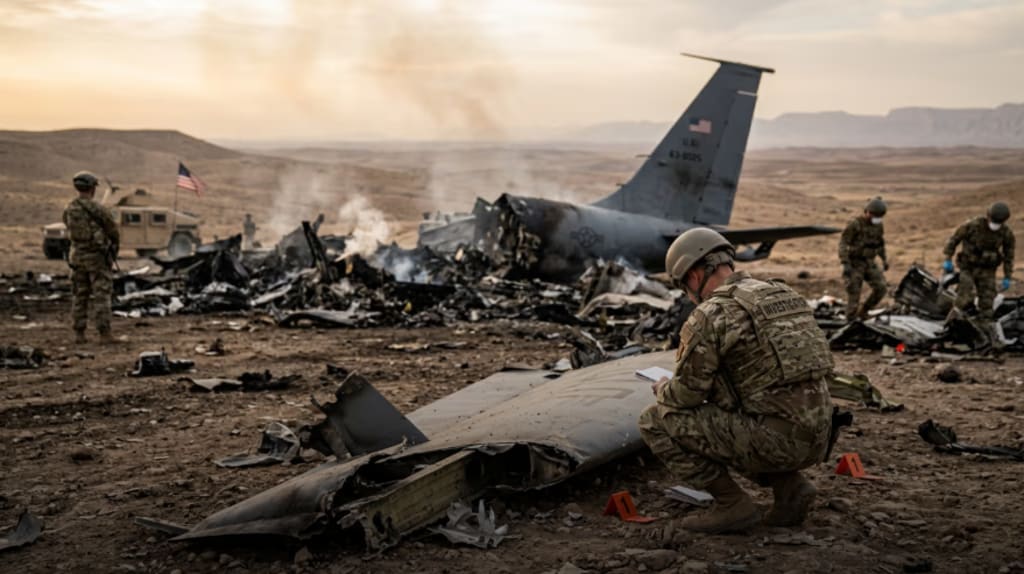
When Donald Trump went on national television and declared the Iran operation a “complete success”, the message was simple:
Mission accomplished. Troops coming home. Crisis ending.
On paper, that should have been bullish. But then something awkward happened. Wall Street didn’t celebrate. It panicked.
Act I: What Markets Should Have Done
If the war was truly ending, the reaction would’ve been textbook:
- Stocks ↑ (risk disappears)
- Oil ↓ (supply fears ease)
- Commodities ↑ (growth optimism returns)
That’s how markets behave when uncertainty fades.
Act II: What Markets Actually Did
Instead, we got the opposite:
- Stocks fell → risk-off mode
- Oil surged → fear intensified
- Industrial commodities dropped → recession signals
This combination isn’t random.
It’s a message. “We don’t believe you.”
Act III: Markets Don’t Trade Words—They Trade Reality
Here’s the first principle of capital markets:
Narratives are noise. Risk is everything.
And right now, the risk hasn’t gone away—it’s just changing shape. Because wars don’t end when one side says so. They end when both sides agree… or can’t continue.
Act IV: The Iran Problem — You Can’t Exit Alone
The core issue is simple:
The US may want to leave. But Iran doesn’t have to cooperate. And that’s exactly what markets are pricing in.
1. The Strait Card — Economic Pressure Without Direct War
Look at oil. The surge isn’t emotional—it’s strategic. The Strait of Hormuz controls a massive share of global oil flows.Iran doesn’t need to fight directly.
It just needs to:
- Disrupt shipping
- Threaten tankers
- Raise uncertainty
And suddenly:
- Oil spikes
- Inflation rises
- Political pressure builds
This is leverage. And markets know it.
2. Asymmetric Warfare — The Slow Bleed Strategy
The US dominates conventional warfare. So Iran avoids it.
Instead, it leans into:
- Drone swarms
- Proxy attacks
- Cyber disruptions
- Base harassment
Low cost. High impact. This isn’t about winning fast. It’s about making sure the US can’t leave cleanly.
Act V: Why Oil Up + Stocks Down = Bad News
This market combo is dangerous because it signals one thing:
Stagflation risk.
- Oil ↑ → higher costs
- Stocks ↓ → weaker growth expectations
- Commodities ↓ → demand concerns
This is the worst-case mix for policymakers. And it directly contradicts the “war is over” narrative.
Act VI: The Real Fear — A War That Refuses to End
Markets aren’t reacting to what has happened. They’re reacting to what might happen next.
And the fear is this:
- The US tries to exit…
- Iran raises the cost of leaving…
- The conflict drags on anyway.
Not a full-scale war. Not peace either. Just a slow, expensive grind.
Act VII: Why Smart Money Doesn’t Trust Political Timing
There’s another layer here.
Timing.
A “quick victory” followed by withdrawal sounds perfect politically.
But markets ask a different question:
Is the timeline realistic—or convenient?
Because if the timeline breaks:
- Credibility drops
- Volatility spikes
- Capital runs
And once confidence is gone, it’s hard to rebuild.
Final Insight: This Isn’t Rejection—It’s Risk Pricing
Wall Street isn’t being emotional. It’s being cold.
It sees:
- Unfinished conflict
- Uncertain exit
- High leverage from the other side
So it adjusts accordingly.
Closing Thought
There’s a famous saying in geopolitics:
“Winning a war is easy. Ending it is hard.”
Right now, the US is trying to end a war on its own terms. But markets are betting on something else:
That the final chapter hasn’t been written yet. And until it is—They won’t celebrate. They’ll hedge.
About the Creator
Why Did America Drop Atomic Bombs on Japan in 1945?
During World War II, the United States dropped atomic bombs on Hiroshima and Nagasaki in August 1945 to force Japan’s surrender and quickly end the war. American leaders believed this would avoid a long and deadly invasion of Japan, saving thousands of soldiers’ lives. It also demonstrated military power, especially to the Soviet Union. However, the decision remains controversial due to the massive civilian casualties and lasting destruction caused by the bombs.
By shaoor afridi2 days ago in History
The World’s BIGGEST Airplane & Its Crazy Transport Network
The Giant's Journey: How Airbus Transports the World's Largest Planes Airbus is a European powerhouse, producing nearly three aircraft every single day. But there is a massive catch: the parts for these planes are manufactured in different countries—wings in the UK, tails in Germany and Spain, and fuselage sections in France. Bringing them all to the final assembly line in Toulouse, France, is one of the most complex transport puzzles in the world.
By Imran Ali Shah7 days ago in History


Comments
There are no comments for this story
Be the first to respond and start the conversation.