
The Old Drifters' Journey Home
Eight years of raising our grandson at sixty, only for our son to say: "It’s time for you to go back home."

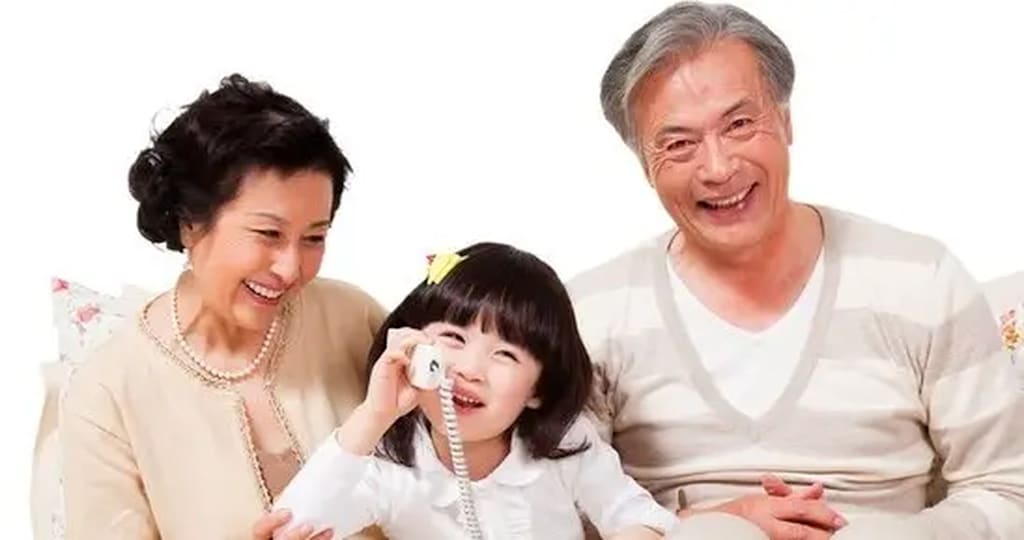
My name is Old Chen, and I am sixty-three years old. My wife is two years younger than me; she just turned sixty. Thinking back, we arrived in Hangzhou the year my grandson finished his first month of life—a tradition we call manyue. Just like that, eight years have slipped by.
Eight years—it’s not exactly a lifetime, but it isn’t short either. For two people in their sixties, these eight years felt like being uprooted from our native soil and forced to take root in a completely different land.
We are Northerners, from a county town on the edge of Henan province. My son, Xiao Chen—well, I can’t call him "Little Chen" anymore, he’s thirty-five—but in our hearts, he’s still that teenage boy who ran around the courtyard shouting the good news when he got into Zhejiang University. Back then, his acceptance was a sensation in the whole village; his mother was so happy she cried for days. Later, he stayed in Hangzhou to work, bought an apartment, and got married. Every step was steady. Back home, my wife and I would brag to anyone who would listen, our hearts bursting with pride.
Eight years ago, that spring, my son called. There was a hint of sheepishness in his voice. He said, "Dad, Mom, Xiaoyu is born. Do you think... you could come to Hangzhou to help out? We both have to work, and we don't feel safe hiring a nanny."
His mother agreed on the spot, without even consulting me. Only after hanging up did she tell me, "Old man, we have to go help our boy." What could I say? If we’re going, we’re going. Back then, we were just over sixty, still sturdy and capable of farm work, never missing a daily card game in the village. We left just like that—handed our affairs over to my nephew, locked the courtyard gate, and boarded the southbound train clutching two oversized plastic weave bags.
On the train, his mother even said, "We’ll just treat it like a vacation to Hangzhou. We’ll stay for six months or a year, and once the baby is older, we’ll come home."
Who would have guessed that this "stay" would last eight years?
The Early Days in Hangzhou
When we first arrived, absolutely nothing felt right.
First, there was the living situation. They lived in a residential compound, a "two-bedroom, one-living room" apartment. They said it was over ninety square meters, but our courtyard back home is over two hundred. You could hardly turn around without bumping into something. On the first day, I accidentally knocked a cup off the coffee table. My daughter-in-law’s mother was there too, and her expression soured. Of course, she didn’t say anything, but I’m a man who understands subtext.
Then, there was the sense of direction—or lack thereof. In Hangzhou, the buildings all look the same, and there are so many compounds. During my first week, I went out to buy groceries and couldn't find my way back. I wandered the complex for nearly an hour until my wife finally came down to find me. My daughter-in-law didn't scold me, but I saw her whispering to her mother, and I understood that look—she thought I was a nuisance.
The hardest part was the language. Our heavy Henan dialect is difficult for Hangzhou locals to understand. At the wet market, I’d ask "How much for this?" in my native tongue, and the vendors would just stare at me blankly. Over time, I picked up a bit of Mandarin, but it came out sounding neither here nor there; sometimes even I wanted to laugh at myself.
His mother adapted faster than I did. She’s always been a capable woman with a knack for childcare and a talent for cooking. Xiaoyu was especially close to her; from the time he was a few months old, he was practically glued to her. Feeding, changing diapers, coaxing him to sleep—she did it all. After my daughter-in-law finished maternity leave and went back to work, the burden fell almost entirely on my wife. As for me, I was responsible for the groceries, cooking, mopping, and taking out the trash, occasionally stepping in to hold the baby.
To be honest, those first two years were exhausting. Not a physical exhaustion, but a weariness of the soul. Living in my son’s house, I never felt at ease. My daughter-in-law is a Hangzhou local, and her lifestyle is different from ours. She’s meticulous. Everything has its place, and if I put something back wrong, she’d simply move it back to its "proper" spot without a word. That silence was harder to take than a scolding.
But what could we say? The son is our own, and we volunteered to raise the grandson. No matter how bitter or tired we were, we had to endure it.
Gradually Becoming "Hangzhou Locals"
The days tumbled by.
Xiaoyu went from crawling to walking, to running, to kindergarten, and now to second grade. Eight years—long enough for me to grow used to Hangzhou’s plum rain season, to food without chili peppers, and to taking the subway instead of a tricycle.
I eventually got to know most of the other grandparents in the neighborhood who were also there for childcare. There was an Old Zhang from Anhui, also there to help his son. We hit it off. Every morning after dropping the kids at school, we’d sit in the community pavilion, brew two cups of tea, and talk about our hometowns and our children. We’d sit there all morning.
Old Zhang went back to his hometown last year. The day he left, he told me, "Old Chen, you know what they call us? The laopiao—the 'Old Drifters.' We drift here, but our roots are still back home. Sooner or later, we have to go back."
At the time, I brushed it off. I thought, My grandson is still small. I still have to pick him up from school and help him with homework. How could I just leave?
But my wife’s health has declined over the last two years. Her back is bad; whenever the sky turns overcast, she can’t even stand up straight. Her blood pressure is high, too. Once, she nearly fainted, which scared the life out of me. The doctor said it was a combination of overwork and a failure to adjust to the local climate, suggesting she rest—ideally back in her hometown.
I brought it up to my son once, suggesting his mother-in-law take over for a while so my wife could go back and rest. My son said his mother-in-law wasn't doing well either, and besides, Xiaoyu wasn't close to her and might not adjust.
When I told my wife, she just sighed. "Forget it, I’ll just hold on a bit longer. It’ll be better when Xiaoyu gets a little older."
That "holding on" lasted another two years.
That Night
It happened one weekend last month.
After dinner, my daughter-in-law took Xiaoyu to his English lesson, leaving the three of us at home. I was washing dishes, my wife was on the sofa pounding her aching lower back, and my son was sitting nearby on his phone.
Suddenly, my son spoke up: "Dad, come sit for a second. I want to talk to you about something."
I wiped my hands and sat down. My wife straightened up too.
My son hesitated, then said, "Dad, Mom... Xiaoyu is big now, he’s in second grade. You can't really help him with his schoolwork anymore. Li and I discussed it, and we feel it’s been hard for you here in Hangzhou. Maybe... maybe you should let Mom go back to the hometown to rest for a while?"
My head started spinning.
He didn't say "you both." He said "you"—as in, "you let Mom go back."
I froze for a moment and asked, "If your mom leaves, who will pick up Xiaoyu? Who will cook?"
My son said, "Li applied for a flexible schedule at work. She can go in later and leave earlier. If all else fails, the school has an after-school program until 6:00 PM."
I asked again, "And what about me?"
My son glanced at me, and I read his look instantly. He said, "Dad, you don't really have much to do here in Hangzhou anyway. You might as well go back with Mom. We still have the land and the courtyard back home; you’d be more comfortable living there."
"You don't really have much to do here"—those words were like a needle piercing my heart.
I opened my mouth to say something, but my throat felt blocked. My wife sat beside me in silence, head down, her hand still rhythmically thumping her back, only slower and slower.
I didn't sleep a wink that night.
I kept thinking: in these eight years, what exactly have I been in Hangzhou?
Was I a nanny? But I never drew a cent in wages. My son gave us 3,000 yuan a month for groceries; anything extra came out of our own pensions. Xiaoyu’s toys, clothes, snacks—which of those didn't we pay for?
Was I family? But would a family member say, "You don't really have much to do here"?
I tossed and turned, my chest feeling tight. My wife wasn't sleeping either, her back to me. I couldn't tell if she was crying or just staring into the dark.
The next morning, I took Xiaoyu to school as usual. On the way, he pulled my hand and said, "Grandpa, are you and Grandma going back to the old house? I don't want you to go."
I asked, "Who told you that?"
"I overheard Daddy and Mommy talking last night."
My nose stung. I knelt down and told him, "Grandpa isn't leaving. Grandpa wants to watch Xiaoyu grow up."
Xiaoyu smiled and skipped into the school gates. I stood there, watching his receding back, and nearly burst into tears.
For the next few days, the atmosphere at home was subtle. My son didn't bring it up again, but we all knew the cards were on the table. My daughter-in-law’s eyes avoided ours; she was likely embarrassed.
I started to seriously consider the question: should I leave?
Truthfully, I missed home.
I missed that courtyard, the jujube tree, and the lounge chair beneath it. I missed the spicy hulatang soup at Old Li’s place by the village entrance, the market days on the 3rd, 6th, and 9th of the month, and the old friends I’d grown up with.
But I couldn't bear to leave Xiaoyu.
Eight years. His grandmother and I raised this boy. From his first time rolling over, to sitting up, to walking against the wall, to the first time he called out "Grandpa"—even if he used our Henan dialect—I remember every single moment vividly.
Last year, when he started first grade and got his first perfect score, he ran out of school and the first thing he did was wave his test paper at me: "Grandpa! I got a hundred!" At that moment, I felt all the exhaustion of the last eight years was worth it.
And now, my son tells me I can go.
Not "Dad, you’ve worked hard," or "Dad, take a break," but "You don't really have much to do here."
The Phone Call to Old Zhang
I brooded for two days until I couldn't take it anymore and called Old Zhang, who was already back in the village.
Old Zhang listened in silence for a long time, then said, "Old Chen, let me give it to you straight. When I left, I was even more reluctant than you. But later I realized—in our children’s homes, we are outsiders after all. When the kids are small, we’re useful; we help with the child and the chores. When the kids grow up and don't need us, it’s time for us to step back. It’s not that the son is unfilial; it’s just that this home, in the end, belongs to the young couple. If we’re just hanging around there, nobody feels at ease."
I said, "But I can't let go of Xiaoyu."
Old Zhang replied, "You have to, even if you don't want to. The kids have their lives, and we have ours. If you stay, the daughter-in-law is uncomfortable, the son is caught in the middle, and you’re miserable yourself. What’s the point?"
After hanging up, I sat on the balcony for a long time, staring into space.
Autumn in Hangzhou is beautiful. The sky is high and blue, and the scent of osmanthus fills the whole city. But no matter how sweet the fragrance, it isn't the smell of home. At this time of year back home, the corn should be harvested and the wheat planted. The air should smell of burning stalks, cow dung, and the metallic tang of upturned earth. It doesn't smell "good," but it smells grounding.
I Made a Decision
That night, I took the initiative to call my son out to the balcony.
I said, "Son, I want to talk about what you said the other day."
My son looked nervous, rubbing his hands. "Dad, I might not have said it the right way. Don't take it to heart."
I waved him off. "You were right. Xiaoyu is big now, and we can’t help with his studies. Your mom’s health isn't great either; it’s only right she goes back to the village to recover. Your mom and I have discussed it—we’re going back next month."
My son was stunned. He probably didn't expect me to agree so readily.
"Dad, I didn't mean... I'm not trying to kick you out..."
I said, "I know. You’re doing it for us. The hometown has the house and the land, and the air is better. It’ll be more comfortable. We can’t help much in Hangzhou anymore, and there’s no need to stay here and be a burden."
My son’s eyes turned red. "Dad, thank you for everything these years."
I patted his shoulder. "It was nothing. He’s my own grandson. It was my duty."
As I said those words, my heart was a mess of emotions. I wasn't entirely "willing," and I felt a bit wronged; yet, I also felt my son hadn't done anything wrong. He has his own family and his own life. As parents, we have to exit the stage eventually.
I just didn't expect the day to come so soon.
The Final Days
Once the decision was made, the days actually became easier.
His mother started packing. Eight years of stuff is quite a lot. Xiaoyu’s outgrown clothes, broken toys, old textbooks—she couldn't bear to throw any of it away, stuffing it all into those plastic weave bags. I asked her why she was taking all this junk back, and she said, "These are my memories."
My daughter-in-law seemed to feel guilty. She was exceptionally attentive over the last few days, volunteering to cook and wash dishes, and even bought my wife a new down jacket. Xiaoyu was more clingy than ever, insisting on sleeping with us every night, saying that once we were gone, no one would be there for him.
My son took time off work, saying he’d drive us back. I told him there was no need—we’d just take the train; we’d be home after a night in a sleeper berth. He insisted, so we compromised: he’d drive us to the station.
On the morning we left, Xiaoyu refused to go to school, clinging to his grandmother’s leg and crying as if his heart were breaking. She cried too, and my eyes grew red. Eventually, my daughter-in-law had to pull him away, telling him we’d still be there when he got home. But we knew that by the time he returned from school, we would be gone.
As the train pulled away, I looked out at Hangzhou—the city where I had lived for eight years—and I couldn't describe the feeling in my heart.
There was the lawn where my grandson learned to walk, the market where I bought groceries every day, the stone bench where I sat with Old Zhang, and the roads I had walked on countless nights. From today on, those places have nothing to do with me anymore.
My wife leaned her head on my shoulder and whispered, "Old man, did we do something wrong? We shouldn't have come. We stayed for eight years, and now we’re being sent back. It’s so embarrassing."
I said, "What’s there to be embarrassed about? We helped our son raise our grandson—that’s the natural order of things. Besides, if we hadn't come, who would have raised him? Would you have trusted a nanny?"
She didn't speak again, just leaned in closer.
The train headed north. The scenery outside changed from skyscrapers to fields and villages. The sky grew bluer, and the air gradually took on a familiar scent.
I knew we were almost home.
Back at the Old House
My nephew picked us up from the station. When the courtyard gate opened, it was full of fallen leaves, and the jujube tree had grown a girth thicker. The house smelled musty, but to me, that was the smell of home.
After two days of cleaning, the place looked like a home again. I lay on my old lounge chair, watching the leaves of the jujube tree rustle above me, and felt a sense of total relaxation spread through my body.
My wife’s back didn't hurt as much either. She said the water and soil of one’s hometown are what truly nourish a person.
My son video calls every day so we can talk to Xiaoyu. When Xiaoyu shouts "Grandpa, I miss you" into the screen, I laugh—and as I laugh, the tears come down.
The villagers heard we were back and started dropping by. Someone asked, "Old Chen, why are you back? Didn't you like enjoying the 'good life' in Hangzhou?"
I said, "What good life? I was there to work for my son, not to enjoy myself."
Someone else asked, "Did your son stop wanting you around?"
My face darkened. "What do you mean 'stop wanting' us? The child is grown and doesn't need us anymore. We’ve come back to live our own lives. It’s great."
I say that, but there’s still a bit of bitterness in my heart.
But as time goes on, I’m getting used to it. I wake up early for a bowl of hulatang in town, come back to tend to the vegetable patch, play cards with my old pals in the afternoon, and watch TV at night. My wife does "square dancing" with the village women, with even more energy than she had in Hangzhou.
Sometimes in the dead of night, I scroll through photos of Xiaoyu on my phone. The kid is eight now, sturdy and handsome, looking exactly like his father did when he was small.
I think to myself: when summer vacation comes, I’ll have him come stay for a while. I’ll take him to the fields to catch grasshoppers, to the river to catch fish, and to the town markets. I want him to know that besides that home in Hangzhou, he has another home here, with a grandpa and grandma who dote on him.
Coda
A few days ago, my son called, sounding hesitant. "Dad, Li and I were thinking... when Xiaoyu’s summer break starts, could he come back and stay for two months? Would that be okay?"
I said, "Of course. Why wouldn't it be? This is his home; he can come back whenever he wants."
After I hung up, my wife asked, "Old man, do you blame our son?"
I thought about it and said, "No. He has his own difficulties. Aren't we parents living for our children anyway? If they’re doing well, then it’s all been worth it."
Outside the window, the leaves of the jujube tree are starting to turn yellow. Autumn is coming again.
These eight years feel like a dream. Now that I’m awake, I’m back in this lounge chair, as if nothing had ever changed. But I know that everything has changed.
But it doesn't matter. The children grow up, and we grow old—that’s just how the world works. We helped where we could, we walked the path we had to walk, and for the rest of our days, it’s time to live for ourselves.
Being back home... it’s pretty good.
About the Creator
Water&Well&Page
I think to write, I write to think
Keep reading
More stories from Water&Well&Page and writers in Humans and other communities.
Thirty-Seven Missed Calls and the Limit of a Father’s Love
My name is Lao Zhou, and I’m sixty-three this year. Don’t let the age fool you; my hair has turned as white as a fresh snowfall over the last few years. It all goes back to a night last winter—a night I’ll never forget as long as I live.
By Water&Well&Pageabout 18 hours ago in Humans
Why Wicked: For Good is Undeservingly the ‘worse movie’
So… off the bat, we’re about to delve into something ridiculous. Just so we’re clear on that, ok? The first thing anyone that knows a thing about these dual movies… knows… is the original movie and sequel were shot together.
By Gabriel Shames6 days ago in Humans




Comments
There are no comments for this story
Be the first to respond and start the conversation.