
Fresh Vegetables Market Is Changing - and the Reasons Go Deeper Than You Might Expect
From vertical farms to AI-assisted breeding how the global fresh produce industry is being quietly rebuilt

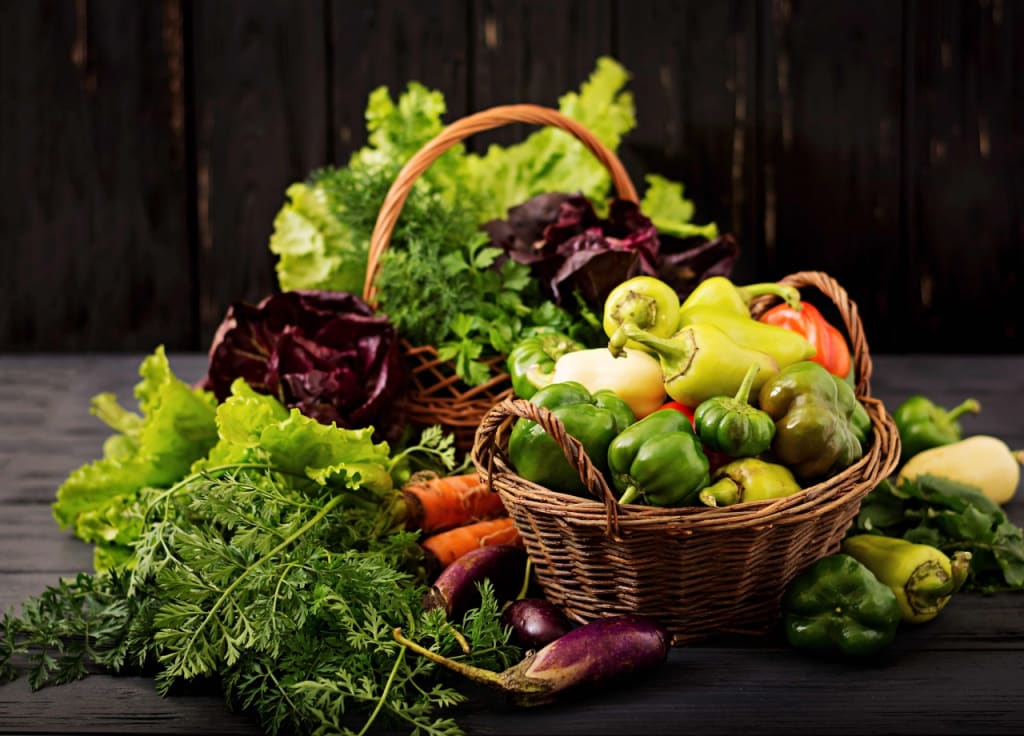
Fresh vegetables are not a glamorous topic.
They do not generate the kind of cultural conversation that surrounds new technology products or luxury goods. They sit quietly in the produce section, priced by the kilogram, bought by habit, and rarely thought about in any serious way by the people who consume them several times a day.
But underneath that unremarkable surface, the global fresh vegetables market is undergoing changes that are genuinely worth paying attention to, not just for the industry, but for anyone who eats.
According to Mordor Intelligence, the global fresh vegetables market size is anticipated to grow from USD 512 million in 2025 to USD 535 million in 2026, reaching USD 684 million by 2031 at a 5.02% CAGR. That steady growth reflects something more interesting than simple population increase. It reflects structural changes in how food is grown, distributed, and valued, changes that are reshaping the industry from the ground up.
Food as Medicine and What That Actually Means
The relationship between diet and health has always been understood in broad terms. Eat more vegetables, live better. That advice has been around for generations.
What is different now is the level of specificity and institutional support behind it.
Medical research has been making increasingly detailed connections between particular vegetables and particular health outcomes, such as cruciferous vegetables and cardiovascular risk, leafy greens and cognitive function. These findings are no longer staying in academic journals. Healthcare systems in countries like Canada and the United Kingdom have begun piloting programs that subsidize fresh produce for at-risk populations, treating food not as a lifestyle preference but as a clinical intervention.
Large institutional food service providers that feed hospital patients, university students, and corporate employees at enormous scale have been reformulating their menus to increase vegetable content in response to corporate wellness mandates. The effect of these shifts on overall demand for fresh vegetables is significant and structural in nature. It is not driven by individual consumer choices alone, but by organized systems that are now moving in the same direction.
The practical result is that fresh vegetable demand has become more resilient and more broadly distributed across the economy than it was a decade ago.
Growing Without Soil, Without Seasons
One of the more significant changes in the fresh vegetables industry is happening not in fields but in buildings.
Controlled-environment agriculture greenhouses, vertical farms, and hydroponic facilities have been expanding steadily, particularly in regions where traditional outdoor growing is limited by climate, water availability, or land constraints. The appeal is straightforward: year-round production, predictable output, dramatically reduced water use, and the ability to locate growing facilities close to the urban populations that consume the produce.
Major retailers including Walmart and Kroger have executed long-term supply agreements with vertical farming specialists, committing to minimum purchase volumes that give these operations the financial stability to scale. Vertical farming startups that began with leafy greens have been moving into higher-value crops, such as strawberries, cherry tomatoes, and cherry peppers, that generate better returns per square meter of growing space.
In the Middle East, climate-controlled growing facilities funded by sovereign investment programs are addressing the challenge of producing food in conditions that make traditional agriculture extremely difficult. Saudi Arabia's national agricultural development programs are piloting greenhouse technologies specifically designed to reduce energy consumption during summer months, as part of broader food security goals under Vision 2030.
What controlled-environment agriculture offers, fundamentally, is a degree of predictability that outdoor farming cannot. In a world where climate variability is increasing, that predictability has real economic value for growers, for retailers, and for the supply chains that connect them.
What Technology Is Doing to Plant Breeding
Breeding better vegetable varieties has traditionally been a slow process. Developing a new tomato with improved disease resistance, better shelf life, or higher nutrient density could take close to a decade from initial crosses to commercial release.
That timeline is being compressed.
Machine learning models that analyze plant genetics and growth characteristics have reduced tomato breeding cycles from around eight years to closer to five. Seed companies, including Syngenta, Bayer, and Rijk Zwaan are investing heavily in gene-editing technologies that can produce disease-resistant varieties without the regulatory complications associated with traditional genetic modification an important distinction in markets like Europe and in the organic segment, where labeling requirements shape what can be sold.
Precision farming, AI-based crop monitoring, and robotic harvesting are reducing the labor intensity of vegetable production while improving consistency and yield predictability. These technologies are not universally accessible yet they require capital investment that smaller growers often cannot access but they are moving steadily from large-scale commercial operations into more widely available tools.
The direction is toward vegetable production that is more efficient, more consistent, and less vulnerable to the labor availability and weather variability that have historically made fresh produce one of the more unpredictable categories in agriculture.
The Geography of Where Growth Is Happening
Asia-Pacific is currently the largest region in the global fresh vegetables market, anchored by China's enormous production capacity and driven by growing consumption across Japan and Southeast Asia. In Japan, shifting dietary habits and government support for smart agriculture technologies have supported steady demand growth. In Vietnam, Thailand, and Indonesia, rising incomes and the expanding presence of international food service chains are driving increased consumption of crops that were previously less common in local diets lettuce, bell peppers, and tomatoes among them.
Africa is projected to be the fastest-growing region through 2031, and the reasons are worth understanding in some detail.
Urbanization across the continent is creating large concentrations of consumers who need reliable access to fresh produce but who are geographically distant from traditional growing regions. Cold chain infrastructure, refrigerated transport and storage has historically been a significant constraint on fresh vegetable distribution in many African markets, contributing to post-harvest losses that reduced the economic viability of production. Investment in solar-powered cold storage facilities is beginning to address this problem in a practical and cost-effective way.
Trade liberalization under the African Continental Free Trade Area has reduced or eliminated tariffs on horticultural products between signatory countries, making it more viable to move surplus production from growing regions in Kenya, Tanzania, and Morocco to urban markets in Lagos and Kinshasa that have historically faced supply shortages.
Europe remains a significant and stable market, though stricter pesticide regulations and water scarcity challenges in key growing regions like southern Spain are creating constraints on expansion. North America is seeing growth supported partly by improved cross-border certification processes that reduce transit times for produce moving between the United States, Canada, and Mexico.
What the Industry Actually Looks Like
The fresh vegetables market is notably different in structure from many other food and consumer goods categories. It involves a complex web of producers, importers, exporters, logistics providers, and retailers, all operating against the fundamental constraint that the product is perishable and time-sensitive in a way that most goods are not.
Large integrated players like Dole and Fresh Del Monte operate across the full chain from seed procurement through contract farming to distribution, which gives them the ability to manage quality and consistency at scale. Their long-term supply agreements with major retailers provide demand visibility that supports the kind of planning and investment that fresh produce operations require.
Emerging opportunities in the market include vertical farming partnerships with urban real estate developers, direct-to-consumer subscription models that remove traditional retail intermediaries, and regenerative agriculture certifications that open access to premium pricing and carbon credit markets. These are not yet mainstream, but they represent directions in which parts of the industry are moving.
A Closing Thought
Fresh vegetables rarely make headlines. They are not disrupted by a new product launch, they do not trend on social media, and they do not attract the cultural attention that surrounds more visible consumer categories.
But the systems that produce and deliver them are changing significantly, driven by urbanization, climate pressures, advancing technology, and a genuine shift in how healthcare systems and consumers think about the role of food in daily health.
With the market projected to reach USD 684 million by 2031, what is unfolding in the fresh vegetables industry is a quiet but meaningful modernization of one of the most fundamental parts of the global food system.
That is a story worth knowing about, even if it never quite makes the front page.
About the Creator
Keep reading
More stories from Harvey Specter and writers in Journal and other communities.
The Outdoor Apparel Market Is Growing - and It Reflects a Real Shift in How People Live
Something has shifted in how people spend their free time. Not dramatically, not all at once, but consistently, across age groups and geographies, more people are choosing to spend time outdoors. They are hiking trails they never visited before, camping with their families, running routes through forests and hills, and generally treating the outdoors as a regular part of their weekly rhythm rather than an occasional event.
By Harvey Specterabout 9 hours ago in Journal
Author’s Advice
If you would’ve asked me 20 years ago did I know I’d become a writer and an author, I would’ve said “nope, ain’t happening”. As fate would have it I did become an author and I can honestly say I’m loving it so far. It really does feel good to be a writer. I’ve learned a lot on this journey and I feel like with even me being as new to this world as I am, there’s some wisdom I need to share with every other aspiring author.
By Joe Patterson6 days ago in Journal
Specialty Vehicles Market Supporting Critical Services and Specialized Operations
The Specialized Machines Behind Essential Services Across cities, highways, and industrial sites, specialized vehicles perform tasks that standard automobiles cannot. From ambulances and fire trucks to mobile medical clinics and command centers, these vehicles are designed to meet specific operational requirements in critical situations.
By james robert6 days ago in Journal




Comments
There are no comments for this story
Be the first to respond and start the conversation.