
Markets May Be Underestimating How the Iran War Could Hit the Global Economy
Rising energy costs, fragile supply chains, and financial uncertainty could turn a regional conflict into a global economic shock
Introduction
Global financial markets are often quick to react to political crises. However, they sometimes underestimate how deep the economic consequences of a war can be. The ongoing conflict involving Iran is raising exactly that concern among economists and financial analysts.
While markets have shown some volatility since the conflict began, many investors still appear relatively calm. Stock markets have not collapsed, and some traders seem to believe the conflict will remain limited to a specific region.
But history suggests that wars involving major energy regions can create economic ripple effects far beyond the battlefield. If the conflict continues or expands, the global economy could face rising inflation, supply disruptions, and slower growth.
In this blog, we explore why markets may be underestimating the economic impact of the Iran war and what risks could lie ahead.
Why Financial Markets May Be Too Optimistic
Investors often assume geopolitical conflicts will be temporary. When a war begins, markets sometimes react sharply at first but stabilize quickly as traders expect the situation to calm down.
This pattern appears to be unfolding again with the current conflict involving Iran. Many investors believe the fighting will remain contained and that global economic activity will continue largely unaffected.
However, economic analysts warn that this view may be overly optimistic. Wars that involve key energy-producing regions tend to have broader economic consequences, especially when they threaten global oil supplies or critical shipping routes.
The longer the conflict lasts, the greater the risk that financial markets will have to adjust their expectations.
The Oil Market: The First Economic Shock
One of the clearest economic effects of the conflict has been rising oil prices. Energy markets are extremely sensitive to geopolitical instability, particularly when it involves major oil producers.
The Middle East remains one of the most important oil-producing regions in the world. Any disruption to production or transportation can quickly push prices higher.
As the conflict continues, traders fear potential supply disruptions. Even the possibility of reduced production or blocked shipping routes is enough to create price spikes.
Higher oil prices affect nearly every sector of the global economy. Transportation, manufacturing, agriculture, and logistics all rely heavily on energy. When fuel becomes more expensive, businesses face higher operating costs that are often passed on to consumers.
This creates inflationary pressure that can weaken economic growth worldwide.
The Strategic Importance of the Strait of Hormuz
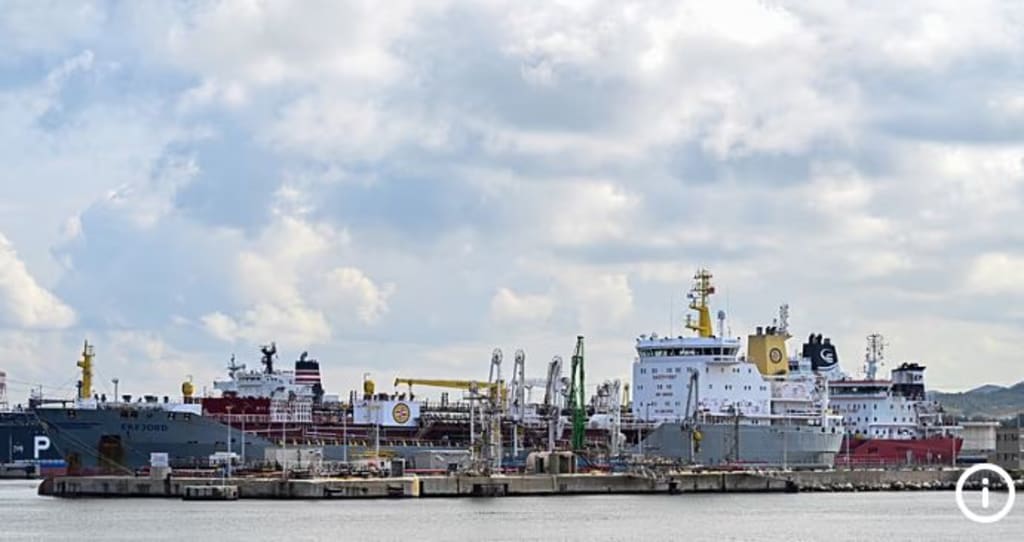
A major concern for global markets is the security of the Strait of Hormuz. This narrow waterway between Iran and Oman is one of the most important energy transit routes on the planet.
Roughly one-fifth of the world’s oil supply moves through this channel every day. Tankers carry crude oil from producers in the Middle East to markets across Asia, Europe, and North America.
If the conflict threatens shipping in this region, the global energy market could face serious disruptions. Even small interruptions can create shortages, increase transportation costs, and push oil prices significantly higher.
Because so much of the world’s energy supply depends on this route, instability in the Strait of Hormuz can send shockwaves through the global economy.
Supply Chains Could Face New Disruptions
Beyond oil, the conflict may also affect global supply chains. The modern global economy relies on interconnected trade networks that stretch across continents.
Many industries depend on resources produced in or transported through the Middle East. Petrochemicals, fertilizers, and energy-related materials all play key roles in manufacturing and agriculture.
If transportation routes become less secure or shipping costs rise dramatically, global supply chains could slow down. Businesses may face delays in receiving materials, while production costs could increase.
For consumers, these disruptions may appear as higher prices for goods or limited availability of certain products.
Inflation Risks Are Growing
Rising energy prices are one of the fastest ways to increase inflation across an economy. Fuel affects transportation, electricity production, and industrial processes.
When oil prices climb, the cost of shipping goods also rises. Airlines may raise ticket prices, delivery companies may increase fees, and manufacturers may charge more for finished products.
Central banks around the world have already been struggling to control inflation in recent years. If energy prices continue rising because of the conflict involving Iran, policymakers may face difficult choices.
They may need to keep interest rates higher for longer, which can slow economic growth and reduce investment.
Financial Markets Could Face Delayed Reactions
One of the reasons economists worry about the current situation is that financial markets sometimes react slowly to geopolitical crises.
In the early stages of a conflict, investors may believe the situation will stabilize quickly. But if the war drags on and economic data begins to reflect real damage, markets may react more dramatically.
For example, prolonged high oil prices could reduce corporate profits, weaken consumer spending, and lower economic growth forecasts.
If that happens, stock markets could experience sharper corrections later, rather than immediately after the conflict begins.
Global Trade and Transportation Are Already Feeling Pressure
Some industries are already experiencing the direct impact of the conflict. Airlines operating in the region have adjusted routes or canceled flights due to safety concerns.
Shipping companies are also facing higher insurance costs for vessels traveling near conflict zones. These expenses increase the overall cost of transporting goods across the world.
If these disruptions continue, global trade could slow, further increasing economic uncertainty.
Could the Conflict Trigger a Global Slowdown?
The biggest fear among economists is that the conflict could contribute to a broader global economic slowdown.
Higher fuel prices reduce consumer purchasing power. Businesses must manage higher costs, and governments may need to spend more on economic support programs.
When these factors combine, they can slow economic growth across multiple regions at the same time.
Even though the Middle East accounts for a relatively small share of global economic output, its role in global energy markets means that instability there can have worldwide consequences.
Final Thoughts
The war involving Iran may appear geographically limited, but its economic impact could be far-reaching. Rising energy prices, fragile supply chains, and financial uncertainty are already creating pressure on global markets.
While investors may currently believe the conflict will remain contained, history shows that wars involving key energy regions often produce long-lasting economic effects.
If the conflict continues or expands, the global economy could face higher inflation, slower growth, and increased financial volatility.
In an interconnected world, events in one region can quickly influence markets everywhere. And as the Iran war unfolds, the true economic impact may only be beginning to emerge.
About the Creator
Author’s Advice
If you would’ve asked me 20 years ago did I know I’d become a writer and an author, I would’ve said “nope, ain’t happening”. As fate would have it I did become an author and I can honestly say I’m loving it so far. It really does feel good to be a writer. I’ve learned a lot on this journey and I feel like with even me being as new to this world as I am, there’s some wisdom I need to share with every other aspiring author.
By Joe Patterson5 days ago in Journal
Hong Kong Authorities Raid Chinese Brokers Citic, Guotai
Hong Kong’s financial regulators and law‑enforcement agencies have launched a high‑profile raid on two major Chinese brokerage firms operating in the city, signalling an intensification of scrutiny into the territory’s capital markets. On Tuesday, authorities executed search warrants at the Hong Kong offices of Citic Securities Company Limited and Guotai Junan International Holdings Limited — two of the most prominent Chinese brokers playing key roles in equity capital markets and IPO sponsorships. The raids, confirmed by multiple sources familiar with the situation, underscore growing regulatory pressure on market participants amid a global boom in listings and trading activity. High‑ranking executives were questioned and at least one senior official was taken in for questioning, according to people briefed on the matter. Authorities specifically targeted the equity capital markets divisions of both firms, which oversee share sale transactions, IPO applications and related deal structuring work. While the exact focus of the investigation remains unclear, the move represents one of the most notable enforcement actions in Hong Kong’s financial sector in years. Context: A Financial Hub Under Watchful Eyes Hong Kong’s role as Asia’s premier capital‑raising centre has returned with force over the past year. After being displaced by other global exchanges during market turbulence, the city regained its footing in 2025, attracting a surge of initial public offerings — many from mainland Chinese companies — and surpassing rivals to reclaim the title as the world’s busiest IPO venue. This resurgence has drawn increased attention from regulators concerned about market integrity, disclosure practices and compliance with securities laws. Citic and Guotai Junan have been among several Chinese brokerages deeply involved in this boom, helping several companies take stock public in Hong Kong. Notably, both have acted as sponsors on high‑profile IPOs in logistics, technology and industrial sectors. This enhanced visibility has also brought heightened regulatory expectations, as authorities seek to ensure that brisk market activity does not come at the expense of investor protection or regulatory compliance. The Securities and Futures Commission (SFC), Hong Kong’s chief securities regulator, and the Independent Commission Against Corruption (ICAC) declined to comment on the ongoing actions. Both brokerages also did not immediately respond to requests for comment, leaving market participants and observers waiting for official clarity on the nature of the inquiry. What Regulators Might Be Looking At While authorities have been tight‑lipped about details, analysts and market insiders speculate that the raids could relate to several possible issues: 1. IPO compliance concerns: In recent weeks, the SFC has warned brokerages about substandard IPO applications and documentation, including errors and omissions in prospectuses. Given Citic and Guotai Junan’s roles in sponsoring listings, regulators may be probing whether proper due diligence was performed. 2. Trading irregularities and insider activity: Hong Kong has been vigilant in combating market abuse, and past actions against hedge funds and trading firms indicate authorities have little tolerance for insider trading or coordinated market manipulation. While there is no public allegation of wrongdoing tied to these raids, the focus on key equity divisions raises questions about potential investigations into trade execution or information disclosures. 3. Regulatory compliance standards: As China’s influence in Hong Kong’s markets grows, regulators are determined to maintain international standards of transparency and investor confidence. Ensuring that global investors can trust regulatory enforcement in Hong Kong is crucial to sustaining the exchange’s appeal. Market Reaction and Broader Implications Initial market responses were muted. Shares of both firms showed little immediate sell‑off, reflecting perhaps a wait‑and‑see attitude among investors. However, the broader financial community is watching closely: enforcement actions against major brokers could signal an era of stricter oversight and less tolerance for lapses, especially as Hong Kong competes with New York, London and Shanghai for capital flows. The brokerage industry in Hong Kong has been under pressure of late. Last year, separate cases brought scrutiny to alleged insider trading — including a notable matter involving Segantii Capital Management — and regulators have been clear that market conduct will be a priority. A former Hong Kong stock exchange staffer was charged over bribery linked to an alleged insider trading incident, and warnings about sloppy IPO filings have been publicly issued. Hong Kong’s Balancing Act For decades, Hong Kong has balanced its position between being a vital conduit for Chinese capital markets and maintaining robust regulatory frameworks recognizable to Western investors. This dual role has been central to its success, enabling companies from across Asia to tap global capital. The current raids — especially on influential brokers — highlight the tension inherent in that role: maintaining openness and market depth while enforcing rules that protect investors and uphold confidence. Looking Ahead As the story develops, market watchers anticipate further disclosures that could clarify whether the investigations will result in formal charges or regulatory sanctions. Regardless of outcome, the raids underscore that even the largest financial intermediaries are subject to scrutiny in Hong Kong’s markets — a message that resonates with both domestic and international investors. This incident may signal a new phase in the territory’s financial regulation — one in which authorities are willing to take decisive action against major players to preserve market integrity, even during the busiest period in Hong Kong’s capital market history.
By Fiaz Ahmed 6 days ago in Journal
March 15, 2026
Merriam Webster - Word of the day: Tranche refers to a division or portion of a whole. World Contact Day is commemorated every year on March 15. It is a unique observance held globally to focus on communicating with extraterrestrial life and exploring the possibility that intelligent beings may exist beyond Earth. World Contact Day inspires people to invoke their curiosity and spend time thinking about the universe and the mysteries surrounding it. What is the “Ides of March”? According to the Roman calendar, the Ides are a monthly occurrence. In March and other months with 31 days, the Ides always falls on the 15th; it falls on the 13th in months with 30 days. The Ides traditionally marked the arrival of the new Moon and was cause for celebration. The word “Ides” is derived from Latin, meaning “to divide.” Mothering Sunday in 2026 falls on Sunday, March 15. Mothering Sunday, celebrated in the United Kingdom and Ireland, occurs on the fourth Sunday of Lent, which is exactly three weeks before Easter. Unlike the fixed-date Mother's Day in countries like the United States, Canada, and Australia, Mothering Sunday’s date changes each year according to the Christian liturgical calendar. On March 15, 2026, several notable observances and events are celebrated: Dumbstruck Day: A day to express frustration. Everything You Think is Wrong Day: A day to challenge and celebrate wrong beliefs. International Day Against Police Brutality: A day to raise awareness and advocate against police violence. My look at today, March 15, 2026 below:
By Denise E Lindquista day ago in Writers



Comments
There are no comments for this story
Be the first to respond and start the conversation.