
The Real Reason You Keep Waking Up Tired (It’s Not Just Lack of Sleep)
The Temperature & Darkness Trap – What Your Ancestors Knew

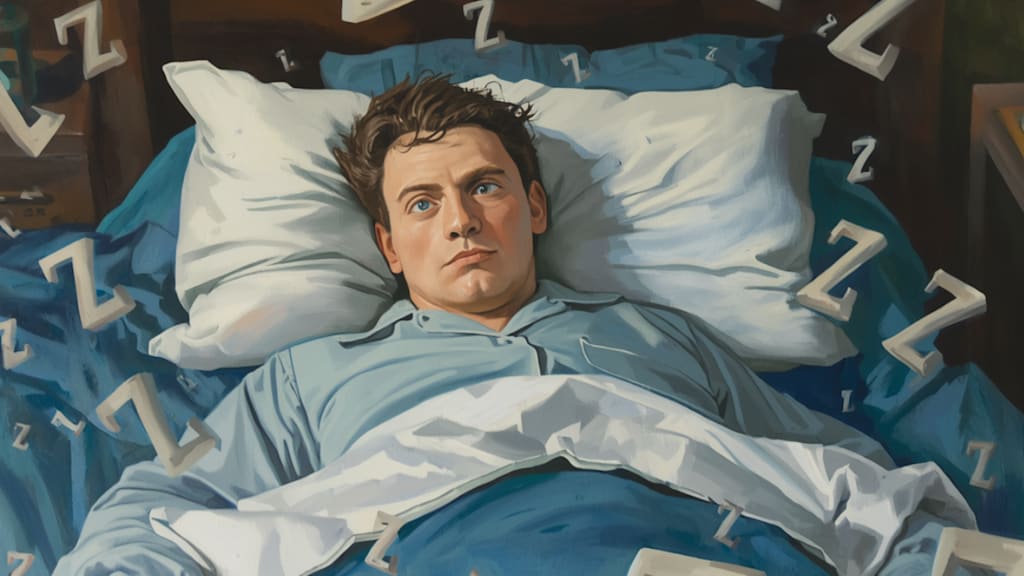
You set your alarm for a solid 8 hours. You put on your silk eye mask, sip your chamomile tea, and drift off at a reasonable hour. Then morning comes — and you feel like you’ve been hit by a truck. Your brain is foggy, your body is heavy, and that first coffee doesn’t even make a dent.
If this sounds familiar, you’ve probably been told: “Just go to bed earlier.” But the truth is more interesting — and more fixable.
Here’s what most people get wrong about morning fatigue, and how to finally wake up feeling human again.
---
1. The “Sleep Bank” Myth – Why More Hours Won’t Help
Many people believe sleep works like a bank account: deposit enough hours, and you’ll withdraw energy the next morning. That’s not how sleep works.
The real currency of sleep is quality, not quantity. You can lie in bed for 9 hours but only get 4 hours of restorative sleep. The rest is light, fragmented dozing that your brain barely counts.
Imagine two people:
· Person A sleeps 6 hours but cycles smoothly through deep sleep and REM.
· Person B sleeps 9 hours but wakes up 10–15 times per hour (often without remembering it).
Person A will almost always feel more rested.
So before you blame your schedule, ask yourself: Was my sleep actually deep, or was I just unconscious?
---
2. The Hidden Thief: Sleep Apnea (And Why You Probably Ignore It)
In many cultures, loud snoring is seen as a sign of “deep sleep.” That’s a dangerous myth. In Western medicine, loud, irregular snoring — especially with choking or gasping sounds — is a classic sign of obstructive sleep apnea.
Here’s what happens: during sleep, your throat muscles relax so much that your airway partly or fully closes. Your brain notices you’re not breathing, panics, and jerks you out of deep sleep — often without fully waking you up. This can happen 30+ times an hour.
The result? You spend the whole night fighting for air instead of resting. In the morning, you wake up with a dry mouth, a headache, and the feeling that you’ve run a marathon in your dreams.
Why this is overlooked: Many people think sleep apnea only affects older, overweight men. In reality, it affects all ages, body types, and genders. Thin women in their 30s can have it. Even children can have it (often misdiagnosed as ADHD).
If you wake up tired more than three times a week, and you snore or wake up with a sore throat, talk to a doctor about a sleep test. It’s often a simple home device now — no hospital stay required.
---
3. Your Evening “Wind-Down” Is Actually Winding You Up
Let’s look at a typical modern evening:
· 9 PM – Scroll through social media (bright screen, blue light).
· 9:30 PM – Watch a tense action show or crime drama.
· 10 PM – Check work emails one last time (stress).
· 10:30 PM – Get into bed, feel your mind racing.
To an international audience, this looks normal. But from a biological perspective, it’s chaos.
Blue light from screens tricks your brain into thinking it’s still daytime. It suppresses melatonin — the hormone that tells your body “time to sleep.” And watching stressful content keeps your cortisol (stress hormone) high, which is the opposite of what you need for deep sleep.
In many East Asian cultures, people have a traditional habit of winding down with tea, a warm bath, or quiet reading. In the West, the “hustle culture” often glorifies being busy until the last minute. Neither extreme is ideal.
Simple fix: Try a “screen curfew” 60 minutes before bed. No phones, no laptops, no TV. Instead, read a physical book, stretch, or listen to calm music. The first few nights feel boring — that’s exactly the point. Boredom is the gateway to deep sleep.
---
4. The Temperature & Darkness Trap – What Your Ancestors Knew
Before electricity, humans slept in near-total darkness and cooling temperatures. As the sun set, the world got dark and cool. That temperature drop was a powerful signal to your body: “Prepare for rest.”
Today, we sleep in warm, often stuffy rooms with streetlights bleeding through the curtains. Your bedroom might be 22°C (72°F) all year. But research shows the ideal sleep temperature is actually 16–19°C (60–67°F) for most people.
Why? Your body needs to drop its core temperature by about 1°C (1.8°F) to initiate and maintain deep sleep. A warm room fights that process.
Darkness is equally important. Even a tiny LED from a phone charger or a crack of light under the door can interrupt your sleep cycles. Your skin has light receptors — you don’t even need your eyes open to be affected.
Quick wins:
· Use blackout curtains or a sleep mask.
· Turn your thermostat down at night.
· Cover or tape over small lights in your room.
---
5. The Late-Night Snack That Destroys Your Sleep (It’s Not What You Think)
You’ve heard “don’t eat sugar before bed.” But the real sleep-killer might surprise you: protein-heavy meals, especially red meat or cheese.
Digesting protein raises your body temperature and requires your stomach to work hard through the night. Your body can’t enter deep rest if it’s still breaking down a cheeseburger.
On the other hand, going to bed starving is also bad — low blood sugar triggers cortisol and adrenaline, which wake you up.
The Goldilocks snack: A small amount of complex carbs (like a banana or a few crackers) with a tiny bit of protein (like a spoon of peanut butter). Carbs help transport tryptophan (a sleep-promoting amino acid) to your brain, while just enough protein prevents midnight hunger.
In many Western countries, dinner is the biggest meal, eaten late (8–9 PM). In some Mediterranean and Asian cultures, dinner is smaller and earlier. That’s not a coincidence — earlier, lighter dinners are strongly linked to better sleep.
---
6. The “Weekend Lie-In” That Wrecks Your Monday
Here’s a trap almost everyone falls into: You sleep poorly all week, so on Saturday you sleep until 11 AM. Sunday you sleep in again. Monday morning? You feel worse than ever.
This is called social jetlag — the mismatch between your biological clock and your sleep schedule. Sleeping in on weekends shifts your internal rhythm later. Then Monday’s early alarm hits you like a time zone change without a plane ride.
Think of your sleep schedule like a piano. You can play a different song on the weekend, but if you change the tuning entirely, Monday’s notes will sound terrible.
Better approach: Wake up no more than one hour later on weekends than on weekdays. If you’re exhausted, take a short afternoon nap (20–30 minutes) instead of sleeping in. Naps give you recovery without breaking your rhythm.
---
7. The Silent Factor: Your Mental “Unfinished Business”
This one doesn’t show up on a sleep tracker. You can have perfect temperature, no apnea, no late snacks — and still wake up tired because your brain is busy.
What are you worried about? A conversation you need to have? A bill you haven’t paid? A project you’re procrastinating on?
Your brain treats unresolved tasks as open loops. It keeps a little mental energy reserved for them, even during sleep. That prevents the full relaxation needed for restorative rest.
The fix is simple but not easy: Write down your top three worries or tasks before bed. Just putting them on paper tells your brain, “I’ve saved this. You can let go for now.” This is called a “brain dump,” and it’s one of the most evidence-backed sleep tools you’ve never tried.
---
8. One Test to Find YOUR Real Reason
You’ve just read seven possible reasons. Don’t try to fix all at once. That’s overwhelming and won’t work.
Instead, keep a one-week sleep diary — but not a complicated one. Each morning, rate three things on a scale of 1–10:
1. How rested do you feel?
2. Did I snore or wake up choking? (Yes/No)
3. What time did I last eat/drink before bed?
After seven days, look for patterns. If you feel worse on days after late dinners, that’s your clue. If you feel worse after stressful evenings, that’s your clue. If you snore on 4+ nights, see a doctor.
No app or gadget can replace this simple observation. Your body is already telling you the answer — you just haven’t been listening.
---
Final Takeaway – You’re Not Broken
If you wake up tired every day, it’s easy to feel like something is wrong with you. “Maybe I just need more discipline.” “Maybe I’m getting old.” “Maybe this is just how I am.”
Stop that thought. Most chronic morning fatigue has a specific, fixable cause. It’s not a character flaw. It’s a mechanical problem — like a car with a dirty fuel filter. Once you find the real reason, you can solve it.
Start with the simplest fix tonight: darken your room, cool it down, and put your phone away one hour before bed. Just that one change helps many people within three nights.
And if it doesn’t? Pick another reason from this list. Work through them one by one. Your energetic mornings are waiting on the other side.
Now go fix your sleep — not by sleeping more, but by sleeping smarter.
About the Creator
Health Looi
Metabolism & Cellular Health Writer. I research and write about natural health, :mitochondrial support,and metabolic wellness .More health guides and exclusive content:
https://ko-fi.com/healthlooi
Keep reading
More stories from Health Looi and writers in Longevity and other communities.
How Stress Is Destroying Your Sleep
The Silent Thief: Understanding the Stress-Sleep Connection You lie in bed, exhausted from the day. Your body is still, but your mind is racing. You replay conversations, worry about tomorrow’s deadlines, and calculate your finances for the hundredth time. The clock ticks past midnight, then 1 a.m., then 2 a.m. Sleep remains a stranger.
By Health Looia day ago in Longevity
Microsoft's Purposeful Marketing Deception About AI's Ability To Beat Physicians In Diagnosis
When you look at the world of scientific research... If you are not careful... You will be fooled into believing things that are not actually supported by the data.
By Dr. Cody Dakota Wooten, DFM, DHM, DAS (hc)25 days ago in Longevity
9 Secrets to Build Iron-Clad Discipline
THE DISCIPLINE MYTH NOBODY TALKS ABOUT The biggest lie the self-improvement industry sells is that discipline is about willpower and forcing yourself to do hard things through sheer mental toughness, when neuroscience research consistently shows that people with the strongest discipline actually use the least willpower because they have designed their environments, habits, and identity in ways that make desired behaviors automatic rather than requiring constant conscious effort. The Navy SEALs, Olympic athletes, and Fortune 500 CEOs who appear to have superhuman discipline are not gritting their teeth through every workout and every early morning, they have built systems that make discipline feel natural and inevitable rather than forced and painful, and understanding these systems is the difference between people who maintain discipline for decades and people who burn out after two weeks of white-knuckling through habits they hate.
By The Curious Writer7 days ago in Longevity
12 Life Lessons The Golden Girls Taught Us
Picture it: Miami, 1985. Four middle-aged actresses agree to play the characters of Blanche, Rose, Dorothy, and Sophia who share a home in a TV sitcom called The Golden Girls, unaware at the time of the kind of impact the show would leave on its adoring fans. The show aired until 1992, ending with a one-season spinoff called Golden Palace. The seven years we were graced with The Golden Girls on our television screens made its mark. More than three decades after Susan Harris’ imagination sparked the creation of these iconic characters, fans from around the world still watch reruns of The Golden Girls, spend time discussing the show on social media in Facebook groups like The Golden Girls Fanatics, carry Sophia-inspired handbags and relate to the episodes in their daily lives.
By Criminal Matters5 days ago in Humans


Comments
There are no comments for this story
Be the first to respond and start the conversation.