
PHP vs IOP Programs: Key Differences and How to Choose the Right Care
PHP vs IOP Programs

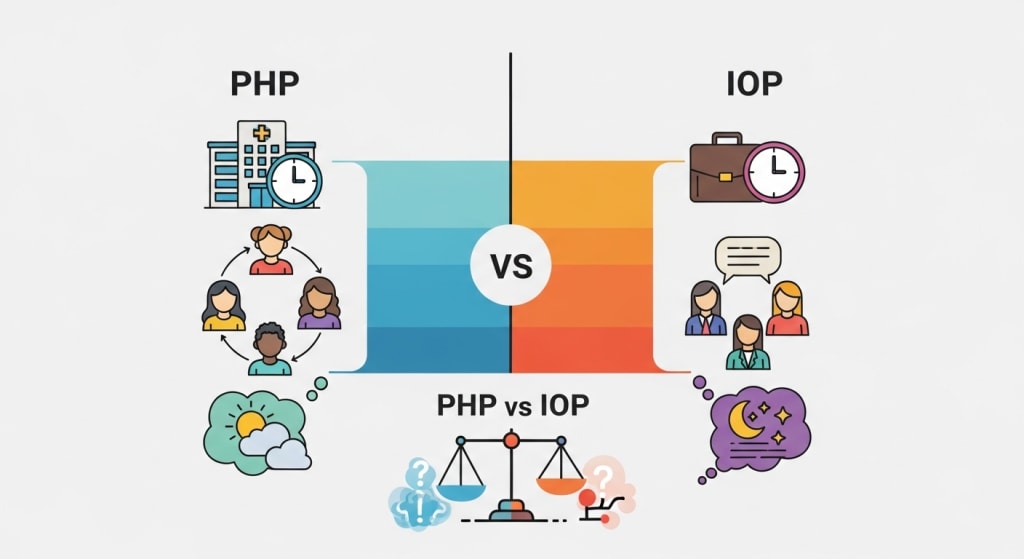
Choosing the right mental health treatment program can feel overwhelming, especially when faced with multiple options. Two of the most common and effective outpatient care models are Partial Hospitalization Programs (PHP) and Intensive Outpatient Programs (IOP). While both offer structured support, they differ in intensity, schedule, and overall approach to care.
Understanding these differences is essential for selecting a program that aligns with your needs. If you’re exploring treatment options, reviewing PHP vs IOP programs can help you make a more informed decision and take the first step toward lasting recovery.
What Is a Partial Hospitalization Program (PHP)?
A Partial Hospitalization Program (PHP) is a highly structured outpatient treatment option designed for individuals who require intensive support but do not need 24/7 inpatient care.
PHP programs typically run for several hours a day, five to seven days a week. This level of care allows individuals to receive comprehensive treatment during the day while returning home in the evening.
Common features of PHP include:
- Daily therapy sessions
- Psychiatric care and medication management
- Group counseling and peer support
- Skill-building and coping strategies
- Ongoing clinical monitoring
PHP is often recommended for individuals experiencing moderate to severe mental health conditions or those transitioning from inpatient treatment.
What Is an Intensive Outpatient Program (IOP)?
An Intensive Outpatient Program (IOP) offers a more flexible level of care while still providing structured therapy and support. It is designed for individuals who need continued treatment but can manage daily responsibilities such as work, school, or family obligations.
IOP programs typically involve a few hours of therapy several days a week, making them more adaptable to everyday life.
Services offered in IOP may include:
- Individual counseling
- Group therapy sessions
- Psychoeducation
- Relapse prevention planning
- Emotional regulation techniques
IOP is often used as a step-down option after completing PHP or inpatient care, but it can also serve as a starting point for individuals with less severe symptoms.
Key Differences Between PHP and IOP Programs
While PHP and IOP share similar treatment goals, they differ in several important ways that impact the level of care provided.
Intensity of Treatment
PHP offers a higher level of care with more hours of therapy and closer supervision. It is ideal for individuals who need significant support and structure.
IOP provides a moderate level of care, focusing on maintaining progress while allowing for more independence.
Time Commitment
PHP requires a full-day commitment for multiple days each week, making it similar to a full-time schedule.
IOP involves fewer hours per week, allowing individuals to balance treatment with daily responsibilities.
Medical and Psychiatric Support
PHP includes more frequent access to medical professionals, including psychiatrists and medication management services.
IOP may still provide medical support, but it is typically less frequent than in PHP programs.
Flexibility and Lifestyle Balance
IOP offers greater flexibility, making it a better option for individuals who need to maintain work, school, or family commitments.
PHP focuses on stabilization and intensive care, which may limit outside activities during treatment.
How to Choose the Right Program
Selecting between PHP and IOP depends on several personal and clinical factors. The right choice will vary based on individual needs, lifestyle, and the severity of symptoms.
Consider PHP if:
- You need intensive, structured support
- Symptoms are severe or unstable
- You are transitioning from inpatient treatment
- Daily monitoring is necessary
Consider IOP if:
- Your symptoms are stable or improving
- You can manage daily responsibilities
- You need continued support after higher-level care
- Flexibility is important for your routine
A comprehensive evaluation by a mental health professional can help determine the most appropriate level of care.
The Role of Evidence-Based Therapies
Both PHP and IOP programs rely on evidence-based therapies to support mental health recovery. These approaches are designed to address the root causes of mental health conditions and promote long-term healing.
Common therapies include:
- Cognitive Behavioral Therapy (CBT)
- Dialectical Behavior Therapy (DBT)
- Trauma-informed care
- Group therapy and peer support
According to the Substance Abuse and Mental Health Services Administration (SAMHSA), structured outpatient programs that incorporate evidence-based practices significantly improve recovery outcomes.
These therapies help individuals develop coping skills, manage stress, and build resilience over time.
Transitioning Between Levels of Care
Mental health recovery often involves moving through different levels of care as progress is made. Many individuals begin with inpatient treatment or PHP and later transition to IOP for continued support.
This gradual step-down approach allows individuals to build independence while still benefiting from structured care. It also helps prevent relapse by ensuring ongoing support during critical stages of recovery.
Treatment providers work closely with individuals to adjust care plans based on progress and evolving needs.
Benefits of PHP and IOP Programs
Both PHP and IOP programs offer valuable benefits that support mental health and recovery.
Some of the key advantages include:
- Access to licensed mental health professionals
- Structured treatment plans
- Development of coping and life skills
- Peer support through group therapy
- Improved emotional regulation and stability
These programs provide a balanced approach to care, combining professional support with real-life application.
Building a Path Toward Recovery
Choosing between PHP and IOP is an important step in the recovery journey. Both programs are designed to help individuals improve their mental health, develop coping strategies, and build a stable foundation for the future.
Recovery is not a one-size-fits-all process, and the right level of care can make a significant difference. By selecting a program that meets your needs, you can take meaningful steps toward healing and long-term wellness.
Final Thoughts
Understanding the key differences between PHP and IOP programs can help you make a confident and informed decision about your mental health care. PHP provides intensive, structured support, while IOP offers flexibility and continued guidance.
Both programs play a vital role in recovery. With the right treatment plan and professional support, individuals can achieve lasting progress and improve their overall quality of life.
Frequently Asked Questions
What is the main difference between PHP and IOP?
PHP offers more intensive, full-day treatment, while IOP provides fewer hours of therapy with greater flexibility.
Who should choose a PHP program?
PHP is ideal for individuals who need a higher level of care due to severe or unstable mental health symptoms.
Is IOP effective for mental health treatment?
Yes, IOP is highly effective for individuals who need structured support while maintaining daily responsibilities.
Can I switch from PHP to IOP?
Yes, many individuals transition from PHP to IOP as they progress in their recovery journey.
Do both programs include therapy?
Yes, both PHP and IOP programs include evidence-based therapies such as CBT and DBT to support long-term recovery.
About the Creator
Jordan Blake
Jordan Blake is a medical content writer focused on mental health and addiction recovery, delivering research-driven, reader-friendly healthcare content.
Keep reading
More stories from Jordan Blake and writers in Psyche and other communities.
How to Get Cocaine Out of Your System Safely and Effectively
Cocaine is a powerful stimulant drug that can have serious effects on both the body and mind. While some individuals may initially use cocaine for its short-term feelings of energy or euphoria, repeated use can quickly lead to dependence and addiction. Over time, cocaine can impact physical health, emotional stability, and overall well-being.
By Jordan Blake4 days ago in Psyche
The Friendship Recession: Why Adults Are Struggling To Build Close Relationships
This is a universal phenomenon that is affecting both individual and collective psyches. Humans thrive on companionship. The pandemic is solely to blame, however that particular far from auspicious time is not really to blame. The no-friends-trend-turned-friendship-recession, bringing forth the loneliness epidemic was a thing before 2020.
By Justine Crowleyabout 13 hours ago in Psyche


Comments
There are no comments for this story
Be the first to respond and start the conversation.