
From Speculation to Infrastructure: How the Crypto Industry Is Maturing
A Brief on the Crypto Industry and latest insights
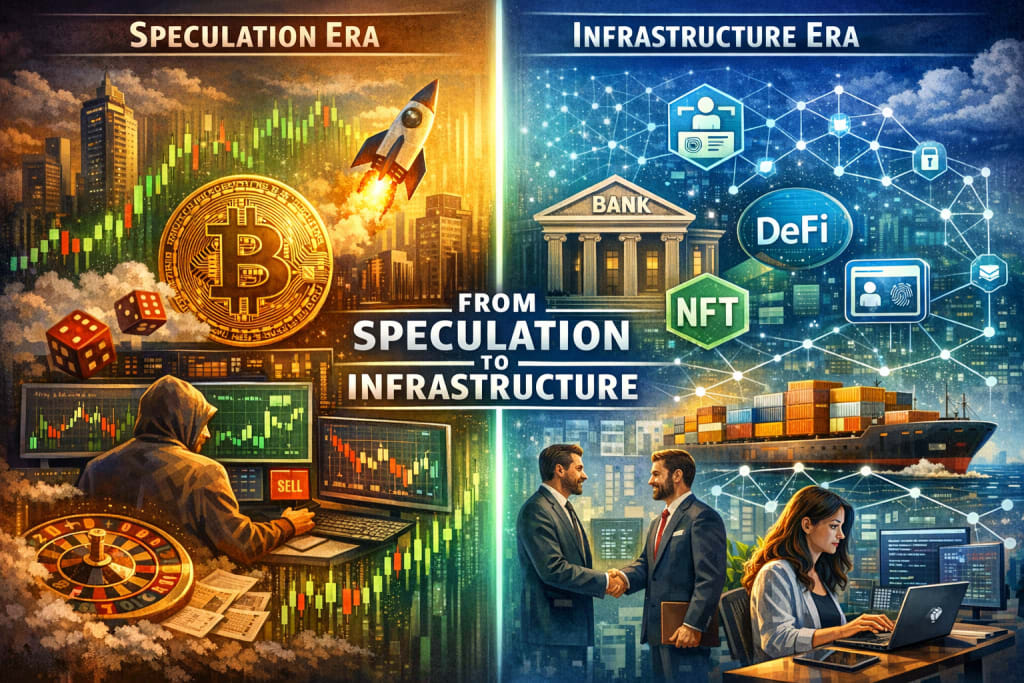
The cryptocurrency industry has changed dramatically over the past decade. In its early years, most conversations revolved around price speculation and short-term market movements. Today, the focus is gradually shifting toward building real infrastructure that can support long-term digital economies.
Blockchain networks are now being used to power decentralized finance platforms, digital identity systems, global payment networks, and tokenized asset markets. This transformation shows that the industry is moving beyond its experimental phase and entering a stage where practical applications are becoming more important.
For Web3 participants, understanding this shift can help explain where the next wave of innovation may come from.
The Early Era of Crypto: Innovation and Experimentation
When cryptocurrencies first appeared, they introduced a new concept: decentralized digital money that operates without a central authority. Early adopters were primarily technologists and enthusiasts who believed in the idea of a borderless financial system.
During this stage, most projects focused on proving that blockchain technology could function securely and independently. Many networks experimented with different consensus mechanisms, token structures, and governance models.
While this period produced rapid innovation, it also resulted in thousands of experimental projects that lacked long-term utility.
The Rise of Real Use Cases
As blockchain technology matured, developers began exploring practical applications beyond simple transactions. Decentralized finance (DeFi) allowed users to lend, borrow, and trade assets without traditional banks. Gaming platforms introduced digital ownership through non-fungible tokens (NFTs).
Supply chain systems started using blockchain to track goods across international trade networks, improving transparency and accountability. Meanwhile, decentralized identity solutions began exploring ways to give individuals greater control over their personal data.
These developments demonstrated that blockchain could serve as more than just a payment system.
The Importance of Ecosystem Development
One of the most important drivers of long-term success in the crypto industry is ecosystem development. A strong ecosystem includes developers, users, applications, and infrastructure providers working together within a network.
When developers build useful applications, users are more likely to participate in the ecosystem. Increased participation leads to more innovation and additional services, creating a cycle of growth.
This network effect often determines whether a blockchain platform can maintain relevance over time.
Market Narratives and Forecast Discussions
The crypto industry is also known for its active forecasting culture. Investors frequently discuss the potential future value of different blockchain networks as part of broader market analysis.
In many online communities, topics such as ada cardano price prediction often appear during discussions about long-term blockchain adoption and technological progress. However, analyzing ada cardano price prediction typically requires looking beyond market speculation and considering factors like ecosystem growth, developer activity, and real-world use cases.
Forecast conversations often reflect broader interest in how blockchain networks may evolve as the industry matures.
The Role of Regulation and Institutional Interest
Another important factor shaping the future of cryptocurrency is regulation. Governments around the world are gradually developing frameworks that define how digital assets should operate within existing financial systems.
At the same time, financial institutions and large corporations are increasingly exploring blockchain technology. Some companies are integrating digital asset payments, while others are investing in blockchain infrastructure.
This growing institutional participation could play a major role in the next phase of industry development.
A More Mature Crypto Industry
As the crypto ecosystem continues evolving, the focus is shifting toward sustainability, infrastructure development, and long-term value creation. Instead of relying solely on speculative interest, successful projects are increasingly defined by their ability to deliver real solutions.
Developers are building more advanced applications, governments are developing clearer regulations, and institutions are exploring new ways to integrate blockchain technology into traditional systems.
These developments suggest that the industry is gradually moving toward a more mature and stable phase.
Final Thoughts
Cryptocurrency is no longer just a niche technology experiment. It is becoming part of a broader digital infrastructure that could influence finance, commerce, and data management across the world.
While market discussions such as ada cardano price prediction will always remain part of the crypto conversation, the long-term success of blockchain technology will likely depend on innovation, adoption, and real-world integration.
For Web3 enthusiasts and investors alike, understanding this shift from speculation to infrastructure can provide valuable insight into where the industry may be heading next.
About the Creator
Keep reading
More stories from writers in The Chain and other communities.
Regulation-Ready Cryptocurrency Coins and the Future of Compliant Digital Assets
The rapid maturation of blockchain ecosystems has shifted the narrative from speculative experimentation to structured financial innovation. Regulation-ready cryptocurrency coins are emerging as a critical evolution within this landscape, designed to align with jurisdictional compliance frameworks while preserving decentralization principles. As global regulators tighten oversight, the concept of compliant digital assets is no longer optional—it is foundational to long-term sustainability.
By Siddarth D2 days ago in The Chain
How Macroeconomic Events Are Influencing Cryptocurrency Coin Development in 2026
The trajectory of cryptocurrency coin development in 2026 is no longer dictated solely by technological innovation or speculative demand. Instead, macroeconomic variables such as inflation cycles, monetary tightening, geopolitical fragmentation, and liquidity shifts are exerting structural pressure on how digital assets are conceptualized, engineered, and deployed. This convergence of global finance and decentralized systems is redefining tokenomics, consensus design, and capital allocation strategies across the blockchain ecosystem.
By Siddarth D3 days ago in The Chain




Comments
There are no comments for this story
Be the first to respond and start the conversation.