
Why Didn’t Donald Trump Travel to Pakistan for Talks?
Strategic Choices Behind the Decision


As high-level negotiations between the United States and Iran unfolded in Islamabad, one question captured global attention: why didn’t Donald Trump personally travel to Pakistan to lead the talks? Given the importance of the moment, many expected the U.S. President to be physically present. However, his absence reflects a mix of strategic, political, and security considerations rather than a lack of interest.
First and foremost, modern diplomacy does not always require the physical presence of a head of state. In sensitive negotiations like these, it is common for presidents to rely on trusted senior officials and envoys. By sending a high-level delegation—including top advisors and diplomats—Trump ensured that the United States was fully represented without needing to attend in person. This approach allows for flexibility, as envoys can negotiate details while the President oversees broader strategy from Washington.
Security concerns also play a major role. A presidential visit to a foreign country—especially during a time of regional tension—requires extraordinary security arrangements. While Pakistan is fully capable of hosting global leaders, the risks associated with an active conflict environment make such trips highly complex. Any movement of a U.S. President involves massive logistical planning, temporary lockdowns, and potential exposure to threats. Avoiding unnecessary risk is often a key factor in such decisions.
Another important reason is strategic distance. By not attending personally, Trump maintained a level of political flexibility. If the talks failed, his absence would reduce the direct political cost. On the other hand, if progress was made, he could step in later to finalize or endorse an agreement. This is a common diplomatic tactic: leaders often join negotiations at the final stage, once key issues have already been resolved by their teams.
Domestic priorities in the United States may have also influenced the decision. At any given time, the President must balance international diplomacy with internal governance, economic matters, and national security responsibilities at home. Traveling abroad for extended periods is not always practical, especially during moments that require attention within the country.
Additionally, the structure of these talks suggests they were part of a phased negotiation process. The initial stage focused on achieving a temporary ceasefire and opening communication channels—tasks that are often handled by diplomats rather than heads of state. A presidential visit might be more likely during later stages, particularly if a historic agreement is within reach.
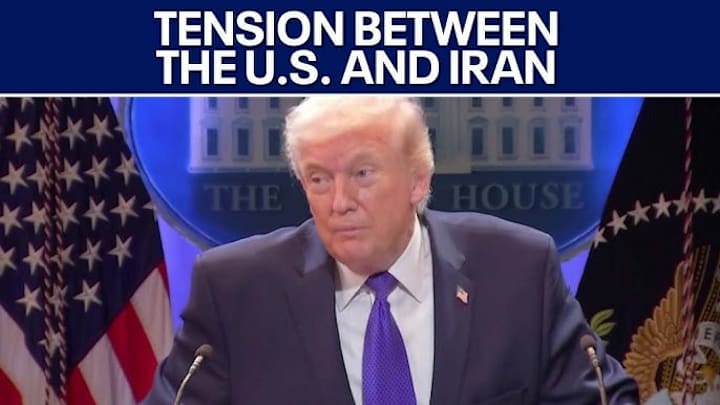
It is also worth noting that indirect communication can sometimes be more effective in tense situations. Given the long history of mistrust between the United States and Iran, negotiations often rely on intermediaries and controlled settings. Holding talks in Islamabad, with Pakistan acting as a mediator, allowed both sides to engage without the added pressure of a direct presidential encounter.
Donald Trump did not travel to Pakistan for talks due to security concerns, tight scheduling, and the preference for neutral venues. High-level diplomatic meetings are often held in safer or more controlled environments to reduce risks. Additionally, political optics and logistical complexity play a role. Remote diplomacy, including phone calls and third-country meetings, allows flexibility while maintaining strategic engagement without the challenges of an in-person visit.
In conclusion, Donald Trump’s decision not to travel to Pakistan was not unusual or unexpected. It reflects a calculated diplomatic strategy that prioritizes flexibility, security, and effective negotiation. By delegating responsibility to experienced officials, the United States was able to participate fully in the talks while minimizing risks and maintaining strategic control.
Ultimately, in today’s world of diplomacy, influence is not measured by physical presence alone. Whether from Washington or Islamabad, what matters most is the ability to shape outcomes—and in this case, the United States remained deeply involved, even without the President on the ground.
About the Creator
Sk
"I am a passionate writer, crafting books and articles on Vocal Media, exploring human experiences, stories, and creative reflections."
Kristi Noem is MELTING!!!!!
Former Homeland Secretary/"Ice Barbie" Kristi Noem is melting with scandals, not she is dealing with a cheating affair with one of the aides, killing her puppy, her own supportive husband Byron Noem is being exposed as a crossdresser, talking with fetish's Bimbos and paying them thousands of dollars. Kristi Noem's husband was exposed by the Dailymail this week exposing photos of Byron wearing and flaunting big gigantic balloon faux ta-tas, wearing paded shorts, and pouting his duck lips like it's 2013.
By Gladys W. Muturi7 days ago in The Swamp
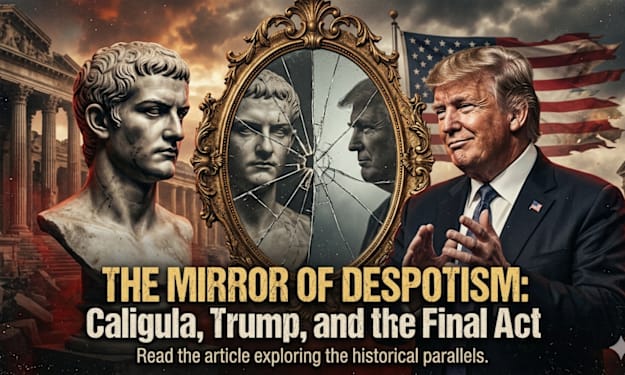
THE MIRROR OF DESPOTISM: Caligula, Trump, and America
I am sitting in my living room, vibrating at a frequency that shouldn’t be possible without a prescription or a lightning strike. The air smells like burnt ozone and wet dog; I just gave my dog a bath, and he’s taken up the couch next to me. Outside, the American experiment is wheezing on its side in the gutter, and nobody is calling an ambulance because we’re all too busy filming the death rattle for the ‘Gram, and hoping it’s our video that goes viral.
By Meko James 5 days ago in The Swamp


Comments
There are no comments for this story
Be the first to respond and start the conversation.