
Japan’s E-Commerce Payment Market Set to Double by 2034: A Cashless Revolution Gains Momentum
From traditional cash dominance to digital-first transactions, Japan’s evolving payment ecosystem is reshaping online commerce at an unprecedented pace.

Japan, long known for its deep-rooted reliance on cash transactions, is undergoing a remarkable transformation. The country’s e-commerce payment landscape is rapidly evolving, driven by technological innovation, changing consumer behavior, and strong government support for a cashless economy. What was once a predominantly cash-based society is now embracing digital payments with increasing enthusiasm, particularly in online commerce.
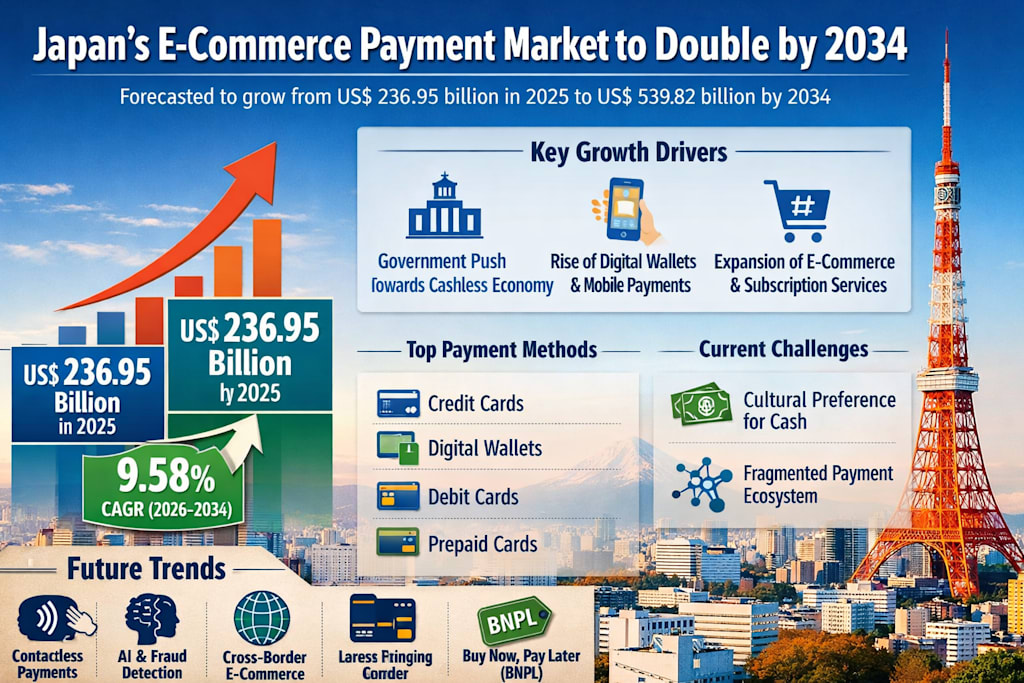
According to recent insights, Japan’s e-commerce payment market is projected to grow from US$ 236.95 billion in 2025 to US$ 539.82 billion by 2034, registering a compound annual growth rate (CAGR) of 9.58% between 2026 and 2034. This growth trajectory underscores a fundamental shift in how Japanese consumers interact with digital platforms and conduct financial transactions.
The Evolution of E-Commerce Payments in Japan
E-commerce payments refer to digital methods that enable consumers to purchase goods and services online. These include credit cards, debit cards, digital wallets, electronic fund transfers, prepaid cards, and mobile payment applications. Over the years, Japan has expanded its payment ecosystem to include secure technologies such as encryption, tokenization, and multi-factor authentication, ensuring both speed and safety in transactions.
Historically, Japan’s preference for cash was deeply embedded in its culture. However, the proliferation of smartphones, the rise of online shopping platforms, and the growing popularity of subscription-based services have significantly altered consumer expectations. Today, convenience, speed, and security are the key drivers influencing payment choices.
Government Push Toward a Cashless Economy
One of the most influential factors behind this transformation is the Japanese government’s proactive push toward a cashless society. Initiatives promoting electronic settlement systems, merchant incentives, and national roadmaps for digital payments have played a crucial role in accelerating adoption.
The government’s efforts aim to reduce the costs associated with cash handling, improve transaction efficiency, and modernize the retail ecosystem. As a result, small and medium-sized enterprises (SMEs) are increasingly integrating digital payment gateways into their operations, further strengthening the online payment infrastructure.
This policy-driven momentum has not only boosted consumer confidence in digital transactions but also encouraged innovation among payment service providers.
The Rise of Digital Wallets and Mobile Payments
Digital wallets and mobile payment solutions are at the forefront of Japan’s e-commerce payment revolution. With high smartphone penetration and a tech-savvy population, especially among younger consumers, mobile-based transactions are becoming the norm.
Digital wallets offer several advantages:
Speed and convenience through one-click payments
Enhanced security via biometric authentication and tokenization
Integration with loyalty programs, increasing user engagement
These benefits have significantly reduced cart abandonment rates in online shopping, making digital wallets a preferred choice for both consumers and merchants. Additionally, the surge in mobile commerce, food delivery services, and subscription platforms has further amplified the demand for seamless payment experiences.
Expansion of E-Commerce and Subscription Services
Japan’s thriving e-commerce ecosystem is another major catalyst for payment innovation. From online retail and digital entertainment to gaming and streaming services, consumers are increasingly engaging with digital platforms that require efficient and flexible payment solutions.
Subscription-based models, in particular, have transformed payment dynamics. Consumers now expect:
Automated recurring billing
Secure storage of payment credentials
Hassle-free checkout experiences
To meet these expectations, payment providers are investing in advanced fraud detection systems and globally interoperable solutions, enabling cross-border transactions and enhancing user trust.
Challenges Hindering Full Adoption
Despite significant progress, Japan’s transition to a fully cashless economy is not without challenges.
Cultural Preference for Cash
A deeply ingrained cultural preference for cash continues to influence consumer behavior. Many individuals still perceive cash as safer and more reliable compared to digital alternatives. Concerns about data breaches, online fraud, and privacy issues contribute to this hesitation.
Fragmented Payment Ecosystem
Japan’s payment landscape is highly fragmented, with multiple platforms and payment methods coexisting. While this diversity offers flexibility, it also creates integration challenges for merchants. Managing various payment systems increases operational complexity and costs, particularly for smaller businesses.
Addressing these challenges will be critical to sustaining long-term growth in the e-commerce payment market.
Segment Analysis: Key Payment Methods
Digital Wallets
The digital wallet segment is experiencing rapid growth, driven by convenience, security, and widespread smartphone usage. These solutions enable users to store payment credentials securely and perform transactions with minimal effort. As Japan moves closer to a cashless society, digital wallets are expected to capture a significant market share.
Credit Cards
Credit cards remain the dominant payment method in Japan’s e-commerce sector. Their popularity stems from:
Strong consumer protection policies
Reward programs and installment options
Reliability in high-value and international transactions
Despite the emergence of new payment methods, credit cards continue to play a central role due to their established infrastructure and widespread acceptance.
Debit Cards
Debit cards are gaining traction among consumers seeking real-time payment solutions and better financial control. They are particularly लोकप्रिय among younger and budget-conscious users who prefer to avoid overspending.
Prepaid Payments
Prepaid cards serve a niche yet important segment, catering to users who prioritize spending control, anonymity, or lack access to traditional banking services. They are widely used for online gaming, digital content, and gifting purposes.
Application Insights: Where Payments Are Growing
Electronics & Media
This segment is a major driver of e-commerce payments, fueled by demand for consumer electronics, gaming consoles, and digital content subscriptions. High transaction values necessitate secure and flexible payment solutions, making credit cards and mobile wallets the preferred choices.
Fashion Accessories
The online fashion market is booming, supported by social commerce, influencer marketing, and direct-to-consumer brands. Younger consumers favor quick mobile payments and “buy now, pay later” options, while credit cards remain popular for premium purchases.
Food & Personal Care
The adoption of online grocery shopping and personal care products is steadily increasing. In this segment, convenience and trust are paramount, leading to a preference for debit cards and digital payments for frequent transactions. Subscription models for household essentials further drive recurring payment adoption.
Competitive Landscape and Key Players
Japan’s e-commerce payment ecosystem features a mix of established financial institutions and innovative fintech players. Companies such as Rakuten Group, PayPay, MerPay, and D-barai are continuously enhancing their offerings through technological advancements and strategic partnerships.
These players are focusing on:
Expanding digital wallet capabilities
Improving user experience
Strengthening security features
Integrating loyalty and reward systems
Their efforts are shaping a highly competitive and dynamic market environment.
The Road Ahead: A Digital-First Future
The future of Japan’s e-commerce payment market looks promising, with several trends expected to drive continued growth:
Increased adoption of contactless payments
Integration of AI and machine learning in fraud detection
Expansion of cross-border e-commerce
Growth of buy-now-pay-later (BNPL) services
Enhanced interoperability among payment platforms
As digital consumption patterns evolve, payment solutions will need to become more adaptive, secure, and user-centric.
Final Thoughts
Japan’s journey toward a cashless economy is both transformative and complex. While cultural preferences and ecosystem fragmentation present challenges, the overall momentum is undeniably strong. The combination of government support, technological innovation, and shifting consumer behavior is creating a fertile ground for growth.
With the market expected to more than double by 2034, stakeholders across the value chain—from fintech companies to online retailers—must stay agile and responsive to emerging trends. The winners in this space will be those who can deliver seamless, secure, and scalable payment experiences.
About the Creator
Keep reading
More stories from shibansh kumar and writers in Trader and other communities.
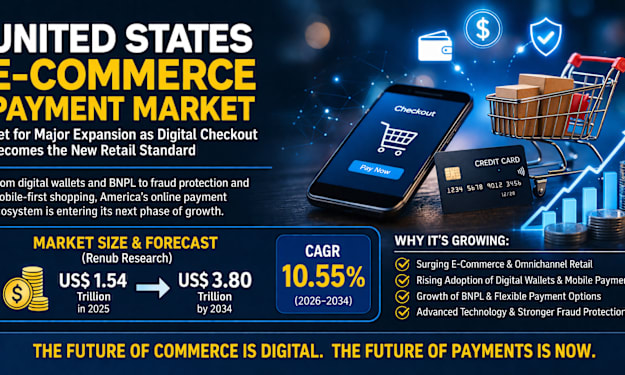
United States E-Commerce Payment Market Set for Major Expansion as Digital Checkout Becomes the New Retail Standard
The way Americans pay online is changing faster than ever—and it’s changing the entire retail economy along with it. Online checkout is no longer just the final step in a purchase. It has become one of the most important competitive battlegrounds in modern commerce. Whether a consumer is buying sneakers from a fashion site, streaming a subscription service, ordering electronics, or making a quick purchase through a mobile app, the payment experience now plays a major role in whether that sale is completed—or abandoned.
By shibansh kumara day ago in Trader
Perfume Market: Fragrance Innovation Shaping the Future of Personal Care
Perfume has long been an essential part of personal grooming and cultural expression. Today, it goes beyond just fragrance—it represents identity, mood, and lifestyle. The perfume market includes a wide range of products such as eau de parfum, eau de toilette, body mists, and niche fragrances, catering to different consumer preferences and price points.
By James Smitha day ago in Trader



Comments
There are no comments for this story
Be the first to respond and start the conversation.