
The Future of Procurement: How Smart Software is Transforming Global Supply Chains
From AI-driven sourcing to cloud-based automation, procurement software is reshaping how enterprises control costs, manage suppliers, and build resilient operations.

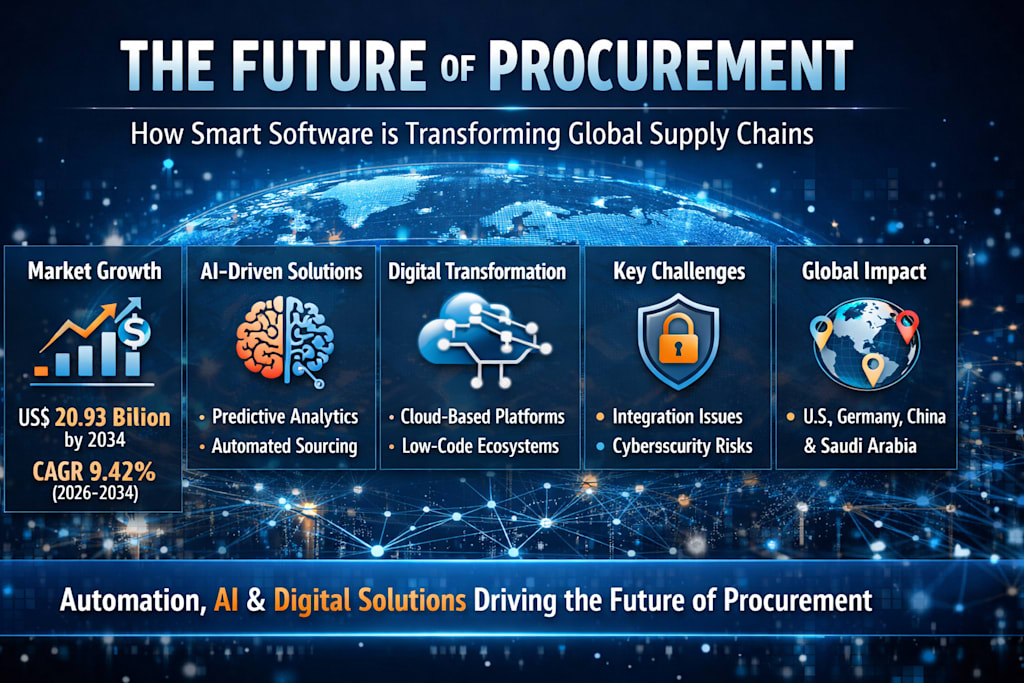
In an era where efficiency defines competitiveness, procurement has emerged as a strategic function rather than a back-office necessity. Businesses worldwide are rapidly adopting procurement software to streamline purchasing processes, enhance transparency, and unlock data-driven decision-making. What was once a manual, fragmented workflow is now evolving into an intelligent, automated ecosystem powered by artificial intelligence, cloud computing, and advanced analytics.
According to recent insights, the procurement software market is set for remarkable growth, projected to reach US$ 20.93 billion by 2034, up from US$ 9.31 billion in 2025, expanding at a CAGR of 9.42% from 2026 to 2034. This growth reflects a broader shift toward digital transformation across industries, where organizations are prioritizing efficiency, cost control, and supply chain resilience.
The Evolution of Procurement in the Digital Age
Procurement software has redefined how organizations handle purchasing activities—from requisition to payment. Traditionally, procurement involved paperwork, manual approvals, and limited visibility into supplier performance. Today, digital platforms centralize these processes, enabling companies to manage vendor relationships, track spending, and automate workflows in real time.
Modern procurement solutions integrate features such as sourcing, contract management, purchase order creation, and invoice processing. By leveraging cloud-based infrastructure, these systems provide accessibility, scalability, and seamless integration with enterprise resource planning (ERP) tools.
Companies like SAP SE and Oracle Corporation have been at the forefront of this transformation, offering comprehensive procurement suites that align with broader enterprise systems.
The result is a procurement function that is no longer reactive but proactive—capable of anticipating risks, optimizing supplier selection, and delivering measurable business value.
Market Growth Driven by Automation and Cost Efficiency
One of the strongest drivers behind the procurement software market is the growing need for automation. Organizations are under constant pressure to reduce operational costs while maintaining high levels of efficiency. Procurement software addresses this challenge by automating repetitive tasks such as purchase order generation, invoice matching, and approval workflows.
Automation not only reduces human error but also accelerates decision-making. With real-time data insights, businesses can monitor spending patterns, identify cost-saving opportunities, and ensure compliance with internal policies and external regulations.
The increasing complexity of global supply chains has further amplified the need for such solutions. As companies expand across borders, managing multiple suppliers, currencies, and regulatory requirements becomes more challenging. Procurement software simplifies these complexities, enabling organizations to operate with greater agility and control.
AI-Powered Procurement: The Next Frontier
Artificial intelligence is playing a transformative role in procurement. AI-driven platforms analyze vast amounts of data to provide predictive insights, automate decision-making, and enhance supplier evaluation.
For instance, AI tools can assess vendor performance, predict price fluctuations, and identify potential risks in the supply chain. These capabilities enable procurement teams to make smarter, faster decisions that improve both efficiency and profitability.
Companies like Coupa Software Inc. and Jaggaer Inc. are integrating AI into their platforms to offer advanced analytics and intelligent automation.
The adoption of AI is not just a technological upgrade—it represents a fundamental shift in how procurement operates. By automating routine tasks, AI frees up procurement professionals to focus on strategic activities such as supplier collaboration, innovation, and long-term planning.
Rise of Low-Code and User-Friendly Platforms
Another significant trend shaping the procurement software market is the emergence of low-code and no-code platforms. These solutions allow users with minimal technical expertise to design and implement procurement workflows quickly.
This democratization of technology reduces reliance on IT departments and accelerates deployment timelines. Businesses can customize procurement processes to meet their unique needs without extensive coding or development efforts.
Platforms like those developed by GEP Corporation are leading this trend, offering flexible, user-friendly solutions that enhance adaptability and resilience.
As organizations seek greater agility in a rapidly changing business environment, low-code procurement ecosystems are becoming an essential tool for digital transformation.
Enhancing Spend Visibility and Financial Control
Procurement software provides organizations with unprecedented visibility into their spending. By centralizing procurement data, these platforms enable businesses to track expenditures, analyze trends, and identify inefficiencies.
Real-time dashboards and analytics tools offer insights into supplier performance, contract compliance, and purchasing patterns. This level of transparency allows organizations to make informed decisions that optimize costs and improve financial performance.
Moreover, procurement software supports compliance with regulatory standards by ensuring that all transactions are documented and auditable. This is particularly important in industries such as healthcare, finance, and government, where compliance requirements are stringent.
Challenges: Integration and Cybersecurity Risks
Despite its many advantages, the adoption of procurement software is not without challenges. One of the primary obstacles is integration with legacy systems. Many organizations still rely on outdated infrastructure, making it difficult to implement modern digital solutions.
Integration often requires significant customization, data migration, and process reengineering. These complexities can lead to delays, increased costs, and potential disruptions to business operations.
Cybersecurity is another critical concern. Procurement platforms handle sensitive data, including supplier contracts, pricing information, and financial transactions. As these systems move to the cloud, they become potential targets for cyberattacks.
Ensuring robust security measures and compliance with regulations such as data protection laws is essential for building trust and encouraging adoption.
Regional Insights: A Global Perspective
United States
The United States remains one of the most advanced markets for procurement software. Strong digital infrastructure, widespread cloud adoption, and the presence of leading technology providers contribute to its growth.
Organizations across sectors—including manufacturing, healthcare, and retail—are investing heavily in AI-enabled procurement tools. Companies like Microsoft Corporation are playing a key role by integrating procurement capabilities into broader enterprise platforms.
Germany
Germany’s procurement software market is driven by its robust industrial base. The country’s focus on precision, efficiency, and compliance aligns well with the capabilities of digital procurement solutions.
The adoption of Industry 4.0 technologies is further accelerating demand for AI-powered and cloud-based procurement systems.
China
China is experiencing rapid growth in procurement software adoption, fueled by large-scale manufacturing and digital transformation initiatives. The increasing complexity of supplier networks and the rise of e-commerce are driving demand for advanced procurement tools.
Cloud-based solutions are particularly लोकप्रिय among small and medium-sized enterprises, offering cost-effective and scalable options.
Saudi Arabia
Saudi Arabia’s procurement software market is expanding as part of its Vision 2030 initiative. The country is investing in digital transformation to diversify its economy and improve operational efficiency.
Large infrastructure and energy projects are creating demand for centralized procurement platforms that enhance transparency and streamline supplier management.
Competitive Landscape and Industry Developments
The procurement software market is highly competitive, with several key players driving innovation and growth. Companies such as Zycus Inc. and Ivalua are continuously enhancing their offerings to meet evolving customer needs.
Recent developments highlight the dynamic nature of the market:
Strategic acquisitions are expanding capabilities and market reach.
Partnerships are enabling seamless integration with financial and ERP systems.
New product launches are introducing advanced features such as AI-driven analytics and guided buying.
These developments reflect a broader trend toward consolidation and innovation, as companies seek to deliver comprehensive, end-to-end procurement solutions.
Market Segmentation: Diverse Applications Across Industries
Procurement software is used across a wide range of industries, including retail, healthcare, manufacturing, BFSI, IT, and energy. Each sector has unique requirements, driving demand for specialized solutions.
Deployment models also vary, with cloud-based solutions gaining popularity due to their flexibility and scalability. However, on-premises systems עדיין remain relevant for organizations with specific security or compliance needs.
Both small and medium-sized enterprises (SMEs) and large corporations are adopting procurement software, although their priorities differ. SMEs often focus on cost efficiency and ease of use, while large enterprises prioritize advanced analytics and integration capabilities.
The Road Ahead: A Smarter, More Resilient Future
The future of procurement lies in intelligence, automation, and collaboration. As technologies such as AI, machine learning, and blockchain continue to evolve, procurement software will become even more powerful and sophisticated.
Organizations that embrace these innovations will gain a competitive edge by improving efficiency, reducing costs, and building resilient supply chains. Procurement will no longer be viewed as a cost center but as a strategic function that drives value and innovation.
Final Thoughts
The procurement software market is at a pivotal moment, shaped by rapid technological advancements and changing business priorities. With a projected market size of over US$ 20.93 billion by 2034, the industry is poised for sustained growth and transformation.
About the Creator
Philippines Infant and Mother Nutrition Market 2026: Health Awareness, Product Innovation & Premium Nutrition Growth
Philippines Infant and Mother Nutrition Market Overview The Philippines infant and mother nutrition market is a vital segment of the country’s healthcare and food industry, encompassing products such as infant formula, baby food, maternal supplements and fortified dairy products. The market plays a crucial role in supporting early childhood development and maternal health.
By Manisha Dixitabout 9 hours ago in Trader
Mexico Luxury Cosmetics Market Size to Hit USD 895.62 Million by 2034 | Growth at 3.05% CAGR
Mexico Luxury Cosmetics Market Size, Growth, and Forecast (2026–2034) The Mexico luxury cosmetics market is experiencing steady growth as consumer preferences shift toward premium beauty products and personalized skincare solutions. In 2026, the market reflects increasing demand for high-quality formulations and brand-driven experiences.
By Jackson Watsonabout 7 hours ago in Trader
Bacon
Satan, laughing, spreads his wings. He launches into an atmosphere riddled with smoke, soot, and ash. He feels the radiation from a thousand fallen nukes. For humanity, it’s certain death. For him, it’s like bathing in a sauna. He laughs again at the thought.
By C. Rommial Butler2 days ago in Fiction



Comments
There are no comments for this story
Be the first to respond and start the conversation.