Mahmoud Mahmoud
Stories (2)
Filter by community
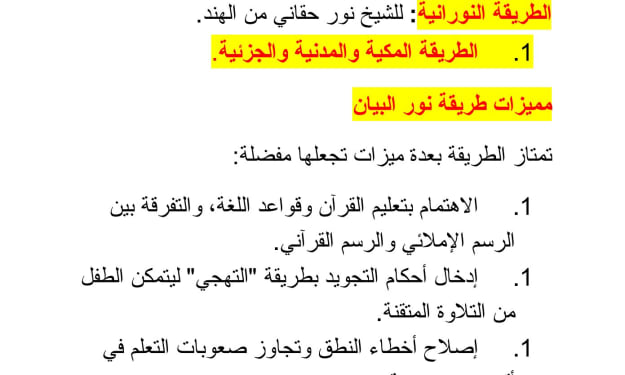
Explanation of the Noor Al-Bayan Course: Lecture 1 [Full & Free] – Theoretical Summary in 7 Pages.
1. Introduction to the Noor Al-Bayan Method and Its Founder Essence and Reach: A blessed educational method for teaching reading, writing, and Tajweed (Quranic recitation). It has spread across Arab and foreign countries, targeting children aged three and older.
By Mahmoud Mahmoudabout 4 hours ago in Education
The Arabic Language: An Eternal Symphony of Eloquence and Science
Start wThe Arabic Language: An Eternal Symphony of Eloquence and Science The Arabic language, often referred to as "Lughat al-Dad", is not merely a means of communication. It is a vast ocean of culture, a historical record of civilizations, and a mathematical marvel of linguistic engineering. For over fifteen centuries, it has stood as one of the most resilient and influential languages in human history. The story of Arabic begins in the heart of the Arabian Peninsula. Long before it was written down in standardized form, Arabic existed as a highly sophisticated oral tradition. The pre-Islamic Arabs, despite living in a harsh and nomadic environment, possessed a linguistic richness that was unparalleled. For the Bedouin, poetry was the "Register of the Arabs". It was their history, their news, and their pride. The Mu’allaqat represent the pinnacle of this era. These were poems of such immense beauty and linguistic complexity that they were reportedly honored by being hung on the walls of the Kaaba. This foundational period established Arabic as a language of high art, where a single word could describe the subtle change in the color of the desert sky at dawn or the specific gait of a camel. The most significant turning point in the history of the language was the revelation of the Holy Qur’an. Beyond its religious significance, the Qur’an transformed Arabic in several fundamental ways. It unified the various dialects of the Arabian tribes into a single, prestigious literary form known as Fus’ha. Because the text was memorized and recorded with extreme precision, the grammar and vocabulary of 7th-century Arabic remain accessible to modern speakers today. It turned Arabic from a regional tongue into a global language of liturgy, law, and administration as the Islamic civilization spread from Spain to India. What makes Arabic truly unique from a linguistic standpoint is its Tri-lateral Root System. Most Arabic words are derived from a three-letter root that carries a core meaning. For example, the root K-T-B relates to the concept of writing: Kataba (He wrote), Kitab (A book), Maktaba (A library), Katib (A writer), and Maktub (Written). This system allows the language to be incredibly concise and logical. It is as if the language is built on a mathematical grid, where new words can be engineered by applying specific "patterns" to these roots. This structural integrity is what allowed Arabic to adapt so easily to the demands of science and philosophy during the Middle Ages. Between the 8th and 14th centuries, Arabic was the international language of science. In the House of Wisdom in Baghdad, scholars translated the world’s knowledge into Arabic. Mathematics and astronomy flourished. We cannot speak of modern science without acknowledging its Arabic roots. The word Algorithm is a Latinization of the name of the Persian-Arabic mathematician Al-Khwarizmi. Algebra comes from his book Al-Jabr. In the night sky, stars like Aldebaran and Betelgeuse bear names derived from Arabic, marking the era when Arab astronomers were the keepers of the stars. The works of Ibn Sina and Ibn Rushd were written in Arabic and became the standard textbooks for European universities for centuries. Arabic provided the precise vocabulary needed to discuss complex metaphysical concepts and medical diagnoses that other languages at the time were not yet equipped to handle. In Arabic culture, the written word is more than just information; it is a visual art form. Because of the cursive nature of the script, where letters connect in fluid movements, Arabic Calligraphy developed into one of the most sophisticated art forms in the world. Styles like Kufic, Naskh, and Thuluth transform sentences into intricate geometric patterns or flowing floral designs. It is an art that reflects the rhythm of the language itself—a balance between strict rules and infinite creativity. Today, Arabic is one of the six official languages of the United Nations, spoken by more than 400 million people. It is a bridge between the past and the future. While Modern Standard Arabic is used in news and literature, various vibrant dialects breathe life into the streets of Cairo, Damascus, and Riyadh. The influence of Arabic on other languages is profound. English speakers use Arabic words every day without realizing it: Sugar (Sukkar), Cotton (Qutn), Coffee (Qahwa), and Magazine (Makhazin). Beyond facts and history, there is an emotional resonance in Arabic that is difficult to translate. It is a language of "Tarab"—a state of musical enchantment. It is a language where "love" has over 50 different names, each describing a specific stage of longing or devotion. When an Arab speaker says "Ya habibi" or "Noor ayni", they are tapping into a thousand-year-old tradition of poetic expression that views human emotion with immense dignity and depth. The Arabic language is a testament to human genius. It survived the isolation of the desert, embraced the complexities of global science, and preserved the spiritual heritage of millions. To learn Arabic is not just to learn a new grammar; it is a treasure chest of wisdom and history. As the world becomes more interconnected, the "Echo of the Desert" continues to resonate, reminding us that language is the most powerful vessel for the human soul. It remains a symphony of sounds that connects the logic of the mind with the passion of the heart.
By Mahmoud Mahmoudabout 23 hours ago in Beat