
How to Migrate from Magento Open Source to Adobe Commerce
A practical guide: steps, best practices, and pitfalls to avoid

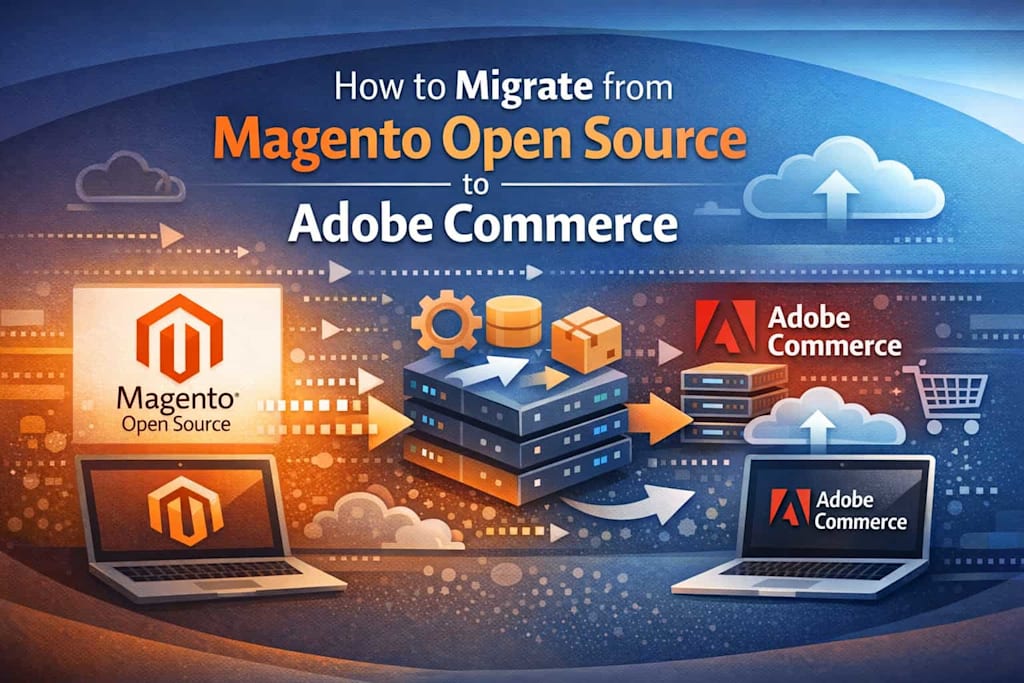
Migrating from Magento Open Source to Adobe Commerce is not merely a technical upgrade—it is a strategic transformation. While Magento Open Source offers a solid foundation for building online stores, Adobe Commerce introduces advanced capabilities designed for scalability, personalization, and enterprise-grade performance. A successful migration demands careful planning, technical precision, and a clear understanding of both platforms’ architecture. This article provides a structured, comprehensive guide to migrating from Magento Open Source to Adobe Commerce, covering planning, execution, and optimization.
Understanding the Differences
Before initiating a migration, it is essential to understand the conceptual and functional differences between Magento Open Source and Adobe Commerce.
Magento Open Source is a free, community-driven platform. It provides essential e-commerce functionality but requires extensions or custom development for advanced features such as:
- Customer segmentation
- Advanced marketing tools
- B2B capabilities
- Enhanced analytics
Adobe Commerce, by contrast, is a paid, enterprise-level solution. It includes built-in features such as:
- Page Builder for visual content creation
- Advanced customer segmentation and personalization
- Built-in B2B tools
- AI-driven product recommendations
- Cloud infrastructure (Adobe Commerce Cloud)
The migration is not just about moving data—it’s about leveraging these new capabilities effectively.
Step 1: Define Migration Objectives
A migration without clearly defined goals risks becoming inefficient or even counterproductive. Begin by identifying what you aim to achieve with Adobe Commerce.
Typical objectives include:
- Improved site performance and scalability
- Enhanced customer experience
- Better conversion rates
- Advanced marketing capabilities
- Reduced reliance on third-party extensions
These goals should guide every technical decision throughout the migration process.
Step 2: Audit Your Existing Magento Store
A comprehensive audit of your current Magento Open Source store is critical. This includes:
1. Data Inventory
- Products (simple, configurable, virtual, downloadable)
- Customers and customer groups
- Orders and transaction history
- CMS pages and content blocks
2. Extension Audit
List all installed extensions and categorize them:
- Critical (must be retained)
- Optional (replaceable)
- Obsolete (can be removed)
3. Theme and Custom Code Audit
Identify:
- Custom themes
- Custom modules
- Third-party integrations
This audit helps determine what can be migrated directly and what must be rebuilt or replaced.
Step 3: Choose the Right Adobe Commerce Version
Adobe Commerce is available in multiple deployment models:
- Adobe Commerce (on-premise or cloud)
- Adobe Commerce Cloud
For most modern enterprises, the cloud version is recommended due to:
- Managed infrastructure
- Automatic scaling
- Built-in CI/CD pipelines
- Enhanced security
Your choice should depend on your organization’s infrastructure strategy, budget, and technical capabilities.
Step 4: Plan the Migration Architecture
Migration is not a simple “copy and paste” process. You must define a structured migration architecture.
Key considerations:
- Data migration strategy (incremental vs. full migration)
- Downtime minimization
- Staging environment setup
- Rollback strategy
A staging environment is essential to test the migration before going live. Never perform a direct migration on a production site.
Step 5: Prepare the Adobe Commerce Environment
Before migrating data, set up your Adobe Commerce environment:
- Install Adobe Commerce
- Configure server settings (PHP version, database, caching layers)
- Set up hosting (if using cloud, configure environments)
- Install necessary extensions
Ensure the environment mirrors your production needs as closely as possible.
Step 6: Use the Magento Data Migration Tool
Adobe provides the official Magento Data Migration Tool to facilitate the transfer of data between Magento Open Source and Adobe Commerce.
The tool supports:
- Settings migration
- Data migration (products, customers, orders)
- Incremental migration
Migration modes:
1) Settings Mode. Transfers configuration settings such as stores, tax rules, and system configurations.
2) Data Mode. Transfers core data such as:
- Products
- Customers
- Orders
- Delta Mode
Transfers new data created during the migration process to avoid data loss.
Step 7: Migrate Data Carefully
Data migration is one of the most sensitive phases. Follow these guidelines:
- Back up your entire database before starting
- Run data migration in a controlled staging environment
- Validate data integrity after migration
- Use delta migration to capture new transactions
Pay special attention to:
- Customer passwords (may require rehashing)
- Order histories
- Product attributes and relationships
- Step 8: Handle Extensions and Integrations
Not all Magento Open Source extensions are compatible with Adobe Commerce. You may need to:
- Replace certain extensions with Adobe-native features
- Update extensions to their Adobe Commerce versions
- Rebuild custom modules
Common integrations to verify:
- Payment gateways
- Shipping providers
- ERP systems
- CRM systems
- Marketing automation tools
Each integration must be tested thoroughly to ensure compatibility and functionality.
Step 9: Migrate Themes and Frontend
Magento themes are not always directly transferable to Adobe Commerce, especially if they rely heavily on deprecated structures.
Options include:
- Adapting existing themes
- Migrating to Adobe’s Page Builder
- Developing a new theme
Adobe Commerce’s Page Builder allows non-technical users to create dynamic content visually, reducing reliance on developers.
Step 10: Optimize Performance
One of the key advantages of Adobe Commerce is performance optimization.
After migration:
- Enable full-page caching
- Use a CDN (Content Delivery Network)
- Optimize images and assets
- Implement Varnish caching
- Monitor database performance
These optimizations ensure your store runs efficiently under high traffic.
Step 11: Conduct Thorough Testing
Testing is a critical phase that should never be rushed.
Functional Testing:
- Product browsing
- Checkout process
- Payment processing
- Account management
Performance Testing:
- Load testing under high traffic
- Response times
- Server performance
Security Testing:
- Vulnerability scans
- SSL configuration
- Payment security compliance
Fix all issues before proceeding to production deployment.
Step 12: SEO Migration Strategy
SEO is often overlooked but critical for maintaining traffic.
Key actions:
- Preserve URL structures where possible
- Implement 301 redirects for changed URLs
- Update metadata and structured data
- Regenerate sitemaps
- Notify search engines of changes
Failure to handle SEO correctly can result in significant traffic loss.
Step 13: Plan the Go-Live
Go-live is the final phase of migration.
Steps include:
- Freeze changes in the Magento Open Source store
- Perform final delta migration
- Conduct a final round of testing
- Switch DNS to the new Adobe Commerce store
Minimize downtime and communicate with stakeholders beforehand.
Step 14: Post-Migration Monitoring
After going live, closely monitor your store:
- Site performance
- Error logs
- User behavior
- Conversion rates
Set up monitoring tools to detect and resolve issues quickly.
Step 15: Leverage Adobe Commerce Features
After migration, fully utilize Adobe Commerce’s advanced capabilities:
1. Personalization
Deliver tailored experiences based on customer behavior and segmentation.
2. B2B Features
Manage company accounts, bulk orders, and custom pricing.
3. AI-Driven Recommendations
Improve conversions using machine learning-powered product suggestions.
4. Advanced Analytics
Use built-in analytics to gain insights into customer behavior and sales trends.
Common Migration Challenges
Even with careful planning, challenges may arise:
Data Inconsistencies
Caused by improper mapping or incomplete migration.
Extension Compatibility
Not all modules will work out of the box.
Performance Issues
Often due to improper configuration or unoptimized assets.
Downtime Risks
Mitigated through proper staging and delta migration.
Best Practices for a Smooth Migration
- Always use a staging environment
- Keep backups at every stage
- Document every step of the process
- Test extensively before going live
- Work with experienced Magento/Adobe Commerce developers
Conclusion
Migrating from Magento Open Source to Adobe Commerce is a complex but rewarding process. It transforms a basic e-commerce store into a powerful, enterprise-grade platform capable of delivering exceptional performance, scalability, and customer experience.
The key to success lies in meticulous planning, thorough testing, and strategic use of Adobe Commerce’s advanced features. While the process may seem demanding, the long-term benefits—improved efficiency, enhanced functionality, and increased revenue potential—make the migration a worthwhile investment.
By following the structured approach outlined in this guide, you can ensure a seamless transition and position your business for sustainable growth in the competitive e-commerce landscape.
About the Creator
Damian Brown
IT consultant with 7+ years’ experience helping organizations optimize technology, implement scalable solutions, and drive digital transformation for measurable business results.
Keep reading
More stories from Damian Brown and writers in Education and other communities.
How to Assess the Technical Debt in Legacy Applications Before Modernizing
Modernizing legacy applications is rarely a purely technical decision—it is a strategic move that can redefine how a business operates, scales, and competes. Yet many modernization efforts fail or stall because teams underestimate one critical factor: technical debt. Before rewriting, refactoring, or migrating anything, you need a clear, structured understanding of what you’re dealing with.
By Damian Browna day ago in Education
Paul and John's 47-Words Short Story Unofficial Challenge
UPDATE - Republished to update the list of entries, with the 40 we've had so far. Completely smashed last unofficial challenge which recieved 31 entries. And there is still time. If you have yet to enter and fancy winning a bit of money or just challenging yourself or both or just making two old geezers job harder - please enter!
By Paul Stewarta day ago in Writers




Comments
There are no comments for this story
Be the first to respond and start the conversation.