
Nataliya Plaksiyenko-Butyrska, Ukraine and East Asia: How China, Japan, and North Korea Are Reshaping Global Security Ties
How does Nataliya Plaksiyenko-Butyrska consider China, Japan, South Korea, and North Korea influencing Ukraine’s war and redefining global security dynamics?

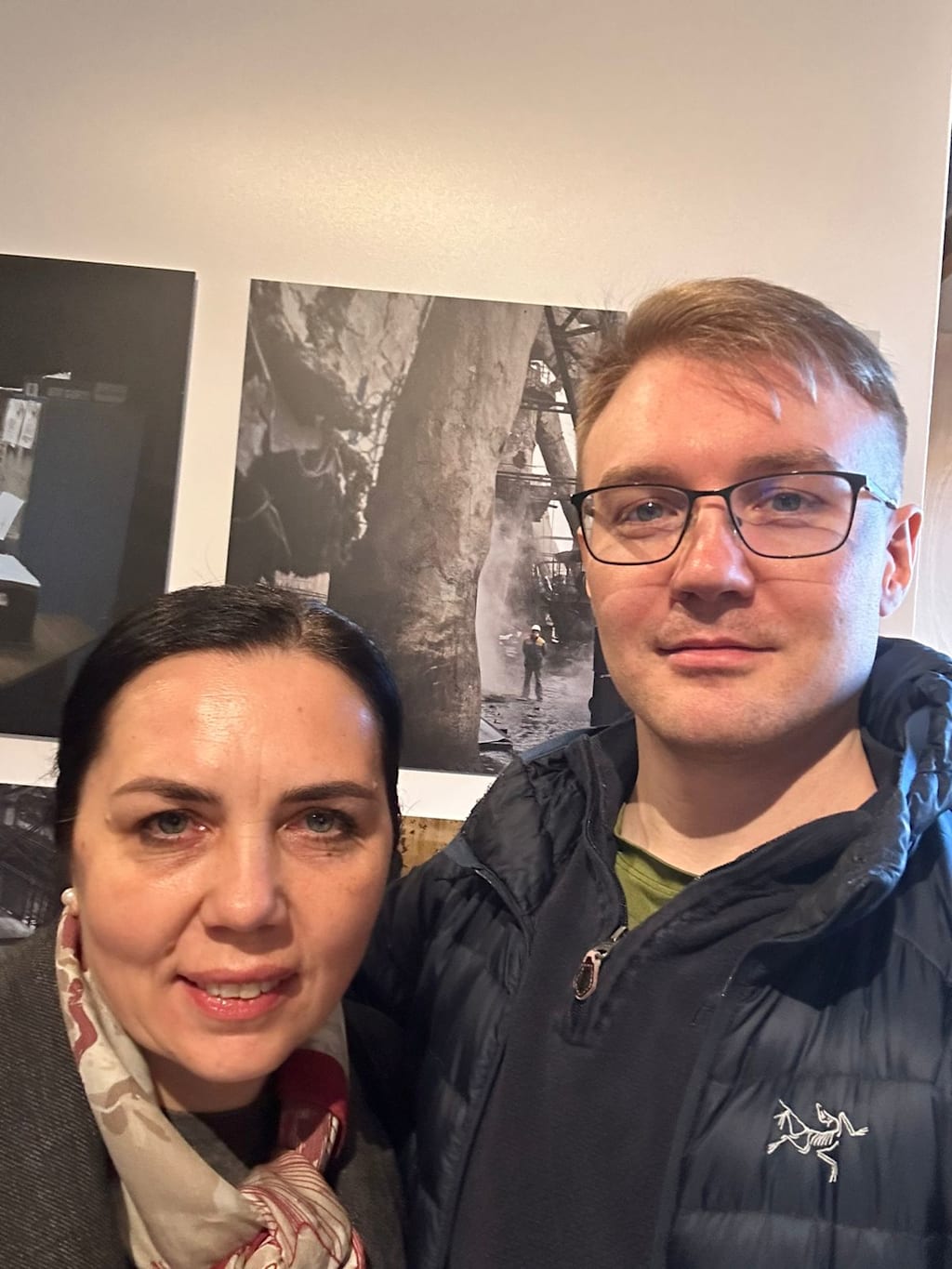
Nataliya Plaksiyenko-Butyrska is an Associated Senior Fellow at the New Europe Center and an expert on East Asia. Nataliya Plaksiyenko-Butyrska is a Ukrainian foreign-policy analyst and East Asia specialist serving as an Associate Senior Fellow at the New Europe Center. Her work focuses on the Asia-Pacific, China’s regional influence, and Ukraine’s relations with Asian partners. She has written more than 100 analytical pieces and contributed to major Ukrainian media outlets. Her background includes studies in journalism, diplomacy, and Korean institutions, informing her policy analysis and public commentary today across Europe and Asia alike.
In this interview, Scott Douglas Jacobsen speaks with Nataliya Plaksiyenko-Butyrska about Ukraine’s growing strategic ties to East Asia amid Russia’s full-scale war. Plaksiyenko-Butyrska argues that North Korea’s military cooperation with Russia and China’s economic and dual-use support have made Asia central to Europe’s security future. She explains why Japan has become Ukraine’s key partner, why South Korea remains more cautious, and how hybrid warfare, deterrence, and democratic coordination now connect Kyiv to the Indo-Pacific.
Scott Douglas Jacobsen: You spent some time in education in South Korea and specialized in East Asia. We have seen more coverage of Ukraine and President Zelenskyy in relation to the Gulf states, including Saudi Arabia and Crown Prince Mohammed bin Salman, as well as on air defence and anti-drone cooperation. East Asia is present, but not always on the front page. Historically and currently, what is Ukraine’s relationship with East Asia?
Nataliya Plaksiyenko-Butyrska: If you are coming from Canada or the United States, Japan feels like the closest point in East Asia, but it is still far away. For Eastern Europe, particularly Ukraine, East Asian countries may feel somewhat closer, not only geographically in a broader Eurasian sense, but also because we are highly interconnected today. Historically, Ukraine has had relations with East Asian countries for decades, especially with Japan and South Korea, and these ties have become much more important since Russia’s full-scale invasion. Japan, in particular, has become one of Ukraine’s most important partners in Asia.
Aspects of the culture may also feel closer to home than many people assume. But the main point now is strategic interconnection. The situation we have today shows that East Asia is no longer distant from Ukraine in terms of security.
North Korea is participating in Russia’s war against Ukraine on the Russian side. That makes East Asia much closer to Europe than many experts expected. Few experts expected Kim Jong Un to send North Korean troops to fight alongside Russia on European soil. But now this is a reality. At the start of 2026, South Korean intelligence reporting indicated that roughly 11,000 North Korean troops were in Russia’s Kursk region near the Ukrainian border, supporting Russian operations.
So a threat that once seemed far from Ukraine and far from Europe is now directly connected to the European theatre of war. The first problem is the deepening military and technical cooperation between Russia and North Korea. The second is the experience North Korea is gaining from this war, meaning experience in a modern, high-intensity conflict involving drones, missiles, artillery, and electronic warfare.
There is also the question of power projection. After this cooperation, North Korea may become more confident than before. For South Korea and Japan, that is a new challenge, because North Korea can use what it learns from this war to strengthen its military posture in East Asia.
From the other side, there is also the question of what happens in the event of Russian actions against NATO countries, or some hybrid form of aggression against NATO. Where would North Korea stand? Right now, the two countries are cooperating closely in the military sphere, so in the case of a wider confrontation, North Korea would most likely support Russia. And from another point of view, if there were a serious crisis in East Asia, the question would be where Russia would stand in that conflict. That is why the relationship is no longer theoretical. It has become part of a shared security reality between Europe and East Asia.
In a potential conflict in East Asia, this situation is changing the region's geopolitical landscape. But it is a big problem for South Korea.
Especially after the situation in the Middle East was observed. South Koreans understood that rockets and nuclear weapons are a major danger, but at the same time, smaller weapons—
Those that North Koreans are now using in the war against Ukraine could also be used against them. A large number of cheap, small drones could threaten Seoul.
That is why many in the South Korean military are now taking this situation very seriously. During our visit, we received many questions and saw a strong interest in the Ukrainian experience.
In this way, we can say that Ukraine and East Asia are much closer than ever before.
Another factor is China's role in this war. Despite its formally neutral position, China has supported Russia throughout this period. This support has developed in line with Russia’s needs.
It began with informational and diplomatic support. Then it expanded into deeper economic relations, helping sustain the Russian economy. Now, China is also supplying dual-use components and materials that Russia uses in producing missiles and drones.
So, in this case, we can say that China significantly influences Russia’s ability to continue this war. If China were to stop this support, it would be much more difficult for Russia to sustain its war effort.
Unfortunately, this means that the war is not only about Ukraine and Russia. It is not only a local or even a regional war. It represents a much broader geopolitical confrontation.
Jacobsen: Part of hybrid warfare involves circumventing international law to achieve political, geopolitical, and other strategic objectives, often operating in a gray zone of what is permitted in warfare.
For instance, when I visited a drone factory in 2023, it was clearly a restricted site. You enter, and your Wi-Fi does not work.
The components of Russian drones were often Chinese, but not exclusively. The manufacturers were not necessarily all Chinese either. So, the drones used by Russia are technically Russian systems, but their parts are often a hybrid of components sourced from multiple countries and technological ecosystems.
Similarly, there are attempts to undermine democratic processes through cyber warfare and political persuasion, including efforts to weaken support for Ukrainian humanitarian and military financing. How does China, as a primary actor, along with others like North Korea, implement this kind of hybrid warfare in gray zones? How do other Asian countries, if they support Ukraine, counter it? Is this kind of hybrid and counter-hybrid warfare happening across East Asia, where Ukraine is indirectly central to the dynamics?
Plaksiyenko-Butyrska: From the first day of the war, China has perceived it as a NATO–US proxy war against Russia.
According to this perception, China has supported Russia in ways that help prevent its defeat. From this perspective, Russia is seen as confronting NATO and the United States on European soil, with China providing indirect backing.
In this sense, China can be viewed as benefiting from the situation because Russia’s war effort absorbs and weakens some of the resources and attention of European countries, democratic states more broadly, and the United States.
At the same time, China has used this situation strategically. Much of the United States' attention has been focused on the European theatre. This has given China more time and space to strengthen its influence in the Indo-Pacific. In some ways, it has reduced the US strategic focus on the Pacific.
Regarding other countries, Japan and South Korea supported Ukraine from the beginning of the full-scale invasion. From their perspective, it is important to uphold the international rules-based order. They understand that a situation like Russia’s aggression against Ukraine could, in some form, be repeated in their own region.
There is a concern that similar patterns of behaviour could be seen in relation to China. That is why it has been important for them to be part of a broader democratic coalition supporting Ukraine.
Japan, in particular, has become a very important partner for Ukraine during this war. In some ways, Russia’s actions and the broader global changes have influenced Japan to adjust its policies, from a more strictly pacifist posture toward strengthening its defence capabilities and strategic positioning, especially in response to China’s actions in the region.
In South Korea, the situation is more complex. It is not easy for South Korea to act as a fully global security player, because it must concentrate significant attention and resources on the Korean Peninsula, given the ongoing threat from North Korea.
The president of South Korea has significant capabilities. But at the same time, its military and economic capacity is much greater than the role it currently plays. There is a gap between its capacity and its international role, as it remains primarily focused on its region, especially the Korean Peninsula.
The previous president tried to shift South Korea toward a more global role. That is why Ukraine strengthened relations with South Korea and received greater support during that period.
However, the current leadership has moved back toward a more cautious policy—balancing relations among major powers, including China, Russia, and North Korea. Because of this, South Korea is now more cautious in its support for Ukraine. It is trying, on the one hand, to remain a partner of democratic countries, and on the other hand, to maintain balanced relations with countries in its region.
So, from the Ukrainian point of view, we would like to see Asian countries more actively supporting Ukraine, especially given the common security threats. But at the same time, every country has its own interests and policies. That is why we cannot rely fully on their support, except for Japan, our main partner in the region.
Jacobsen: Thank you very much for the opportunity and your time, Nataliya.
Scott Douglas Jacobsen is a blogger on Vocal with over 130 posts on the platform. He is the Founder and Publisher of In-Sight Publishing (ISBN: 978–1–0692343; 978–1–0673505) and Editor-in-Chief of In-Sight: Interviews (ISSN: 2369–6885). He writes for International Policy Digest (ISSN: 2332–9416), The Humanist (Print: ISSN, 0018–7399; Online: ISSN, 2163–3576), Basic Income Earth Network (UK Registered Charity 1177066), Humanist Perspectives (ISSN: 1719–6337), A Further Inquiry (SubStack), Vocal, Medium, The Good Men Project, The New Enlightenment Project, The Washington Outsider, rabble.ca, and other media. His bibliography index can be found via the Jacobsen Bank at In-Sight Publishing,, comprising more than 10,000 articles, interviews, and republications across more than 200 outlets. He has served in national and international leadership roles within humanist and media organizations, held several academic fellowships, and currently serves on several boards. He is a member in good standing in numerous media organizations, including the Canadian Association of Journalists, PEN Canada (CRA: 88916 2541 RR0001), Reporters Without Borders (SIREN: 343 684 221/SIRET: 343 684 221 00041/EIN: 20–0708028), and others.
Image Credit: Scott Douglas Jacobsen.
About the Creator
Scott Douglas Jacobsen
Scott Douglas Jacobsen is the publisher of In-Sight Publishing (ISBN: 978-1-0692343) and Editor-in-Chief of In-Sight: Interviews (ISSN: 2369-6885). He is a member in good standing of numerous media organizations.
Keep reading
More stories from Scott Douglas Jacobsen and writers in Education and other communities.
Khrystyna Kurhanska on DoLadu Support Veteran Rehabilitation
Khrystyna Kurhanska is a Ukrainian entrepreneur, aromatherapist, and mental-health advocate based in Kyiv. She is chair of the board and public head of the NGO DoLadu, registered in November 2022 to support the mental health, rehabilitation, and reintegration of Ukrainian defenders, veterans, and the wider public. Public speaker bios state that DoLadu has operated mental-health centres in Kyiv hospitals and served more than 1,650 people, while later public interviews cite assistance to more than 1,800 service members. Kurhanska also founded the aroma-branding agency Ol.factory and Kamana perfume store, combining business, sensory design, psychology, and veteran-focused social recovery work.
By Scott Douglas Jacobsen2 days ago in Education
I Live By the Bottle
For about a week I had the Norovirus. The Norovirus is a gastrointestinal virus that causes vomiting and diarrhea. Most people get over it within three days. It is troublesome for the elderly and young children, as well as people with medical conditions. I, myself, have a rare medical condition called Nephrogenic Diabetes Insipidus.
By Sid Aaron Hirjia day ago in Education
Effective Change Management in Healthcare Systems
Healthcare systems are constantly evolving. New technologies, updated regulations, and shifting patient needs require organizations to adapt quickly and carefully. However, change in healthcare is not as simple as introducing a new process or tool. It affects people, workflows, and ultimately patient outcomes. Without a structured approach, even well-intended changes can create confusion, resistance, or risk.
By Brady Beitlich3 days ago in Education




Comments
There are no comments for this story
Be the first to respond and start the conversation.