Historical
JACK OF DIAMONDS
Chap 4 - Pt 3 (ARE SEETHING WITH CONTENTION...) iii Berry directed Nigel to the East Library, guiding him soundlessly through wide hallways hung with elaborate paintings, sculptures, and wall hangings he wished he had the time to examine. He knew he'd give anything to sit in one of the hall chairs and make endless studies. All the same, it was an ostentatious show of wealth, and little else, he thought. Like the jacket Berry had given him to wear, a little long in the sleeves. He willingly admitted to himself the paintings were quite fanciful, and while they were possibly quite valuable, it also reminded him that the people working the farmsteads on the outlying grounds probably paid for many of these treasure with their toils. It was another example, as far as he was concerned, of the extravagance of riches. People, monied people, seldom think of anything but their own welfare—which for the most part is the same for everyone else—and while he may have felt that it would be better to share the wealth, he knew that type of thinking in today’s world was impossible.
By ben woestenburg5 years ago in Fiction
Lemon Lane
Lemon Lane. 1798. A little girl was ignoring her mother’s insistent calls to come along, and instead was dropping pebbles into the stone well set by the side of the laneway, delighting in the “splooshes!” and “splashes!” that followed. A rotund woman rushed out into the road, her large middle still donning her paisley apron, slightly smudged from bleach destroying sporadic pigment in the pattern. She untied a ribbon which was binding cloth together tightly, and a pigeon fluttered out into the daylight, faltering in the sudden shock of sunlight before regaining its ability to simply flap its wings and be off, far away from the world it had just left. The little girl abandoned her mission of filling in the well and instead delighted in the sight, eagerly awaiting the matron’s next magic trick, but when the door slammed shut tight again, she begrudgingly ran to catch up with her ever-patient mother, who by this point had taken a seat on the stoop of a nearby building.
By Renessa Norton5 years ago in Fiction
Breakfast of Champions
Another bout of coughing wracked Doc’s chest, leaving him gasping for breath. He curled his sweat-soaked body deeper underneath the covers, bloody rag clutched in his fist. Incessant bleating from a rooster in the street below indicated morning had finally arrived. Exhaustion weighed on Doc’s limbs as heavily as the blanket. He coughed again and squeezed his eyes closed, willing sleep to end the misery.
By B. M. Valdez5 years ago in Fiction
Alexander's Wife
Men call him the King of Kings, the son of Zeus, the man who conquered the world. Generations would take up his mantle, birth fire of purpose in their hearts from the mere sight of his image, name cities and citadels in his honor. They would delegate him among the greatest of giants who walked this earth. But what of me?
By Bethy Parr5 years ago in Fiction
Names in a Hat
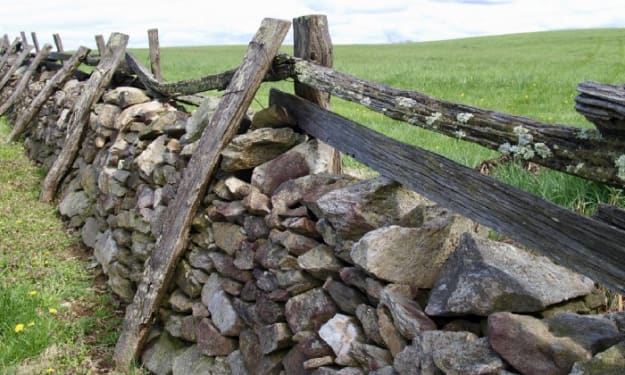
The white stallion’s muscles moved rhythmically under her. His rumbling hooves stirred up the only breeze blowing across the harvested ground. As the fieldstone wall loomed up, sweat dripped down and burned Lydia’s eyes. She knew the danger of jumping the stone wall but trusted the horse. There was freedom in being airborne, no matter how short lived. Pegasus, neglected since the Colonel’s death two days earlier, hankered for the jump as much as she did. Neither the other enslaved people, busy at work, nor the master’s family crying over the Colonel’s open grave would know. She and Pegasus craved this. They jumped.
By Diane Helentjaris5 years ago in Fiction
Requiem in White
It must be said, with some degree of temerity, the occult and I are intimate. So, yes, I am known in the Halls of Shegorab. I am versed in the labyrinthine passages that descend the Mad Stairs beneath our very feet. My meditations on the cryptic and obscure, my dissertations to those unafraid to dabble in the darker ways—these are all matters of record, albeit a record viewed by singular few. Some would call me charlatan. My calling is Truth; let what will come of it rise to the surface of its own accord.
By Erroneous Monk5 years ago in Fiction
Pirates Ahead
My grandfather was right about many things. He called the World Series winners many years in a row, how we’d put a man on the moon, Nixon – he knew things, or he was an excellent guesser. His 86 years of experience included both good things and bad, the good things being what he shared with his grandkids. Besides his love of chess, he loved making us laugh. He would take us into his lap and point to his mustache. We’d go to touch it, and he’d pretend to bite our fingers. My father did that, too, come to think of it. We’d break out into a fit of giggles.
By Barb Dukeman5 years ago in Fiction
JACK OF DIAMONDS
iv “I want to know who she is,” Chernetsov said, his voice low, controlled, but threatening. He looked at the three men sitting in front of his desk. It was obvious, even to him, that he was fighting to keep himself under control—he could see that looking at his reflection in the mirror behind them—where it was obvious he was fighting to control the anger threatening to get away from him.
By ben woestenburg5 years ago in Fiction
The barn and the bog body
Breda walked to work each day as if she were walking to the gallows. Only a few nights had passed since a group of vagabond thieves—known among the Irish as Tinkers—had stormed Lord Andrews’ manor house, masked in old cut-out flour sacks that made them look demonic. But evil spirits they weren’t. They were common thieves who knew it was an auspicious evening to loot the teach mór—“the big house.” The owner, a rich English landlord, was entertaining rich guests that night. They knew because Breda had felt sympathy for the poor Tinker woman at the market. Breda had given the woman butter and a loaf of bread to feed her gaunt, dirty children, while letting it slip that Lord Andrews was hosting a Midsummer party.
By Ashley Herzog5 years ago in Fiction
The Albion Kiss.
Southwest England, 1943. I want to kill my husband. It’s not entirely his fault; we’ve been stuck in this cold, claustrophobic house together for too long now. Trapped by the remoteness of the endless fields that make up our farm, the rolling hills beyond acting as mighty walls. Our only neighbour is a nosey woman in a cottage on the opposite side of the distant road. I can’t breathe. Nothing exciting ever happens here. Well, except for that Luftwaffe plane crash a little while ago. There was a big search for the pilot by all the locals, but he was never found.
By Peter Spering5 years ago in Fiction