literature
Geek literature from the New York Times or the recesses of online. Our favorite stories showcase geeks.
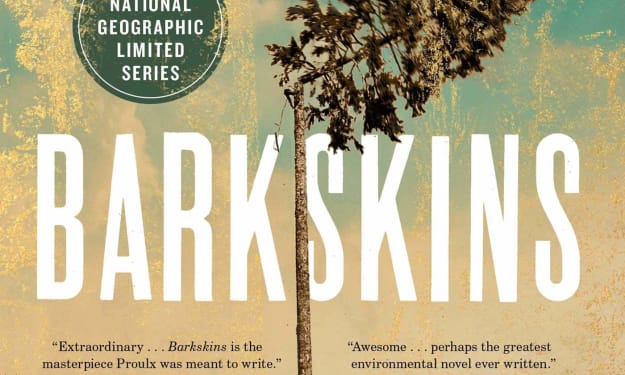
"Barkskins" by Annie Proulx
“Barkskins” by Annie Proulx, the writer of “Brokeback Mountain” and “The Shipping News” has often been described as ‘bold and visionary’ or ‘energetic’ with hints of ‘uncompromising splendour’ and ‘extraordinary power’ by various reviews. The reason for these powerful adjectives in use here is primarily because of the way in which nature is depicted throughout the novel. The novel centres around nature as the destruction of the forests seems to be the main point of concern throughout the entire novel for almost every generation of character and yet, the characters cannot seem to stop the violent push-backs that nature is giving them with brute force. Much like the push-back of the natural world in “Frankenstein” when the doctor tries to work nature to his own plans, “Barkskins” demonstrates that humans are a minor part of the natural landscape and however long we are here, the landscape will outlive us, it will be more powerful than we are and ultimately, it will always be above us in ways we could never comprehend. A sublime take on the destruction of the forest, this book seeks out characters who live and die by harvesting wood and ultimately they pay great prices for it. The natural world does not though, just include the forest areas, it also includes the natural landscape, the weather and the way in which night and day are described as being different atmospheres to different characters at different times.
By Annie Kapur6 years ago in Geeks
The Best Works: Cormac McCarthy
Cormac McCarthy was born on the 20th of July, 1933 in Rhode Island in the USA - he was one of six children born to an Irish-Catholic couple called Gladys and Charles. When McCarthy was 4, his family relocated to Knoxville, Tennessee because of his father's job and by 1941, after moving to various places over Knoxville, the family finally settled in the south section of the city.
By Annie Kapur6 years ago in Geeks
“Les Miserables” by Victor Hugo
It’s been a long time since I first read “Les Miserables” by Victor Hugo and I am going to be perfectly honest with you that I was about fourteen when I first tackled it. I kept a notebook with all the characters and how they interacted with each other. I had a flowchart as well and after two weeks or so I had finished the book. Again, I’m not going to pretend that I found it easy - I sat there with a dictionary some of the time and mostly I was kind of scratching my head over some of the concepts. It was definitely a difficult read and when I had finished the book, I felt a sense of massive accomplishment that I hadn’t felt before. I felt like I’d done something a lot of people don’t do at 14, no matter how long it took me. The book actually changed my perception of French History and really got me into studying the revolutions in France. I read a multitude of books on the French Revolutionary Wars, the Napoleonic Wars and the June Rebellion after that. The history of the book was absolutely electrifying. It really made you want to get up and seek out a revolution.
By Annie Kapur6 years ago in Geeks
20 Books of 2020 (Pt.38)
I would first like to say how shocked and amazed I am at the response I have gotten for wanting to open up my network and beginning talking to people a lot more. Many, many people have followed me on Instagram since I've gone public and they are all such nice people as well. Everyone seems to be a part of this giant book network in which everyone follows everyone else and they talk about certain books and types of book on a per monthly or, per genre basis. It is really quite something and may be able to help me in my first stages of socialising and improving the social skills I require.
By Annie Kapur6 years ago in Geeks
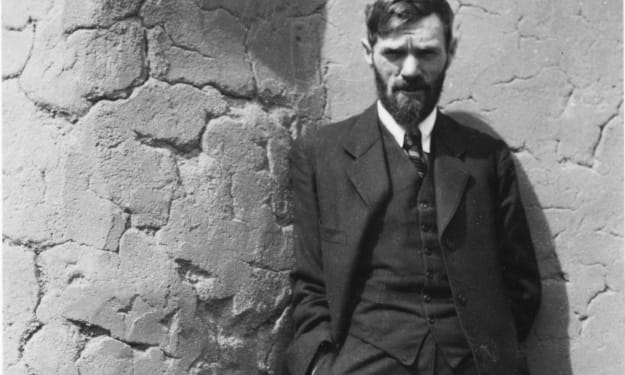
"Life with a Capital L" by DH Lawrence
I only read this book recently in the past two years or so. I discovered it whilst looking for an essays book to read and initially, I was considering the essays of Saul Bellow - but when DH Lawrence popped up, I knew I couldn’t miss that opportunity. I had already read so much by DH Lawrence and I remember enjoying “Sons and Lovers” in a cafe whilst by myself some years before. Unlike Saul Bellow, every memory I had of DH Lawrence was relatively good. My first experience of reading this book though, was incredible. I would lie on the floor in the summer’s heat and mark my favourite quotations because it was just so satirical. I would then proceed to write small quotations from the book on a piece of card and then, place the pieces of card inside a jar (which I still have) because there were some quotations in that book that you just don’t miss out on for your life. It completely changed my opinion of DH Lawrence just as this slightly humorous provincial writer. He was now a master of humour, darkness and had risen to the status of literary genius in my eyes. I thought this book was fantastic and it has become my favourite DH Lawrence book of all time. Even surpassing “Sons and Lovers”.
By Annie Kapur6 years ago in Geeks
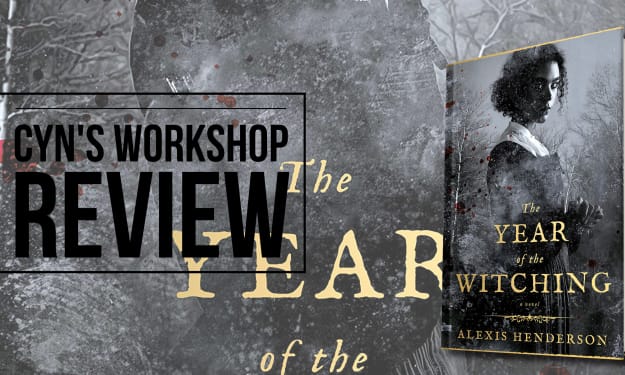
Review of 'The Year of the Witching'
Synopsis A young woman living in a rigid, puritanical society discovers dark powers within herself in this stunning, feminist fantasy debut. In the lands of Bethel, where the Prophet's word is law, Immanuelle Moore's very existence is blasphemy. Her mother's union with an outsider of a different race cast her once-proud family into disgrace, so Immanuelle does her best to worship the Father, follow Holy Protocol, and lead a life of submission, devotion, and absolute conformity, like all the other women in the settlement. But a mishap lures her into the forbidden Darkwood surrounding Bethel, where the first prophet once chased and killed four powerful witches. Their spirits are still lurking there, and they bestow a gift on Immanuelle: the journal of her dead mother, who Immanuelle is shocked to learn once sought sanctuary in the wood. Fascinated by the secrets in the diary, Immanuelle finds herself struggling to understand how her mother could have consorted with the witches. But when she begins to learn grim truths about the Church and its history, she realizes the true threat to Bethel is its own darkness. And she starts to understand that if Bethel is to change, it must begin with her.
By Cyn's Workshop6 years ago in Geeks
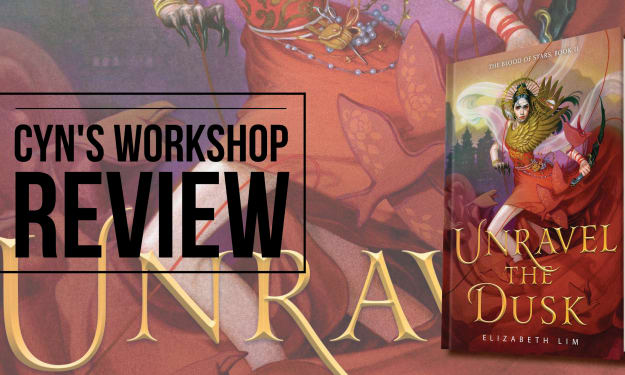
Review of 'Unravel the Dusk'
Synopsis Maia Tamarin proved her skill as a tailor when she wove the dresses of the sun, the moon, and the stars, but it will take more than a beautiful gown to hide the darkness rising up within her. . . . The stakes are higher than ever in this breathtaking sequel to Spin the Dawn, perfect for fans of Six of Crows. Maia Tamarin's journey to sew the dresses of the sun, the moon, and the stars has taken a grievous toll. She returns to a kingdom on the brink of war. Edan, the boy she loves, is gone--perhaps forever--and no sooner does she set foot in the Autumn Palace than she is forced to don the dress of the sun and assume the place of the emperor's bride-to-be to keep the peace. When the emperor's rivals learn of her deception, there is hell to pay, but the war raging around Maia is nothing compared to the battle within. Ever since she was touched by the demon Bandur, she has been changing . . . glancing in the mirror to see her own eyes glowing red; losing control of her magic, her body, her mind. It's only a matter of time before Maia loses herself completely, and in the meantime she will stop at nothing to find Edan, protect her family, and bring lasting peace to her country.
By Cyn's Workshop6 years ago in Geeks
5 Books that I read this summer[2020]!
Getting back to reading has probably been the best thing that has happened to me during this lock-down. I don't remember the last time I had read so many books one after the other. Thanks to a few friends who kept pestering me and recommending me books, I decided to read again. So, here are the five books that I read during this summer!
By Raibat Sarker6 years ago in Geeks
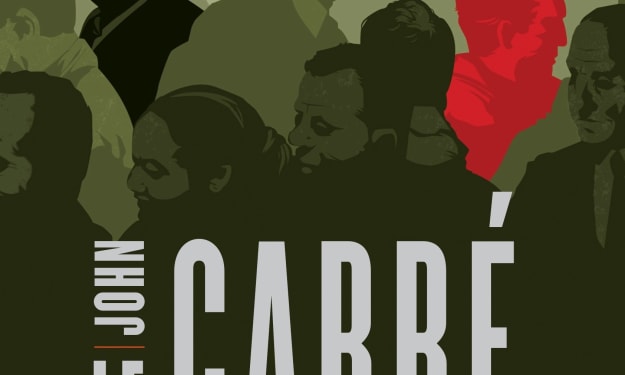
"Tinker, Tailor, Soldier, Spy" by John Le Carré
I read this book when I was about fourteen years’ old - it was a year before the film came out and I’m going to be perfectly honest with you that I only read the book because I knew there was going to be a film with a lot of big names. I’d heard of George Smiley before that, being interested in spy fiction - I was incredibly into the James Bond series as my guilty pleasure reading growing up (and I’m re-reading the entire series at the moment, it really brings back some serious memories) and I was also a big fan of things like Poirot and Sherlock Holmes. To be honest, I didn’t think I’d like all the dullness of the Cold War involved in the novel, but I was so definitely wrong because everything about this book is contained within that historical context. It was like releasing a beast into a circle that already had these dark, shady creatures of its own. It made for the perfect atmosphere. This book ended up changing my opinion of spy novels altogether because of the fact it was so intense, it was so suspenseful and it was definitely one of the darkest spy novels I’d ever read. My first reading experience of it, you could say, was completely immersive.
By Annie Kapur6 years ago in Geeks
"The Mark on the Wall and Other Short Fiction" by Virginia Woolf
Virginia Woolf is often known as a revolutionary of prose and often used themes that were new and hyper-realist. When it comes to existentialism, Woolf often uses realistic observations of the modern world to captivate the reader, sending them on a journey of language through her wild and yet, poetic style of prose in which she will compare the tiniest molecule of life to the entire universe and the object and idea itself all at once. This style of realism is often considered to drift from the storyline, but within these existential ideas is Woolf’s own thoughts veer the reader back to the main plot via an observation on life that is something to do with the actual title and plot. This shows that there is far more to the plot than what the title may suggest and also shows that there may be more than one meaning to the title of which we have not realised until we have read the entire thing. Virginia Woolf also uses thrilling ideas of nature and the natural state of being that constitutes life and death - stating that the anthology was written in “a flash, as if flying, after being kept stone breaking for months…” - the idea seems to be to make the anthology look as if it had been written in only a few drafts and from most ideas that came from the top of her head and from the depths of her heart. There are many themes that link us to other books by Virginia Woolf such as the themes of existentialism and hyper-focus that are worked in to the depths of “Jacob’s Room” (1922) and the realism of emotion in the acts of the mundane that are most often associated with “Mrs Dalloway” (1925) are seen in many of the short stories within this particular text. With darker themes than many Woolf readers may be used to and the arguments of philosophy are introspective to a new degree since the stories are shorter than Woolf’s usual writings. Therefore, when the reader analyses the text for details, there are perceptions that seem a lot longer than the perceptions of the same situations and philosophies the reader encounters in Woolf’s novellas and novels. However, the themes are relatively the same.
By Annie Kapur6 years ago in Geeks
20 Books of 2020 (Pt.37)
Now that we're well underway into the 700s, I would not only like to say thank you to my readers, friends and online pen-pals, but I'd also like to say thank you to people who have, in real life, had to spend more than five minutes with me. I have realised that I am a pretty one-sided human being from being in lockdown for so long that I'm pretty much stuck with myself. However, it has given me time to improve upon my reading goals that I think I've met so far. Here are the ones I have completed:
By Annie Kapur6 years ago in Geeks