economy
Economy and the area of production, distribution, trade, and consumption of goods and services.
The movement of the Pakistani fleet in the Strait of Hormuz and the reality of global statements
Special Analysis: Journalist Malik Sarfaraz Hussain Awan: The Strait of Hormuz, located at the mouth of the Persian Gulf, is not just a maritime passage, but has become a key center of global politics where the eyes of the world are fixed on every passing ship. If the situation from the past week, i.e. March 20, 2026, is examined closely, it is clear how the data is being presented in different ways to create excitement in the region. Because the recent statements of US President Donald Trump, in which he allegedly made claims such as unclear naval missions and a situation of distrust in the region, are proving to be baseless in the face of ground realities and technical data, and a professional and impartial investigation requires us to weigh these claims in the scales of satellite monitoring and naval logistics so that the real situation can be determined. It can be seen that during this sensitive period, the movement of four important ships of the Pakistan National Shipping Corporation has assumed the greatest importance, the first of which is MT Shalimar, which began its departure on the evening of March 20 and determined its destination by passing through the southern part of the Strait of Hormuz in the early morning of March 22. This oil tanker was heading towards the port of Fujairah in the United Arab Emirates for fully specified commercial purposes, the choice of which in itself is an argument that the ship was not on an undisclosed mission but was part of the international supply chain because this port is considered one of the major logistics centers in the world where ships are in and out at all times and its travel record shows that it fully respected the maritime boundaries. Similarly, the case of MT Karachi, which knocked on the entrance to the Strait of Hormuz on the night of March 23 and regularly crossed this passage on March 24. This ship was headed directly towards Pakistan's Port Qasim, which is the main source of the country's energy needs. It was bringing crude oil from the Gulf region to meet its energy needs because it is not possible for a country like Pakistan, which depends on imported oil for its energy needs, to use its limited resources in a political process that could affect its long-standing regional relations. And when the scope of the investigation extends to MT Lahore, it is found that this ship made its position clear on the afternoon of March 24 and on March 25, it successfully crossed the Strait of Hormuz and set sail for the industrial port of Jubail in Saudi Arabia. The ship, which is engaged in the delivery of chemical and refined petroleum products, adhered to all international safety protocols while passing through the narrowest part of the Strait of Hormuz, whose logbook records show that its route and timetable were in accordance with commercial agreements. While the fourth ship, MV Lucky, which is a bulk carrier, passed through this important waterway on the night of March 20 to anchor at Jebel Ali on March 21 and the construction cargo loaded on this ship The material and machinery are proof that Pakistan's maritime activities are purely related to economic stability and development. One thing these four ships had in common was that at any stage their Automatic Identification System (AIS) remained active, which is sufficient to negate any suspicious or illegal activity under international maritime laws. If we compare the travel times of these ships, it is seen that each ship maintained its prescribed speed and route, which is monitored not only by satellites but also by regional maritime authorities who are also present here all the time. Therefore, President Donald Trump's statements that some covert measures were taken regarding oil shipments in the region are not technically correct because it is impossible for any ship to escape monitoring in a high-alert passage like the Strait of Hormuz. If there was any such activity, the relevant maritime administration, which identifies and checks every passing ship, would have taken formal notice of it by now, which shows the fact that Pakistan is currently a responsible state at the international level. As a country, Pakistan is respecting its maritime borders and international laws, and the statements of the US President cannot be seen in isolation from his political narrative and efforts to increase specific pressure in the region, which are often aimed at gaining political advantage, because the essence of a comprehensive investigative report is that as long as solid travel records and maritime logs are available, the professional reputation of a country cannot be questioned on the basis of mere statements. And this movement of Pakistan's naval fleet is a reflection of the fact that the country is adopting legal and transparent ways to support its economy and, contrary to the propaganda of various circles, is committed to maintaining trade balance in the region, all the contents of which make it clear that the truth is always hidden in figures and undeniable facts, and not in emotional speeches and unverified allegations that often cause damage to international relations. And this investigation also proves that the ships of the Pakistan Maritime Corporation not only reached their destinations on time, but their movements No aspect of the agreement violates international trade rules because in the current situation in the region, where it is very easy to create misunderstandings, such authoritative data shows that economicInterests and commercial cooperation are the foundations on which future diplomacy is built, and this documented history of Pakistani ships proves that the state is focused solely on promoting its economic stability and cooperation with the international community, and any kind of negative propaganda has nothing to do with reality, which for a dedicated journalist should be the basis of any major report so that only information that is beyond all doubt reaches the readers, and this is the path by which we can uphold our journalistic reputation at the global level. Furthermore, the voyage charts of these four ships, MT Shalimar, MT Karachi, MT Lahore and MV Lucky, make it clear that at no time between March 20 and March 27, they did not unnecessarily stop their journey or turn to any port that was not included in their manifest, which proves that the cargo loaded on these ships and their destinations were completely legal, and this investigation has also revealed that These ships of the Pakistani Navy were fully cooperating with regulatory authorities in Gulf waters and their schedule reflects a normal commercial activity that completely rules out the possibility of any kind of clandestine mission or illegal delivery. This is the truth that must be conveyed to the general public and international institutions in today's era so that the facts are not distorted and journalistic values are upheld, thanks to which transparency and justice will prevail in society.
By Malik Sarfraz Hussain Awan7 days ago in Journal
The Brutal Truth About Trying to Make Money Online
New Perspective Honestly, I have spoken about this topic before on my account, but I am both proud and regretful that I now have a new perspective on making money from home and earning a living online, as it were.
By Timothy A Rowland10 days ago in Journal
The TikTok Effect: How Social Commerce is Skyrocketing Sales of Cosmetics Products in Brazil 2026. AI-Generated.
Brazil’s relationship with beauty is deeply personal and culturally ingrained. From the vibrant streets of São Paulo to the Amazonian heartland, the pursuit of self-expression through cosmetics is a powerful economic and social force. This unwavering commitment, combined with a growing middle class and a vibrant digital culture, is propelling the market to new heights. According to a recent report by IMARC Group, the Brazil cosmetics products market is on a steady growth trajectory. Valued at USD 7,545.9 Million in 2025, the market is projected to reach USD 11,917.2 Million by 2034, expanding at a compound annual growth rate (CAGR) of 5.02% from 2026 to 2034. This growth is fueled by rising middle-class spending, the influence of social media, and a powerful demand for inclusive beauty.
By Joey Moore10 days ago in Journal
3PL Market in Brazil: A Deep Dive into CAGR, Competitors, and Complexity. AI-Generated.
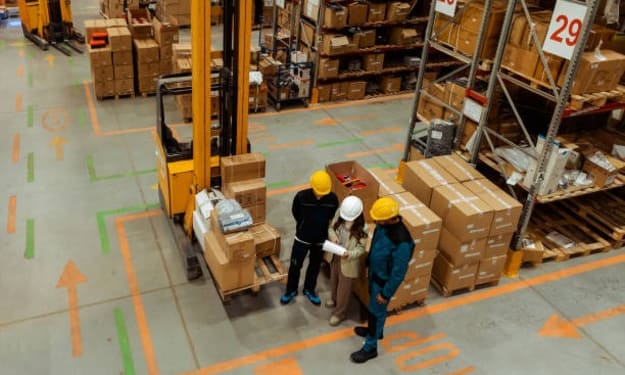
Brazil's economic engine—from its booming e-commerce sector to its vast agricultural heartland—runs on logistics. As companies face increasing pressure to optimize costs, enhance efficiency, and navigate the country's complex geography, the role of third-party logistics (3PL) providers has never been more critical. According to a recent report by IMARC Group, the Brazil 3PL market is on a robust growth trajectory. Valued at USD 31.4 Billion in 2025, the market is projected to reach USD 60.0 Billion by 2034, expanding at a compound annual growth rate (CAGR) of 7.19% from 2026 to 2034. This growth is fueled by rapid e-commerce expansion, government infrastructure investments, and a structural shift towards outsourcing supply chain management.
By Joey Moore10 days ago in Journal
The Cost of Global Hegemony: An Analytical Study of Human Costs Since 1492. AI-Generated.
The story began in 1499 when an Italian explorer set foot on the continent that we now call America. This so-called discovery proved to be a great human tragedy for the original inhabitants, as the ruthlessness with which indigenous civilizations were wiped out in the struggle for resources is a sad chapter in history. The foundation of the American continent was laid on the desecration of innocent people who were targeted simply because they were an obstacle to the economic goals of the colonial powers. During various periods of European colonialism, millions of indigenous people living there were eliminated through forced evictions and systematic operations in order to lay the foundation for a new state. When independence was declared in 1776, its benefits were limited to a select few, while for the indigenous population and the millions of people who were forcibly brought in, these chains became even tighter. The policies adopted by the American state to expand its borders wiped out every nation and civilization in its path. From the beginning of the twentieth century, this state began to go beyond its borders and intervene from the Philippines to Cuba, the sole purpose of which was to protect its economic interests. At the end of World War II, when the world was looking for peace, the nuclear attacks on Hiroshima and Nagasaki proved that any human limit can be crossed in the pursuit of power. This was the turning point from which this state established its role on the global stage, which plunged the world into the fire of constant conflict. In the name of the Cold War, the entire world was divided and dozens of countries were turned into laboratories. More than three million human lives were lost in the Korean War, while the operations that continued for fifteen years in Vietnam not only targeted humans but also devastated the land there with toxic chemicals. Behind all these measures lies the interest of the arms manufacturing industries, which can only thrive in the event of confrontation. This is why, in the last eight decades, there has hardly been a year when this state has not been directly or indirectly engaging in some kind of adventure in some region. These attacks have always been presented in the attractive words of “democracy and freedom” to appease the global conscience, but now it is time to bring the facts to the world that this system itself has become the biggest challenge to world peace.
By Malik Sarfraz Hussain Awan13 days ago in Journal
What Is the Golden Rule of Bookkeeping Before Outsourcing?. AI-Generated.
Money leaves clues. Every sale, expense, and adjustment tells a story about how a business is performing. The problem is, those clues only make sense when records are handled correctly. Many business owners rush into outsourcing their finances without first understanding the basics, and that’s where mistakes begin. Before handing over your financial data, it’s essential to understand the one principle that keeps everything accurate and reliable the golden rule of Bookkeeping.
By Charles Bright14 days ago in Journal