wall street
All about the world of Wall Street.
Opendoor’s Sudden 25% Surge: A Real Opportunity or a Familiar Trap?
In a market where most stocks grind forward inch by inch, a sudden 25% jump grabs attention. That’s exactly what happened with Opendoor Technologies (NASDAQ: OPEN), a company many investors had quietly written off after years of volatility, losses, and broken promises. In a single trading session, Opendoor shares surged dramatically, climbing from deeply depressed levels to around $2.50. Trading volume spiked far above average, lighting up retail trading forums, financial Twitter, and speculative investor circles. For some, it looked like the beginning of a long-awaited comeback. For others, it felt uncomfortably similar to rallies that fizzled just as fast in the past. The question now is simple but critical: Is this the early stage of a genuine turnaround—or just another short-lived bounce in a difficult business model? Understanding What Opendoor Actually Does Opendoor operates in the iBuying space—short for “instant buying.” Instead of listing a home traditionally, sellers can receive an algorithm-generated cash offer within days, skip showings, and close quickly. Opendoor then renovates the home, relists it, and attempts to sell it for a profit. At its best, the model promises speed, certainty, and convenience in an industry often criticized for inefficiency. At its worst, it exposes the company to massive capital risk, housing market cycles, and razor-thin margins. Opendoor has lived through both extremes. During the pandemic housing boom, the company expanded aggressively, buying homes at scale as prices surged. When interest rates rose sharply in 2022 and demand cooled, Opendoor was left holding expensive inventory that quickly lost value. Losses ballooned, cash burned fast, and confidence evaporated. By early 2025, the stock was trading near penny-stock territory, with many investors assuming the iBuying dream had failed. Why the Market Suddenly Paid Attention Again The recent rally didn’t come from nowhere. Several factors aligned at once. First, expectations around interest rates shifted. As inflation cooled and economic data softened, markets began pricing in the possibility of rate cuts. Lower mortgage rates don’t just help buyers—they directly impact housing liquidity. For a company like Opendoor, even modest improvements in transaction volume can significantly change the outlook. Second, Opendoor’s operational metrics showed signs of stabilization. Inventory turnover improved, pricing accuracy increased, and losses narrowed compared to the worst quarters of 2022–2023. The company became more selective about purchases, reduced exposure to volatile markets, and leaned heavily on data to manage risk. Third, short interest remained elevated. With many traders betting against the stock, any positive catalyst had the potential to trigger a short squeeze. When volume surged, those short positions were forced to cover, amplifying the upward move. Finally, sentiment shifted. Investors began reconsidering whether Opendoor had quietly survived the worst and emerged leaner, smarter, and better positioned for a more balanced housing environment. The Technology Advantage—Real or Overstated? Opendoor’s core claim has always been that data and automation can outperform human judgment in residential real estate. Over time, the company has accumulated data from more than 150,000 home transactions across dozens of U.S. markets. That dataset feeds machine-learning models that estimate fair value, renovation costs, resale timelines, and demand patterns with increasing precision. Recent disclosures suggest pricing accuracy has improved substantially compared to earlier years, reducing the risk of catastrophic overpayment. Operational improvements—such as faster inspections, standardized renovations, and tighter resale windows—have also helped control costs. The company is no longer chasing growth at any price; instead, it appears focused on survival and discipline. Whether that’s enough to generate sustainable profits remains an open question—but it’s a meaningful change from past behavior.
By The Insight Ledger 3 months ago in Journal
Karoline Leavitt’s Husband
Introduction As political commentator and former White House press secretary Karoline Leavitt gains national attention—especially during her 2024 congressional campaign and ongoing media appearances—many fans and followers have turned their curiosity toward her personal life. One of the most frequently searched questions? “Who is Karoline Leavitt’s husband?”
By KAMRAN AHMAD3 months ago in Journal
Mickey Lee
Introduction When Big Brother 27 was announced, fans eagerly scanned the cast list for fresh faces — and one name quickly sparked curiosity: Mickey Lee. Dubbed “Mickey from Big Brother” across social media, he rapidly gained attention for his sharp gameplay, emotional depth, and unexpected alliances.
By KAMRAN AHMAD3 months ago in Journal
Grocery Stores Open on Christmas Day
Introduction Christmas Day is traditionally a time for family, feasting, and rest — and for most retailers, that means closed doors. But emergencies happen. Maybe you forgot an ingredient, your pet food ran out, or an unexpected guest shows up. So, are any grocery stores open on Christmas Day?
By KAMRAN AHMAD3 months ago in Journal
Richard Linklater
Introduction When discussing directors who changed the language of modern cinema, Richard Linklater stands as one of the most influential filmmakers of his generation. Known for deeply human storytelling, natural dialogue, and bold experiments with time, Linklater’s movies have left a lasting mark on independent and mainstream cinema alike.
By KAMRAN AHMAD3 months ago in Journal
Bangladesh’s Tourism Revolution: National Branding Through Fantasy Kingdom & Resort Atlantis
Tuhin Sarwar । Journalist । 21 December । 2025 । Bangladesh. Bangladesh is often portrayed abroad through narrow lenses: urban density, infrastructure pressures, or climate vulnerability. Yet just beyond Dhaka’s bustling core lies an emergent story that challenges this reductive image one rooted in experience‑driven tourism, family‑friendly entertainment, and strategic destination development. At the heart of this narrative are two complementary local institutions: Fantasy Kingdom Bangladesh and its integrated hospitality partner, Resort Atlantis Dhaka. Together, they reflect a broader shift in how Bangladesh can project its tourism potential onto the global stage.
By Tuhin Sarwar3 months ago in Journal
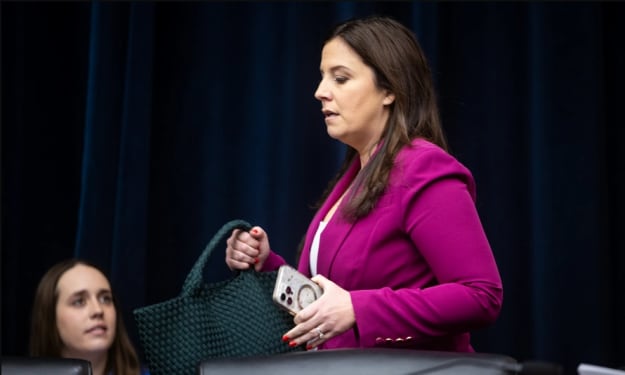
Elise Stefanik
Introduction Elise Stefanik has emerged as one of the most recognizable and influential figures in modern American politics. Known for her sharp debating skills, rapid rise within the Republican Party, and strong media presence, Stefanik represents a new generation of conservative leadership. Over the years, she has transformed from a young policy professional into a powerful political voice with national influence.
By KAMRAN AHMAD3 months ago in Journal
Tyron Woodley vs Anderson Silva
In the world of mixed martial arts, few names command as much respect as Tyron Woodley and Anderson Silva. Although these two legendary fighters never faced each other inside the UFC Octagon, fans have long speculated about how a matchup between them might have unfolded. Their careers overlapped just enough to make the debate realistic, yet circumstances, weight classes, and timing kept the fight from ever becoming official.
By KAMRAN AHMAD3 months ago in Journal
We Shouldn't Have to Pay for Everything
Bills, bills, bills. They keep piling up. One after the other. Rent, phone, grocery, water, heat. The list goes on. More than 60% of your bi-weekly paycheque gets used towards bills. And then you have to save in case something bad may happen, or a wedding is coming up, what about Christmas? Our current world drags you down, one dollar at a time. You’re surviving, not living.
By Melody Vanbeak4 months ago in Journal