addiction
The realities of addition; the truth about living under, above and beyond the influence of drugs and alcohol.
full life details of Jeffrey Dahmer Cannibalism
Jeffrey Lionel Dahmer, infamously known as the "Milwaukee Cannibal" or "Milwaukee Monster," was one of America's most notorious serial killers. His life was a tragic confluence of deep-seated psychological disorders, profound isolation, and horrific violence that culminated in the murders of 17 young men and boys between 1978 and 1991.
By Faheem ullah6 months ago in Psyche
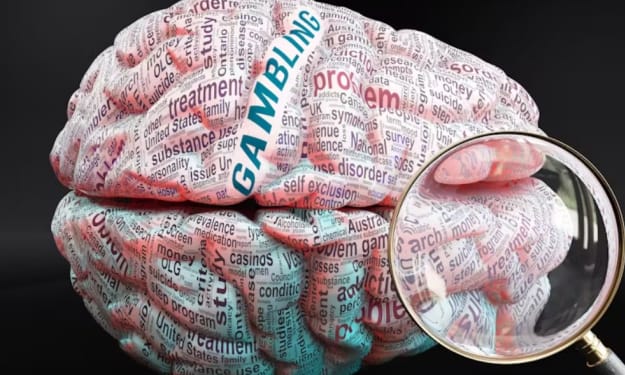
Neuroscience Insights: How Our Brain Processes Gambling Risks
Why do we go skydiving, invest in the stock market, or bet on a game? The allure of risk is an inherent part of human nature. The feeling that accompanies uncertainty—a mix of excitement, hope, and tension—has fascinated philosophers, psychologists, and, more recently, neuroscientists for centuries. It turns out that our propensity for risk-taking isn't just a matter of personality or conscious calculation. It's a complex biochemical process, deeply embedded in the structure and function of our brain. Understanding these mechanisms sheds new light on why gambling can be so captivating and how the brain processes the odds of winning.
By Shabbir Ahmad7 months ago in Psyche
Is Caffeine as Dangerous as Cocaine?
Caffeine is the world’s most popular psychoactive substance. It’s celebrated for its ability to boost alertness and energy, to zing us up. But its impact on the brain and body is far more nuanced than many realize, and far more individual than we give it credit for. While caffeine is not necessarily as addictive or harmful as cocaine per se, its neurological and physiological effects deserve closer scrutiny as society has normalised its excessive consumption as standard and funnily enough we’re in the midst of an unprecedented human energy burnout crisis.
By Bianca Best7 months ago in Psyche
Who Supports the Support System?
For as long as I can remember, I’ve been the one people turn to. The listener. The problem-solver. The “strong” one. At first, it felt good. There’s a kind of pride that comes with being dependable—the person who can carry other people’s pain without flinching. Friends called me their “rock.” Family relied on me to keep things together. At work, I was the one who could handle the pressure without breaking.
By Nadeem Shah 7 months ago in Psyche
I Was the Strong One Until It Broke Me
For as long as I can remember, people have seen me as “the strong one.” The dependable friend. The sibling who always listens. The co-worker who steps up when things fall apart. I carried that title like a badge of honor, proud that others trusted me, proud that I could be the one who held everyone together.
By Nadeem Shah 7 months ago in Psyche
I Didn’t Know These Common Habits Were Signs of Mental Health Issues
“I thought I was just being careful, just being tired, just being introverted. But it turns out the little habits I brushed off as harmless were quiet signals my mind had been sending all along.”
By Zakir Ullah7 months ago in Psyche
8 Ways A Child Can Cope With an Alcoholic Parent
Growing up, I saw that drinking was a big part of how adults socialized. Many I knew carried boxes of their favorite liquor around with them when they visited other people’s homes. That alone is not an issue, but when social drinking turns into an everyday activity, it can become a problem.
By Lorelei Nettles7 months ago in Psyche
Why Vulnerability is My Greatest Strength — Healing Through Honest Connection
I used to think that strength meant keeping everything inside. That if I never let anyone see me cry, break, or struggle, I would somehow appear stronger. For years, I wore a mask—smiling when I wanted to scream, nodding when I wanted to collapse, and pretending everything was “fine” when, deep down, I was drowning.
By Nadeem Shah 7 months ago in Psyche