addiction
The realities of addition; the truth about living under, above and beyond the influence of drugs and alcohol.
Overcoming Societal Blind Spots
When Maya joined her new school in the heart of the city, she noticed something odd. No one looked at the janitor. No one said hello to the cafeteria staff. And not once did a single student question the posters lining the walls—ads promoting success with smiling, fair-skinned, affluent-looking kids, all wearing the same kind of clothes, all speaking the same polished English.
By Muhammmad Zain Ul Hassan8 months ago in Psyche
The Loneliness Vending Machine: How We Started Paying for Connection. AI-Generated.
I. A Machine for Love Last month, I rented a friend. Not metaphorically. I paid $29.99 for a one-hour video call with someone who promised to listen to me, validate me, and laugh at my jokes. The app was clean, the interface sleek, and the calendar surprisingly full. My session started with a smiling young woman named Emma—probably not her real name—who said, “So, how was your day?” with the kind of warmth you’d expect from someone you’ve known since high school. Except we hadn’t.
By Ahmet Kıvanç Demirkıran8 months ago in Psyche
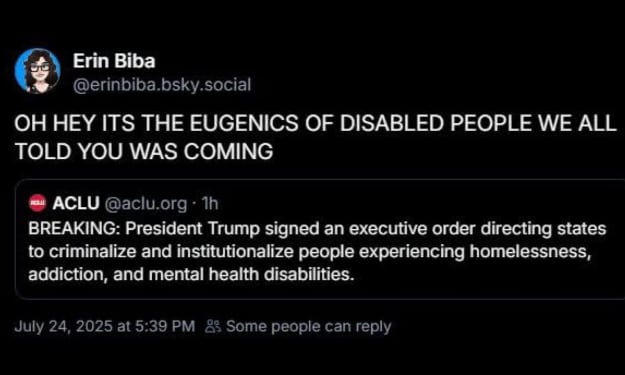
Asylum Warehousing: Again?
The recent discourse surrounding "mental health disabilities" and their societal ramifications carries a chilling echo of a past many hoped had been left behind: the era of asylum warehousing. While framed as a solution to complex social issues, policies that empower the state to institutionalize individuals deemed in need, even those already housed, threaten to unravel decades of progress in mental healthcare and civil liberties. This approach risks re-establishing a system where individual autonomy is sacrificed for perceived public order, potentially leading to widespread human rights abuses and the erosion of fundamental freedoms.
By Sai Marie Johnson8 months ago in Psyche
The Psychology of Ghosting: Why People Disappear Without Explanation. AI-Generated.
You’re texting someone, everything seems to be going well, and then—suddenly—nothing. No reply. No explanation. Just silence. You double-check your messages, wonder if you said something wrong, and slowly spiral into a loop of confusion and self-doubt. This experience has a name: ghosting. It’s when someone abruptly cuts off all communication without warning, and it’s become increasingly common in the digital age. But why do people ghost? What’s happening inside their minds when they decide to vanish? And why does it hurt so much?
By Muhammad Hussain8 months ago in Psyche
The Last Dance
The Last Dance The heavy red curtains swayed slightly as the final call echoed backstage. The auditorium was packed, but backstage was silent—almost holy in its stillness. The hum of anticipation from the crowd seeped through the walls, but all she could hear was her heartbeat.
By Abdul Basit8 months ago in Psyche
The Nostalgia Industry: Why We Keep Buying Our Past Back. AI-Generated.
Somewhere between the VHS static of a childhood movie and the neon glow of an old arcade cabinet, a memory stirs—not just remembered, but sold back to you. Nostalgia, once a deeply personal emotion, has become one of the most profitable commodities in the modern economy. You don’t just remember your past anymore—you subscribe to it.
By Ahmet Kıvanç Demirkıran8 months ago in Psyche
Healing as a Neurodivergent: A Journey Back Home to Myself
Being neurodivergent, the experience of healing feels like coming home. For years, I was told that Autism and ADHD are simply different brain designs—lifelong static conditions. I was taught that I would always need to manage my mind by restricting myself. For example:
By Neurodivergent-Soul2Soul8 months ago in Psyche