defense
Moving through the ranks of military activity including infrastructure, wars, our commander in chief and the nucleur arms race.
Rant of a Human Being Trying to Survive 2026. Content Warning.
Rant of a Human Being Trying to Survive 2026 This is my first draft that I wrote. I thought it was too potent, raw, and political. However, it is not political. It is about human suffering, dignity, and living each day on Earth.
By Vicki Lawana Trusselli about 3 hours ago in The Swamp
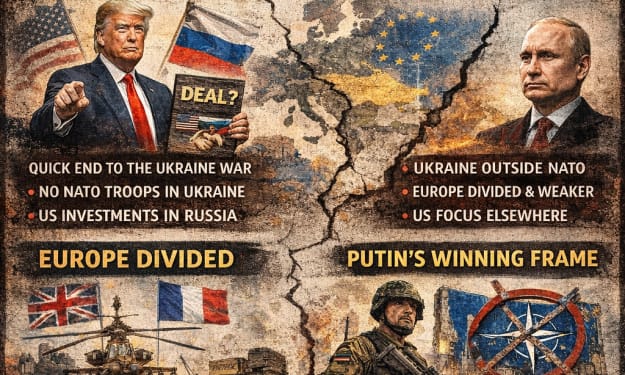
IS Russia Winning Ukraine War?
For much of the conflict, Europe framed Ukraine’s struggle as a clear case of resistance against Russian aggression. The narrative was straightforward: Ukraine was defending sovereignty, and Europe stood firmly behind it. However, by 2026, the situation has evolved into something far more complex. The war is no longer just about Ukraine—it has become a broader strategic test for Europe itself. At the center of this test lies what analysts are calling the “Trump Conundrum.”
By Ibrahim Shah about 4 hours ago in The Swamp
Results Of US Regime Changes
For decades, the United States has justified its foreign interventions under the banner of promoting democracy and stability. The underlying assumption behind many of these actions is simple: remove an authoritarian leader, and a more stable, democratic, and cooperative system will naturally emerge. However, history tells a far more complicated—and often troubling—story.
By Ibrahim Shah about 4 hours ago in The Swamp
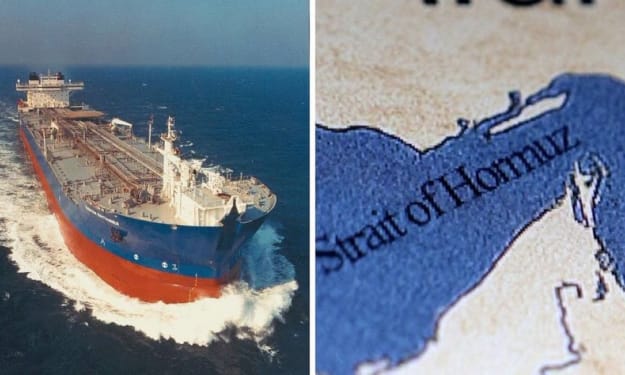
The Strait of Hormuz
Introduction The Strait of Hormuz is one of the most important maritime passages in the world. It connects the Persian Gulf to the Gulf of Oman and eventually the Arabian Sea. Because it is the main route for oil exports from the Gulf region, millions of barrels of oil pass through it every day. This makes the strait a vital artery for global energy supplies and international trade.
By shaoor afridiabout 12 hours ago in The Swamp
The decline of the West and the rise of ‘the Rest’ will lead to a new world order
As Donald Trump rampages through the global economic system with his tariff war and throws the United States’ commitment to NATO into serious doubt, fears – even panic – are mounting about the collapse of world order. Part of the anxiety stems from how suddenly these changes appear to have unfolded. In the aftermath of the 2008 global economic crisis, what was often described as the US-led liberal international order seemed alive and well, though not without challenges.
By Ibrahim Shah 2 days ago in The Swamp
Indian warships on standby near Persian Gulf for merchant vessels. AI-Generated.
Indian Warships on Standby Near Persian Gulf for Merchant Vessels New Delhi deploys naval assets as tensions rise in West Asia, ensuring safe passage for maritime trade Several Indian Navy warships have been deployed near the Persian Gulf and Strait of Hormuz, remaining on standby to assist merchant vessels — especially those bound for India — amid the ongoing war in West Asia that has disrupted commercial sea lanes and heightened regional security risks. The deployment reflects New Delhi’s growing efforts to safeguard its maritime trade routes and protect Indian seafarers during a period of escalating conflict. Why Indian Warships Are in the Region With the Middle East at the centre of a widening conflict involving Iran, the United States, and Israel, strategic chokepoints like the Strait of Hormuz — through which a significant share of global oil and liquefied gas supplies transit — have become areas of intense diplomatic and military focus. In this environment, Indian authorities have kept naval vessels near the Gulf to support and monitor merchant ships navigating these waters. Officials said the warships are being kept on standby to assist merchant vessels coming towards India, responding to potential calls for help, providing situational awareness, and reassuring India‑bound cargo owners and crews amid heightened risks. This naval presence is part of Operation Sankalp, a longer‑running mission under which Indian warships have patrolled the Gulf of Oman and Gulf of Aden — and now the wider Persian Gulf region — to ensure maritime safety and respond to potential threats or emergencies affecting commercial shipping. Safe Passage Through the Strait of Hormuz Despite tensions, several Indian‑flagged vessels have made headway. Two Indian LPG carriers, Shivalik and Nanda Devi, have been granted passage through the Strait of Hormuz and are en route to Indian ports, carrying critical energy supplies. These successful transits underscore the importance of safe shipping corridors for India’s economic interests. However, many other India‑flagged vessels remain in the region, with the government actively negotiating and coordinating with regional partners to secure safe movement and, if necessary, naval support or escorts. Recent diplomatic engagements reflect India’s effort to coordinate with Iran, Gulf Cooperation Council states, and Western powers to keep trade routes open. Protecting Indian Seafarers and Commerce The maritime deployment also responds to growing concerns for the safety of Indian seafarers working aboard ships in the Persian Gulf. According to a Reuters report, thousands of Indian sailors are currently in the region, with some stranded and caught between the escalation of hostilities and restrictions on commercial travel and shipping. These crews face increased anxiety as airspace and waters remain tense. India has been clear that the naval presence is aimed at ensuring the safe passage of merchant vessels, providing operational support if needed, and maintaining vigilance in a highly volatile maritime environment — not to contribute to combat. The Indian Navy regularly conducts patrols, surveillance and escort missions to deter threats and monitor hazardous situations. Strategic Importance of the Deployment The Strait of Hormuz remains one of the world’s most critical maritime chokepoints, accounting for a large portion of oil and gas transit worldwide. Disruption here affects global energy markets and economic stability, making international attention to naval deployments all the more significant. India, heavily dependent on imports for energy and trade, has a vested interest in keeping these routes secure. Deploying warships in such locations also serves as a deterrent to potential threats — from state actors to non‑state groups — that might target commercial vessels or disrupt shipping in response to regional tensions. The presence of naval assets aims to reassure both Indian and international shipping operators that maritime safety remains a priority. Naval Cooperation and Regional Dynamics India’s naval deployments complement diplomatic efforts to maintain open seas and safe navigation. In recent weeks, New Delhi has communicated with key stakeholders to facilitate safe passage and protect Indian nationals and seafarers. This includes regular contact with Gulf nations, Iran, and allied countries seeking to reduce maritime risks amid broader geopolitical challenges. Furthermore, Indian warships have been involved in maritime security operations elsewhere in the region for years, including anti‑piracy missions in the Gulf of Aden and Arabian Sea. These longstanding efforts bolster India’s ability to respond effectively to evolving security needs in the Gulf. What Comes Next As the West Asia conflict continues, India’s maritime posture is expected to adapt, balancing diplomacy, commercial interests and security imperatives. Authorities have stressed that naval forces will remain vigilant while working through diplomatic channels to ensure Indian and allied vessels can traverse critical sea lanes without undue risk. In a time of heightened tension, India’s naval presence near the Persian Gulf signals both a commitment to maritime security and a proactive stance in safeguarding its economic and strategic interests. Continued monitoring and cooperation with international partners will be essential as the situation evolves.
By Fiaz Ahmed 2 days ago in The Swamp