
Has Russia Officially Announced Oil and Gas Deals in Chinese Yuan?
Is That True?

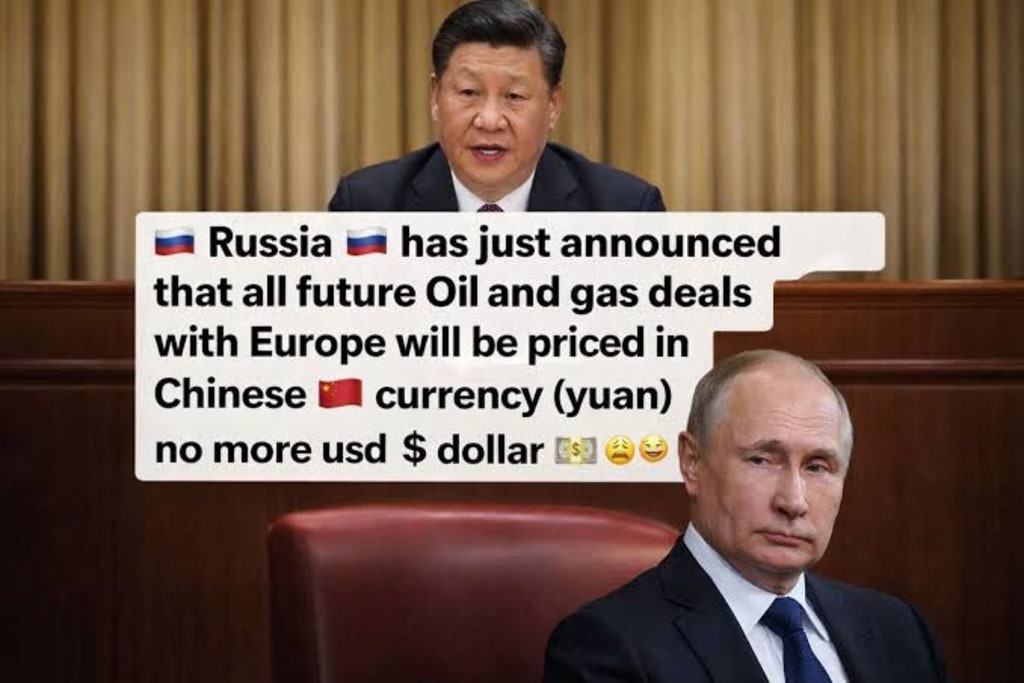
In recent years, global attention has increasingly focused on the shifting dynamics of international trade, particularly in the energy sector. One question that has gained widespread traction is whether Russia has officially announced that all its oil and gas deals will be conducted in Chinese yuan. While this claim has circulated widely on social media and in political discussions, the reality is more nuanced and requires careful examination.
To begin with, there has been no official declaration from the Russian government stating that all future oil and gas transactions will be exclusively priced in Chinese yuan. Instead, what Russia has emphasized is flexibility in payment systems, especially in response to Western economic sanctions. Following increased financial restrictions from countries like the United States and the European Union, Russia has actively sought alternatives to the US dollar and euro in international trade
One of the most significant developments has been Russia’s deepening economic relationship with China. Energy trade between the two countries has grown rapidly, with China becoming one of Russia’s largest buyers of oil and gas. In this context, the use of the Chinese yuan has expanded considerably. Many bilateral agreements between Russia and China now allow transactions to be settled in yuan or Russian rubles, reducing dependence on Western currencies.
However, this shift should not be misunderstood as a complete replacement of the dollar. Russia continues to engage in trade with multiple countries, including India and others in Asia, where payments may be made in local currencies or through alternative arrangements. The goal is not to adopt a single currency like the yuan universally, but rather to diversify financial channels and reduce vulnerability to sanctions.
The idea of “de-dollarization” plays a central role in this strategy. De-dollarization refers to the process of reducing reliance on the US dollar in international trade and finance. For Russia, this approach has become both an economic necessity and a geopolitical statement. By promoting the use of alternative currencies such as the yuan, Russia aims to create a more multipolar financial system where no single currency dominates global markets.
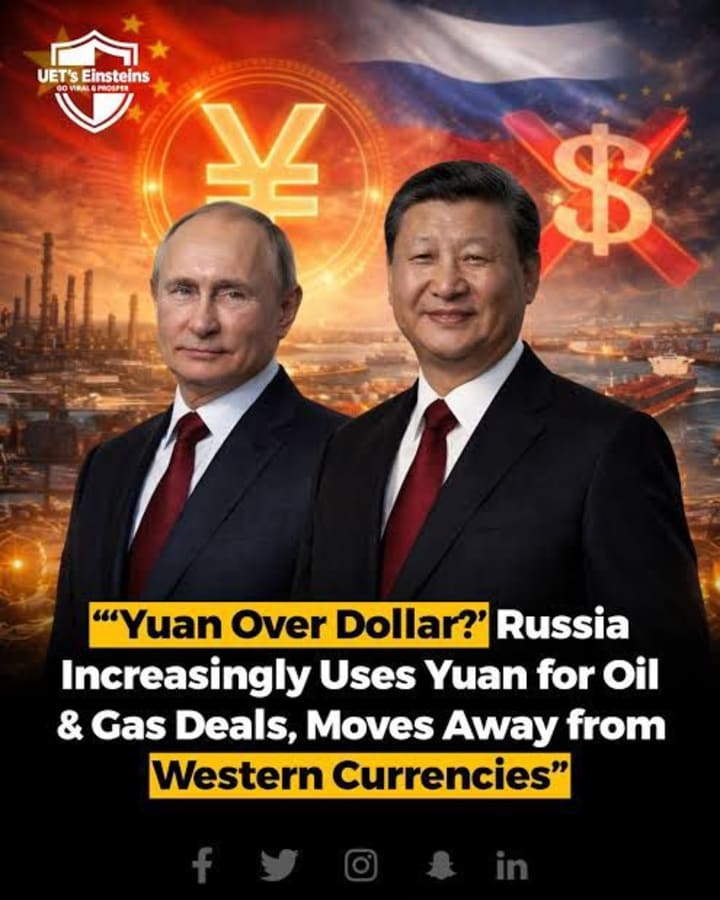
China, for its part, has also shown interest in increasing the global use of the yuan. As the world’s second-largest economy, China has been encouraging international partners to use its currency in trade and investment. Initiatives such as cross-border payment systems and bilateral currency agreements are part of this broader effort. Nevertheless, China has not mandated that all global energy transactions must be conducted in yuan. Instead, it promotes the currency as a viable alternative alongside others.
It is also important to consider the practical challenges of such a transition. The US dollar remains the dominant currency in global energy markets due to its stability, liquidity, and widespread acceptance. Shifting entirely to another currency would require significant changes in financial infrastructure, trust, and international agreements. At present, no single currency, including the yuan, has fully matched the dollar’s global role.
Furthermore, the growing use of alternative currencies in energy trade signals a gradual transformation in the global financial system rather than a sudden shift. Countries are increasingly exploring ways to protect their economies from geopolitical risks and currency dependence. While the Chinese yuan is gaining importance, especially in Asia, it still faces limitations such as restricted convertibility and lower global trust compared to the US dollar. Therefore, instead of a complete replacement, the future of energy trade is likely to involve multiple currencies, reflecting a more balanced and diversified international economic order.
In conclusion, while Russia is indeed increasing the use of the Chinese yuan in its oil and gas trade—particularly with China—it has not officially announced a universal shift to pricing all energy deals in yuan. The current trend reflects a broader strategy of diversification rather than replacement. As global economic conditions continue to evolve, the role of different currencies in energy markets may change, but for now, the transition remains gradual and selective rather than absolute.
About the Creator
Sk
"I am a passionate writer, crafting books and articles on Vocal Media, exploring human experiences, stories, and creative reflections."
Why the United States Allergy Treatment Market Is Poised for Strong Growth Through 2034
Allergies are no longer considered a minor seasonal inconvenience in the United States. For millions of Americans, they have become a year-round health challenge that affects daily routines, work productivity, school performance, and overall quality of life. From pollen-filled spring mornings to food-related emergency scares, allergic conditions are now deeply woven into the public health conversation.
By shibansh kumar5 days ago in Trader
United States Cannabis Market Set for Explosive Growth Amid Legalization and Innovation
The United States cannabis market is undergoing a historic transformation, evolving from a heavily restricted sector into one of the fastest-growing industries in the country. Once stigmatized and confined to underground trade, cannabis is now at the forefront of innovation, healthcare integration, and consumer lifestyle trends.
By shibansh kumar5 days ago in Trader


Comments
There are no comments for this story
Be the first to respond and start the conversation.