literature
Geek literature from the New York Times or the recesses of online. Our favorite stories showcase geeks.
"Therese Raquin" by Emile Zola
It’s been about eight years since I’ve read this - I first read it when I was around sixteen and since then, I’ve read the book, read a graphic novel based on the book, listened to the audiobook, watched a production of it and read a ton of journals all about the way in which the book portrays Shakespearean themes. The way in which I first discovered it was because I heard about it on the radio. Yes, the radio. I don’t actually remember exactly where but I liked the pronunciation of the word and looked for it for half an hour because I couldn’t spell it. It took a while but I finally found it and read the book. It was crazy and amazing. It was almost overwhelmingly emotional and it makes you fearful and tearful at the same time. It completely changed the way I thought about gothic romances and what they could achieve. I admit, I never thought literature could be so dark and romantic since I read Anne Rice’s Vampire Chronicles Series.
By Annie Kapur6 years ago in Geeks
"The Book and the Brotherhood" by Iris Murdoch
Within this text there is a clear account of each character being tortured by three things: their identity, change and the past. The book represents the way in which the characters evolve through their understandings of themselves and the growth of each of their relationships. From the death of Gerard’s father to Tamar’s strange and aloof attitude - this book constructs character identities from their past experiences and gives the reader reason to believe that now that all is said and done, their lives are falling apart at the seams. Each and every one of them has an individual identity and yet, their identity is entirely different to what the reader believes of them after reading the book.
By Annie Kapur6 years ago in Geeks
10 Books: Existential Men
Men have constantly been the source for great soliloquies of existentialism in literature. Just thinking about some such as the speeches of Hamlet in William Shakespeare’s eponymous play, Victor Frankenstein in Mary Shelley’s magnum opus and in the works of Dostoevsky, Gogol, Victor Hugo, and many more. These books always have men who are mentally disturbed by either their own existence, are disturbed by someone else’s existence, feel either hunted, alienated from reality, treated like outsiders for some reason or have been rejected, resented or hated for reasons that are not entirely fair, but you can definitely see where the other characters are coming from.
By Annie Kapur6 years ago in Geeks
20 Books of 2020 (Pt.35)
We have finally hit 700 and I can honestly say thank you to everyone who has been joining me on this journey. Recommendations have been welcome from every corner of the globe whilst I have also been expanding my knowledge of the modern classics. I also want to thank you for joining me in my 'first impression' articles where I spend around 2'000 words on a book I've been analysing and write about what my very first impression of themes and plot were. It has been incredibly interesting this year since I've had a lot more time to read during lockdown and yet, I feel like I'm not exhausted or burnt out at all. I find that I've become more social in my reading - giving and receiving recommendations, people actually caring about what I think about books and I've made a ton of new friends.
By Annie Kapur6 years ago in Geeks
"The Red and the Black" by Stendhal
It’s been a long, long while since I read “The Red and the Black” by Stendhal. I first read it when I was sixteen and the reason I read it was because I accidentally mistook it for “The Charterhouse of Parma” by the same author. I was actually looking for “The Charterhouse of Parma” and picked up “The Red and the Black” from the shelf instead. It’s recorded in my diary as me making a strange mistake and not really looking at what I was picking up. But it proved to be an amazing book anyways and ironically, I enjoyed it far more than I enjoyed “The Charterhouse of Parma” when I got around to reading that one. My first reading experience of “The Red and the Black” was admittedly a little difficult. There was a lot of political language I needed to look up and so, I kept my dictionary at hand again. When I finished the book, I had a sense of real pride and yet, I found the book to be very satirical and actually somewhat humorous about the way political position and social hierarchy were seen in France during the time of the author himself. The book changed my opinion on French Literature forever because until then, I had only been exposed to either horrors or books like “Les Miserables” and “Notre Dame de Paris”. I had never really read anything that directly made fun of itself. It was a cool and refreshing idea of France and I thoroughly enjoyed my experience of it.
By Annie Kapur6 years ago in Geeks
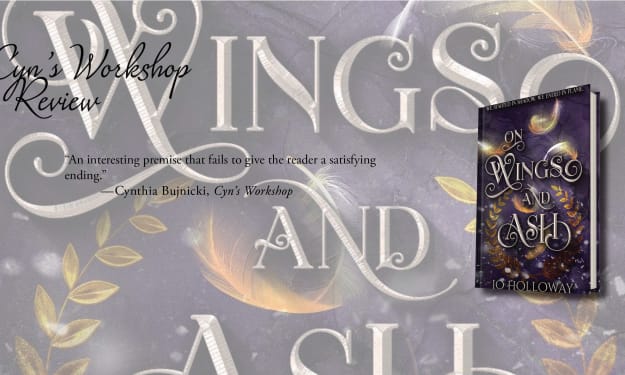
Review of 'On Wings and Ash'
Synopsis Alessa awoke the morning of the festival for Hades expecting nothing more than a night at the bonfires with her charming best friend. She never expected the rest... Not meeting the man she would end up promised to in marriage. Not the Spartan warrior or the desperate fight to save a lost princess. And certainly not the monsters who swooped down in the dark. When Alessa’s ability to communicate with them results in her taking the blame for the bloodshed, she’ll have to fight for her life. But she never imagined her future would depend on the trust of a stranger – the stranger she’s set to marry – or the strength of a long unspoken love. Before the night is over, more than just the bonfires might burn...
By Cyn's Workshop6 years ago in Geeks
The Best Works: William Faulkner
William Faulkner is one of my favourite writers in the world. From a young age, I was interested in Faulkner’s divine writing style, his southern gothic atmosphere, his Shakespearean and Biblical-scaled tragedies. Most importantly, I think I was interested in his characters the most. Faulkner’s works are known for being filled with intense darkness, destruction and the danger of humans when they are taken out of their natural environments. A satire on the heavy industrialisation of the USA during and after the times of the Civil War, Faulkner’s writing was often heaped in darkness, tragedy, well-written and almost poetically style prose along with characters that you could’ve seen coming from either a Shakespeare Play, the Bible or a 18th Century Opera. These almost Byronic heroes tend to take the Hamlet-like form and often end up worse than they began. Death overtakes in many cases and the natural world around the character is harmful, turned against them, as they move through the world and get out of their habitats, they long for release from this new, self-destructive lifestyle that brings them nothing but greed and misery.
By Annie Kapur6 years ago in Geeks
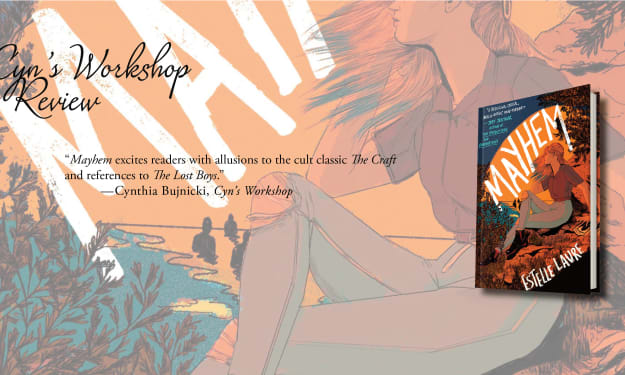
Review of 'Mayhem'
Synopsis The Lost Boys meets Wilder Girls in this supernatural feminist YA novel. It's 1987 and unfortunately it's not all Madonna and cherry lip balm. Mayhem Brayburn has always known there was something off about her and her mother, Roxy. Maybe it has to do with Roxy's constant physical pain, or maybe with Mayhem's own irresistible pull to water. Either way, she knows they aren't like everyone else. But when May's stepfather finally goes too far, Roxy and Mayhem flee to Santa Maria, California, the coastal beach town that holds the answers to all of Mayhem's questions about who her mother is, her estranged family, and the mysteries of her own self. There she meets the kids who live with her aunt, and it opens the door to the magic that runs through the female lineage in her family, the very magic Mayhem is next in line to inherit and which will change her life for good. But when she gets wrapped up in the search for the man who has been kidnapping girls from the beach, her life takes another dangerous turn and she is forced to face the price of vigilante justice and to ask herself whether revenge is worth the cost. From the acclaimed author of This Raging Light and But Then I Came Back, Estelle Laure offers a riveting and complex story with magical elements about a family of women contending with what appears to be an irreversible destiny, taking control and saying when enough is enough.
By Cyn's Workshop6 years ago in Geeks
Review of ‘The Burning’
Synopsis A rumor is like fire. And a fire that spreads online... is impossible to extinguish. New school. Check. New town. Check. New last name. Check. Social media profiles? Deleted. What happens when you can't run or hide from a mistake that goes viral? Anna and her mother have moved hundreds of miles to put the past behind them. Anna hopes to make a fresh start and escape the harassment she's been subjected to. But then rumors and whispers start, and Anna tries to ignore what is happening by immersing herself in learning about Maggie, a local woman accused of witchcraft in the seventeenth century. A woman who was shamed. Silenced. And whose story has unsettling parallels to Anna's own. From Laura Bates, internationally renowned feminist and founder of the Everyday Sexism Project, comes a realistic fiction story for the #metoo era. It's a powerful call to action, reminding all readers of the implications of sexism and the role we can each play in ending it.
By Cyn's Workshop6 years ago in Geeks
The Best Works: Nathaniel Hawthorne
Biography Born in Salem, Massachusetts, Nathaniel Hawthorn was one of the key 19th Century American Writers of the Dark Romantic Era. But, he wasn't always the great writer that we appreciate him as today, he started off somewhere else.
By Annie Kapur6 years ago in Geeks
"The Aeneid" by Virgil
It’s been about nine or ten years since I first read Virgil’s “Aeneid” and there’s a strange reason behind why I even read it in the first place. I found it in a beautiful copy at a bookstore. It was clothbound and patterned. The reason I actually picked it up was because I was watching a strange cartoon on the internet the previous day that was all to do with romans, I can’t remember exactly what it was but when I opened “The Aeneid”, the cartoons reminded me of the ones from the video - just drawn a billion times better. My first reading experience of “The Aeneid” was actually really strange because I remember trying to bullet point exactly what was happening all the way through the book and yet, I didn’t really understand what happened at the end because it didn’t really end at all. This book really ended up changing my opinion on the possibilities for poetry. It was a whole new poem with a great amount of drama. It was an epic in every sense of the word and I loved it so much that I ended up reading it every year since. I studied it for my undergraduate dissertation and I even got some people in to it online as well. It’s a brilliant poem with some great characters and history.
By Annie Kapur6 years ago in Geeks
July 4th: A Celebration of American Literature
American Independence Day is a great day, even though I am not American and nor do I live in America, I like to see how our friends across the Atlantic are celebrating this auspicious occasion. Filled with fireworks, party foods, gatherings of friends and family, this is set to be incredible day complete with unforgettable memories and happiness all around. American Independence Day is obviously the day where America celebrate being free of their overlords in Britain and became their own country, their own power and their own land. I think it’s a brilliant day to celebrate the works of fiction and nonfiction that came out of America due to its rapidly changing scene. From the late 1700s to the present, the USA has undergone so many changes in their artistic movements and so many social reforms that it is difficult to really count where one ends and another begins. I would like to celebrate alongside our friends across the Atlantic by offering a book set in every state of the USA. From the Southern Gothic to the Jazz Age, from the Harlem Renaissance to the 80s Transgressive Era and from Civil War Literature to the Post-Modern Destruction of the American Dream. American Literature has so much to offer us in terms of characters like the loveable George and Lennie from Steinbeck’s “Of Mice and Men” or the regrets of characters like Thomas Sutpen from Faulkner’s “Absalom, Absalom!”, the terrifying prospect felt by John Unger in Fitzgerald’s “Diamond as Big as the Ritz” and even the innocence of one of the most beloved character from any American Literature Work ever, little Scout Finch of Harper Lee’s “To Kill a Mockingbird”. From fiction to nonfiction, poetry and back again, American Literature is endless in its surprises and innovation…
By Annie Kapur6 years ago in Geeks